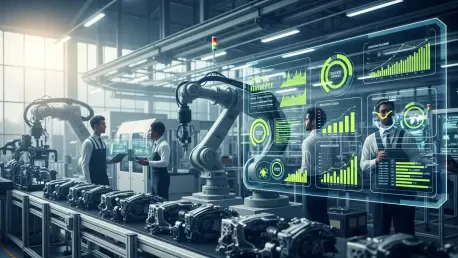

The steady rhythm of a high-speed production line often masks the subtle mechanical whispers that signal an impending failure long before any human operator or traditional sensor can detect a deviation. For decades, the industrial sector viewed these technical glitches as an unavoidable cost of doing business, a friction point that could only be smoothed out by massive, multi-million-dollar digital transformations. However, the narrative surrounding industrial progress underwent a radical shift as forward-thinking companies discovered that the most significant financial gains did not require a complete architectural overhaul. Instead, the real winners in today’s competitive landscape are those targeting specific operational pain points with precision, proving that small, strategic applications of artificial intelligence can yield immediate and outsized returns on investment.
While many industrial leaders previously assumed that artificial intelligence required an “all-or-nothing” approach to implementation, the current reality has debunked the myth of the million-dollar entry barrier. The focus moved away from waiting for a total factory metamorphosis that might take years to provide a single cent of value. Modern manufacturing executives now prioritize a modular strategy, where AI is deployed to solve immediate, localized problems. This incremental method allows companies to protect their margins in real-time, using the savings generated by one small success to fund the next phase of digital evolution. By avoiding the paralyzing complexity of a full-scale replacement, these organizations bypassed the typical pitfalls of large-scale IT projects and maintained their operational agility.
The skepticism that once surrounded emerging technologies often stemmed from a fear of disrupting existing, functional workflows that had served companies for decades. There was a prevailing concern that introducing complex algorithms would alienate the experienced workforce or create more problems than they solved. In contrast, the targeted approach demonstrated that AI could serve as an enhancement to human expertise rather than a replacement for it. By focusing on specific friction points—such as a single bottlenecked assembly line or a recurring quality defect—manufacturers were able to prove the concept without risking the entire production schedule. This shift in mindset transformed AI from a daunting executive-level mandate into a practical tool for the shop floor.
Solving the Data Island Paradox: Modern Factory Challenges
Most modern manufacturers find themselves in a peculiar position where they are essentially data-rich but insight-poor, struggling with the persistent phenomenon of data islands. Over the past decade, significant investments were poured into Enterprise Resource Planning (ERP) systems, Customer Relationship Management (CRM) platforms, and various Internet of Things (IoT) sensors. Despite these expenditures, these tools frequently operate in total isolation, leaving critical information stranded in departmental silos. A machine operator might see a vibration spike on a localized dashboard but remain completely unaware of the quality history stored in a supply chain spreadsheet or the raw material cost fluctuations tracked in the executive suite.
This fragmentation creates a significant hurdle for decision-makers who require a holistic view of the production environment to maintain efficiency. When information is siloed, the response to operational issues is inevitably reactive, as the context necessary to understand the root cause of a problem is often missing. AI serves as the vital connective tissue between these disparate systems, synthesizing both structured sensor data and unstructured historical reports to provide a clear, actionable picture of factory health. By sitting atop existing infrastructure, these intelligent layers interpret the relationship between different data streams, turning a chaotic collection of numbers into a coherent narrative that guides production strategy.
The resolution of the data island paradox does not require a total migration to a new platform but rather a focus on interoperability and synthesis. By utilizing AI to bridge the gap between separate software ecosystems, manufacturers can unlock the latent value of the data they already collect. This approach allows for a more nuanced understanding of how different variables—such as humidity levels on the shop floor or the specific performance of a shift crew—interact to affect final product quality. When these insights are delivered in real-time, the entire organization moves from a state of firefighting toward a more disciplined, data-driven management style that prioritizes long-term stability.
High-Margin Targets: Where Small AI Wins Drive Large Returns
To achieve a fast return on investment, manufacturers are increasingly focusing their AI efforts on specific pillars that transition operations from reactive maintenance to proactive management. Real-time quality signaling stands at the forefront of this movement, using machine learning to detect minute variations in temperature, vibration, or pressure that precede defects. By identifying these signals before a part even leaves the machine, companies can make immediate adjustments, significantly reducing the amount of scrap and rework produced. This level of precision protects profit margins by ensuring that resources are only spent on products that meet the highest standards of quality from the start.
Another area where small investments yield significant gains is in the realm of granular performance visibility and predictive maintenance. Analyzing fragmented shift data allows floor leaders to identify bottlenecks as they occur, rather than waiting for a month-end report to discover where productivity stalled. Simultaneously, moving beyond rigid, calendar-based maintenance schedules toward predictive models prevents costly unplanned downtime. By analyzing actual runtime behavior to forecast component failure, manufacturers can schedule repairs during natural breaks in production, ensuring that the failure of a single inexpensive sensor does not bring an entire multi-million-dollar assembly line to a grinding halt.
Operationalizing decision execution represents the final step in maximizing the utility of existing assets and labor. Advanced AI models now provide “next best action” recommendations to supervisors and technicians, effectively turning raw data into a set of instructions for optimization. Whether it involves reallocating labor to a high-priority line or adjusting material flow to compensate for a delay, these models ensure that the existing resources of a company are utilized to their absolute maximum potential. This strategy ensures that every dollar invested in technology leads directly to a corrective or optimized action, building a foundation for operational excellence without requiring massive capital expenditures for new equipment.
Benchmarking the Shift Toward Strategic Intelligence Adoption
The current industrial landscape reveals a widening divide between organizations that are waiting for a comprehensive digital solution and those pursuing incremental, strategic wins. Current research indicates that 80 percent of manufacturers plan to increase their AI usage significantly between 2026 and 2028 by focusing on these high-impact implementations. While organizations like the National Institute of Standards and Technology have historically cited high upfront costs as a major barrier, the success of modular AI has fundamentally changed the financial equation. Competitive advantage now belongs to those who use intelligence to bridge the gap between “shop floor” realities and “top floor” strategies.
Industry experts emphasize that the most successful companies are those that view AI as a way to refine and protect their existing profit margins rather than as a speculative gamble on future technology. This benchmarking of strategic intelligence suggests that the focus has shifted toward the “connective tissue” approach, where the value is found in how information flows through an organization. By transforming raw data into actionable intelligence, manufacturers are better equipped to handle the volatility of global markets and supply chain disruptions. This trend highlights a shift in the definition of industrial leadership, where the ability to interpret data has become just as important as the ability to move physical product.
Furthermore, the adoption of these targeted technologies has created a compounding effect on operational efficiency. As each small AI application proves its value, the data it generates further refines the broader intelligence ecosystem within the factory. This creates a virtuous cycle where the ROI of subsequent projects increases because the underlying data quality continues to improve. Manufacturers who embraced this philosophy early found themselves in a much stronger position to scale their digital efforts, as they had already established a proven framework for success. The move toward strategic intelligence adoption is no longer a luxury for the largest firms but a survival necessity for any manufacturer looking to remain relevant in a data-driven economy.
Bridging the Gap: From Shop Floor Data to Top Floor Decisions
The manufacturers who successfully navigated the transition to digital intelligence prioritized the creation of a seamless link between operational realities and executive strategy. They identified the most significant sources of waste, such as frequent machine downtime or excessive material scrap, and applied targeted AI models to those specific data streams. By integrating existing ERP and IoT data through a thin, intelligent layer, these companies provided their workforce with the context needed for autonomous decision-making. This approach ensured that workers on the factory floor possessed the same high-level insights as those in the executive suite, allowing for a more agile response to production challenges.
Executive leadership found that the implementation of these targeted systems provided a unprecedented level of transparency into the day-to-day efficiency of their facilities. They moved away from relying on static, historical reports and instead used real-time dashboards that reflected the actual pulse of the manufacturing process. This clarity allowed for more informed capital allocation and strategic planning, as leaders could see exactly how specific operational improvements correlated with overall financial performance. The integration of AI did not just improve the machines; it improved the quality of the decisions made at every level of the organization, from the assembly line to the boardroom.
The transition proved that the most effective path to a high return on investment involved a departure from the “all-or-nothing” mentality that once dominated the sector. Organizations that thrived were those that viewed AI as a tool for empowerment and connectivity rather than a standalone solution. They focused on removing the friction between different departments and systems, ensuring that every piece of data served a specific, actionable purpose. By building a foundation of small, high-impact wins, these manufacturers established a scalable model for long-term operational excellence. This strategy successfully protected profit margins and positioned the organizations to lead the next generation of industrial innovation with confidence and precision.