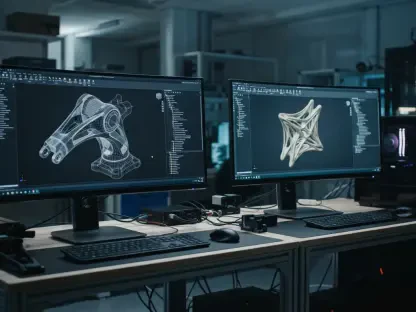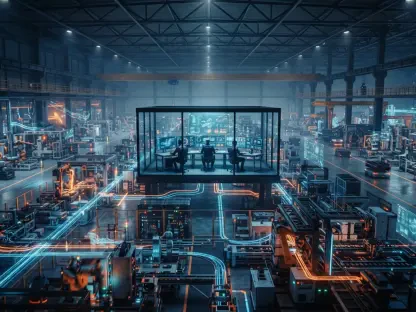

The hum of a modern production facility today carries a distinctively digital resonance, signaling a shift from machines that merely repeat to systems that truly understand their own environment and operational nuances. In the current industrial landscape of 2026, the traditional reliance on pre-programmed automation is being challenged by the necessity for cognitive agility. Manufacturers are no longer satisfied with robots that simply follow a script; they are demanding systems that perceive, reason, and act. This transformation represents the birth of the autonomous factory, a self-optimizing ecosystem where the line between mechanical execution and intelligent decision-making is increasingly blurred. As organizations navigate this high-stakes transition, the focus has shifted from mere speed to the sophisticated orchestration of data and intelligence.
The transition from a collection of automated tools to a cohesive, autonomous organism is driven by the realization that unpredictability is the only constant in modern production. While a standard robotic arm can perform a repetitive task with unwavering precision, it remains effectively incapacitated the moment a variable changes outside its narrow programming. If a gear slips or a supply chain delay alters the material quality, a traditional system continues blindly until a human intervenes to fix the error. Autonomy changes this dynamic by imbuing the floor with a sense of situational awareness. These cognitive systems do not just execute; they observe micro-fluctuations in performance and pivot their own strategies to maintain efficiency, marking a fundamental shift in how the industry perceives machine labor.
Is Your Factory Just Running, or Is It Actually Thinking?
Traditional automation has long served as the gold standard for industrial productivity, providing the speed and repetition necessary for mass production. However, even the most advanced automated systems are fundamentally limited by their lack of “sight.” They operate in a world of rigid logic where every action must be dictated by a human operator. When a mechanical failure looms or an energy surge threatens to derail production, these machines are unable to sense the danger or take corrective measures. They are effectively running on a loop, disconnected from the broader context of the facility’s health. In contrast, the autonomous systems now emerging in 2026 are designed to think through problems, identifying patterns that are invisible to the naked eye and acting on them before they escalate into downtime.
Moving toward autonomy means transforming the factory floor from a series of isolated tasks into a self-aware entity. This evolution is not about replacing the human element but rather elevating it. In an automated environment, humans are often relegated to troubleshooting and routine maintenance, essentially serving as the “brains” for mindless machines. In an autonomous setting, the system handles the immediate cognitive load of operational adjustments, allowing personnel to move into roles focused on high-level strategy and continuous improvement. This shift from manual intervention to system-level intelligence allows the factory to operate as a self-healing environment, where energy usage is optimized in real-time and equipment wear is managed proactively without waiting for a scheduled shutdown.
Why the Shift to Autonomy Is the New Industrial Mandate
The global manufacturing sector currently faces a complex array of challenges, ranging from volatile supply chains to rising energy costs and a persistent shortage of specialized labor. In this environment, the traditional focus on simple cost-cutting through automation is proving insufficient to maintain a competitive advantage. Companies have realized that “operational agility”—the capacity to respond to market shifts and internal disruptions in real-time—is a far more valuable asset than raw throughput. By transitioning toward autonomy, manufacturers can address the hidden inefficiencies that human operators often overlook, such as subtle variations in power consumption or the early warning signs of component fatigue, turning these data points into immediate corrective actions.
Moreover, the mandate for autonomy is fueled by the need for greater resilience. Traditional automation is fragile; it thrives on consistency but falters when faced with the unexpected. Autonomous systems, however, are built to handle uncertainty. They leverage advanced machine learning to analyze massive datasets, allowing them to predict demand fluctuations and adjust production schedules autonomously. This level of responsiveness ensures that a facility can remain productive even when external conditions are in flux. For many organizations, the push for autonomy is no longer a luxury but a survival strategy designed to ensure that the production floor can withstand the economic pressures of 2026 and beyond.
Mapping the Journey: From Rigid Tasks to Cognitive Systems
The transition toward an autonomous floor requires a clear conceptual understanding of the divide between automation and autonomy. Automation is defined by the execution of predefined tasks that require human oversight for anything outside the norm. Autonomy, however, represents system-level intelligence capable of evaluating multiple scenarios and making independent decisions. This evolution often follows a “Human-in-the-Loop” model, where the system is empowered to take action within specific guardrails while human experts focus on optimizing the broader business strategy. By liberating the workforce from the burden of routine execution, companies can focus on innovation and long-term growth.
Achieving this level of sophistication involves a strategic roadmap built on three core pillars. It begins with establishing total data visibility, which involves a systemic audit of all energy and production metrics. Once this foundation is in place, the facility moves toward the implementation of predictive analytics. This stage uses machine learning to forecast equipment health and market demand, moving away from reactive maintenance toward proactive care. The culmination of this journey is the deployment of prescriptive controls. These systems do not just predict what will happen; they automatically adjust production parameters, such as machine speed or temperature, to ensure the facility is always operating at peak efficiency.
The technological stack powering this transition includes a variety of advanced tools that work in concert. Autonomous Mobile Robots (AMRs) are now common for “lights-out” warehouse logistics, handling material transport without human intervention. AI-driven Maintenance Copilots have also become essential, moving beyond simple uptime tracking to ingest technical manuals and historical logs for instant root-cause analysis. Additionally, Digital Twin technology allows manufacturers to create virtual simulations of their entire production process. By testing different scenarios in a digital environment, they can identify bottlenecks and optimize layouts before a single piece of physical equipment is moved, drastically reducing the risk of costly errors.
Expert Perspectives and Real-World Impact: The Singapore Case Study
According to Bob Buttermore, a leading expert at Rockwell Automation, the primary obstacles to reaching this level of sophistication are often cultural rather than technical. Many organizations struggle with the internal friction that arises when traditionally siloed departments are forced to integrate. By examining the Asia Pacific Business Center (APBC) in Singapore, one can see the tangible results of successfully bridging the gap between Information Technology (IT) and Operations Technology (OT). This facility serves as a blueprint for the industry, demonstrating how a focus on fusion teams—pairing domain experts with digital specialists—can ensure that technology serves specific operational goals rather than being implemented for its own sake.
The quantitative results from the APBC study highlight the immense potential of the autonomous model. The facility saw a 43% surge in labor productivity and a 25% improvement in quality metrics. Financial gains were equally impressive, including a 21% annual return on investment. Beyond productivity, the move toward autonomy has significant implications for sustainability. The Singapore center achieved a 35% reduction in energy consumption and notable cuts in carbon emissions, proving that digital transformation is a key driver for environmental responsibility. These metrics underscore the fact that autonomy is not just about doing things faster; it is about doing them smarter and with a smaller footprint.
Navigating the Autonomy Maturity Curve: Practical Strategies
Moving through the autonomy maturity curve requires a deliberate, staged approach. In the first stage, organizations must focus on contextualizing their data. It is not enough to simply collect information; manufacturers need to understand the “why” behind historical events to make informed decisions for the future. Integrating platforms that connect disparate sensors across the production line allows for a holistic view of the entire enterprise. This visibility is the prerequisite for all subsequent autonomous functions, as it provides the clean, contextualized data that AI models need to function effectively.
The second stage involves shifting toward a software-defined architecture. This means decoupling application design from the underlying hardware, allowing intelligence to move freely across different parts of the factory. By prioritizing systems that can self-organize, manufacturers avoid the trap of being locked into rigid, hardware-dependent workflows. The third stage focuses on accelerating the time-to-competency for the workforce. By investing in intuitive digital tools and engaging teams early in the process, companies can reduce the learning curve and ensure that their employees are ready to manage the transition. Finally, success metrics must be redefined, moving away from a narrow “cost-reduction” mindset toward a framework that values agility and resilience above all else.
The transition toward an autonomous manufacturing floor established a new baseline for what industrial excellence meant in a volatile economy. Forward-thinking organizations identified that the true competitive edge was not found in raw speed, but in the cognitive agility of their systems. They successfully integrated human expertise with machine intelligence, creating a symbiotic relationship that drove both profit and sustainability. These companies focused on building scalable software architectures that allowed them to adapt to the unexpected challenges of 2026. Ultimately, the industry realized that the shift away from rigid automation toward flexible autonomy was the only viable path to long-term resilience and operational success.