
The rapid convergence of digital logic and physical machinery has transformed the American manufacturing landscape from a series of isolated assembly lines into a sprawling, intelligent network of interconnected systems. This transformation, often referred to as the Fourth Industrial Revolution, has reached a critical tipping point in 2026, as evidenced by a domestic market valuation that surpassed $58 billion only last year. The shift is not merely about replacing human labor with machines but involves the creation of comprehensive cyber-physical ecosystems that can predict failures before they occur and optimize output with surgical precision. As industries across the United States pivot toward these data-driven architectures, the momentum is expected to carry the market to a staggering $182.60 billion valuation by 2034. This growth trajectory, characterized by a compound annual rate of nearly 14 percent, underscores a national commitment to maintaining a competitive edge in a global economy that increasingly rewards technological agility and infrastructure-heavy automation.
Technological Foundations: Digital Synergy and Physical Precision
The Nexus of Intelligence: AI and Interconnected Networks
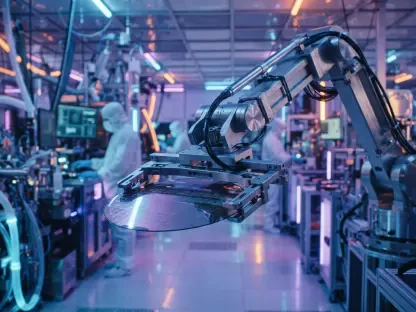
Artificial intelligence has evolved into the operational brain of the contemporary American factory, providing the cognitive framework necessary for autonomous decision-making and predictive analytics. By implementing sophisticated machine learning algorithms, manufacturers are now able to analyze vast streams of historical and real-time data to identify subtle patterns that precede equipment malfunctions. This transition from reactive repairs to proactive maintenance has saved billions in potential downtime, ensuring that production cycles remain uninterrupted and efficient. Beyond maintenance, AI is being utilized to refine quality control protocols through computer vision systems that can detect microscopic defects invisible to the human eye. These advancements are particularly vital in sectors where precision is paramount, allowing for a level of consistency that was historically unattainable. The integration of AI does not just speed up production; it fundamentally changes the nature of industrial problem-solving by shifting the focus toward preventative strategy.
The efficacy of artificial intelligence is fundamentally tied to the Internet of Things, which serves as the sensory nervous system for modern industrial facilities. By embedding high-precision sensors throughout the production floor, companies have gained an unprecedented level of visibility into every phase of their operations, from raw material arrival to final product shipping. This connectivity allows for the continuous monitoring of environmental variables, machine temperatures, and vibration levels, all of which are fed into centralized management platforms for immediate analysis. In 2026, the proliferation of 5G connectivity has further accelerated this trend, providing the low-latency communication required for hundreds of devices to interact simultaneously without bottlenecking. This seamless flow of information ensures that managers can make data-driven decisions in real-time, adjusting throughput based on current demand or supply chain fluctuations. The synergy between sensors and high-speed data networks creates a transparent environment where inefficiency has nowhere to hide.
Advanced Mechanics: Robotics and Virtual Performance Modeling
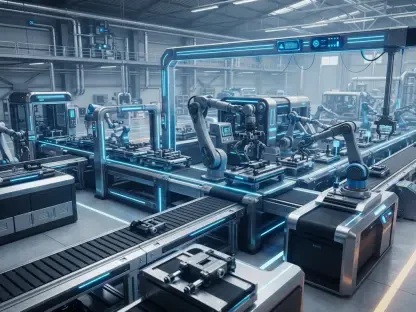
Robotics and automation continue to redefine the boundaries of physical production, moving far beyond simple repetitive motions toward complex, collaborative tasks. Modern industrial robots are now equipped with advanced haptic feedback and spatial awareness, allowing them to work alongside human operators safely and effectively. Automated guided vehicles and autonomous mobile robots have revolutionized internal logistics, navigating complex warehouse environments to deliver components exactly when and where they are needed. This level of synchronization minimizes idle time and reduces the physical strain on the workforce, allowing human talent to focus on high-level oversight and creative problem-solving. As these robotic systems become more affordable and versatile, even smaller manufacturing operations are finding ways to integrate them into their workflows, further driving the national market toward its projected multi-billion dollar milestone over the next decade.
Complementing the physical advancements in robotics is the widespread adoption of digital twins, which are highly accurate virtual replicas of physical assets and production lines. These digital models allow engineers to simulate various production scenarios and stress-test new designs in a risk-free environment before a single physical component is ever moved. By mirroring the behavior of real-world machines, digital twins provide a platform for continuous optimization, enabling manufacturers to identify bottlenecks and test solutions without interrupting actual output. This virtual prototyping capability significantly reduces the time-to-market for new products and ensures that physical upgrades are backed by rigorous data-driven validation. The ability to predict how a factory will perform under different conditions has become a cornerstone of strategic planning, providing a layer of operational security that was previously impossible to achieve. In an era where efficiency margins are increasingly thin, virtual modeling offers a definitive competitive advantage.
Market Dynamics: Sector Adoption and Strategic Resilience
Industrial Catalysts: Sector Growth and Governmental Infrastructure
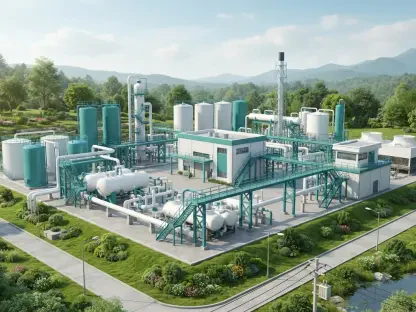
The automotive sector remains at the forefront of this industrial evolution, driven by the massive capital investments required to transition toward electric and autonomous vehicle production. Major manufacturers have overhauled their assembly lines to incorporate flexible manufacturing systems that can handle multiple vehicle platforms simultaneously with minimal downtime for retooling. This demand for extreme precision is echoed in the aerospace and defense industries, where the complexity of modern aircraft requires a level of traceability and quality assurance that only digital systems can provide. Beyond heavy industry, sectors such as food processing and energy production are increasingly turning to smart technologies to manage resource distribution and ensure safety compliance. These diverse applications demonstrate that Industry 4.0 is not a niche trend but a fundamental shift in how the American economy produces and delivers goods across every major vertical.
Public-private partnerships and federal initiatives have provided the necessary regulatory and financial framework to support this large-scale digital transformation. Organizations such as the National Institute of Standards and Technology have been instrumental in developing the open standards required for different systems to communicate effectively, preventing the fragmentation that often plagues emerging technologies. Government-backed research grants and tax incentives have encouraged companies to invest in high-tech infrastructure, particularly in the development of smart factory models that prioritize sustainability and resource efficiency. These policies have created a stable environment for long-term investment, ensuring that the United States remains a global leader in industrial innovation. By fostering a climate where technology can be scaled rapidly, the government has helped bridge the gap between experimental pilots and full-scale industrial implementation, accelerating the pace of national economic growth.
Operational Sustainability: Navigating Constraints and Regional Innovation
Despite the clear benefits of digitalization, the expansion of the market faces significant hurdles in the form of escalating cybersecurity threats and high initial capital requirements. As factories become more interconnected, the potential for cyberattacks increases, forcing companies to divert substantial resources toward advanced encryption and secure network protocols. For small and medium-sized enterprises, these security costs, combined with the expense of upgrading legacy equipment, can create a daunting barrier to entry. Addressing these financial and technical challenges requires a coordinated effort between technology providers and financial institutions to create accessible pathways for modernization. Without specialized talent to manage and defend these systems, the risk of operational disruption remains a constant concern for executives. Navigating this landscape requires a balanced approach that prioritizes both technological advancement and the robust protection of industrial intellectual property.
The American market has successfully mitigated some of these constraints through the development of specialized regional hubs that leverage local industrial heritage and technological expertise. Silicon Valley has continued to lead the world in the development of the software and AI architectures that power smart factories, while Detroit has reinvented itself as a center for high-precision automotive automation. Other cities, such as Chicago and Dallas, have emerged as vital nodes for telecommunications and food processing technology, creating a diverse and resilient industrial network that spans the country. These clusters of innovation facilitated the sharing of best practices and the pooling of specialized talent, which significantly lowered the barriers to entry for many regional manufacturers. By focusing on technological superiority and the strategic reshoring of critical supply chains, these hubs ensured that the domestic economy remained insulated from global volatility. Ultimately, the integration of intelligent tools and collaborative robotics paved the way for a more sustainable and efficient production model that lasted through the turn of the decade. These efforts collectively ensured that the domestic market reached its multi-billion dollar potential while fostering a climate of continuous technological evolution.