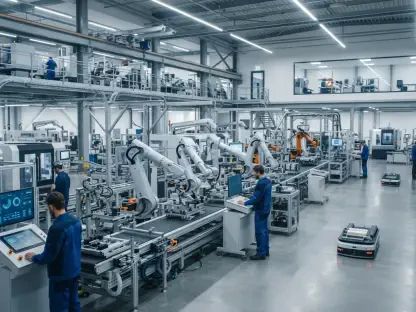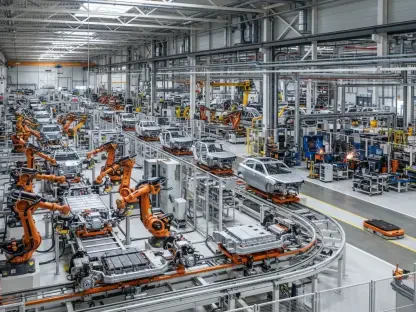

The rapid convergence of physical machinery and digital intelligence has fundamentally altered the industrial landscape, making the mastery of information more critical than the refinement of any single mechanical component. As factories transition into fully realized ecosystems of automation and artificial intelligence, the primary obstacle to success is no longer the procurement of high-tech hardware, but the effective management and interpretation of the massive data streams these systems produce. Industry leaders are increasingly recognizing that the modern factory operates on two parallel tracks: the physical production of goods and the digital cultivation of insights that drive efficiency. Without a robust strategy to handle this influx of information, even the most advanced robotic systems remain underutilized assets. Consequently, the ability to transform raw data into a strategic resource has become the ultimate differentiator in an increasingly crowded global market, where the speed of insight often dictates the speed of production.
Moving from Technical Experimentation to Value Creation
Transitioning from localized pilot projects to enterprise-wide digital implementation requires a fundamental shift in how manufacturing executives perceive the relationship between technology and profitability. Many facilities currently suffer from a phenomenon known as signal fatigue, where an overwhelming volume of alerts from sensors and automated systems creates noise rather than clarity for human operators. To overcome this, organizations must move away from perpetual experimentation and instead focus on applying digital tools to solve specific, high-stakes industrial bottlenecks that directly impact the bottom line. This strategic prioritization ensures that automation and artificial intelligence are treated as precision instruments for value creation rather than mere novelties. By filtering the vast sea of incoming signals through the lens of operational necessity, companies can ensure that their digital infrastructure supports productivity gains rather than adding unnecessary layers of technical complexity to the floor.
Standardization remains one of the most formidable hurdles in creating a cohesive digital thread across diverse manufacturing environments and global supply chains. Historically, machine data was treated as a localized byproduct, often trapped in proprietary formats or confined to individual stations with no connection to a centralized database. In the current landscape of 2026, forward-thinking manufacturers are pausing massive hardware expenditures to focus on the Herculean task of data cleanup and the digitization of legacy paper records. Utilizing generative AI to ingest and standardize hundreds of thousands of pages of historical process variables allows these firms to build end-to-end data models that are finally actionable for advanced analytics. This process of harmonizing disparate information sources into a unified digital language is essential for any company aiming to scale its operations, as it provides the foundational transparency needed to run complex simulations and optimize production cycles in real-time across multiple locations.
Improving Shop-Floor Visibility and Accountability
The practical application of a robust data strategy is most evident in its ability to reveal operational inefficiencies that were previously hidden from the view of management and floor supervisors. By retrofitting older production facilities with modern tracking capabilities and wireless sensors, companies can now monitor equipment health and assembly progress in real-time through mobile applications. This level of visibility does more than just enhance executive oversight; it serves as a powerful tool for workforce empowerment by providing operators with the immediate information they need to address bottlenecks. When workers have access to live performance metrics, they can take proactive steps to prevent downtime before it occurs, shifting the culture from reactive maintenance to a predictive model. This transparency fosters a sense of ownership among the staff, as everyone from the assembly line to the front office can see how individual actions contribute to the overall success of the facility.
To prevent the influx of real-time information from overwhelming staff, modern organizations are adopting a tiered control tower model to manage data dissemination and organizational responsibility. This structured approach ensures that information is filtered and directed to the appropriate levels of the hierarchy: shop-floor workers receive immediate operational metrics, while plant managers and executives focus on broader long-term trends. By delegating data responsibility in this manner, companies avoid the trap of data paralysis, where too much information leads to indecision or micromanagement from the top. The control tower model maintains a necessary balance between high-level oversight and local autonomy, allowing operators to make quick decisions based on localized data while ensuring that site-wide goals remain aligned. This hierarchy of information ensures that data acts as a guiding light for daily operations rather than a distraction that hinders the workforce from completing their primary manufacturing tasks.
Driving Workforce Evolution and Preserving Context
Embracing a data-centric manufacturing model necessitates a comprehensive transformation of the industrial workforce, blending traditional mechanical expertise with modern computational skills. Organizations are increasingly integrating data scientists directly onto the production floor to work alongside veteran mechanical engineers, creating a collaborative environment where craftsmanship meets analytics. This cultural shift is vital for ensuring that data analysis becomes a natural component of the decision-making process at every level rather than an isolated function buried within the IT department. By cross-training employees in both the physical and digital aspects of production, manufacturers can bridge the gap between theoretical insights and practical application. This evolution of the workforce ensures that the digital tools being deployed are used effectively by those who understand the nuances of the machinery, leading to more sustainable improvements in quality and output that rely on both human experience and machine precision.
One of the most complex challenges in modern manufacturing is capturing the human context that often lives outside of structured databases but remains essential to a plant’s success. Years of experience and informal problem-solving among workers constitute a form of situational wisdom that raw sensor data frequently fails to reflect accurately in a digital report. Future leaders are looking toward semantic anthology, a method of blending hard numerical data with the qualitative insights of the workforce to create a more holistic view of the manufacturing environment. By finding ways to record and quantify the “secret sauce” of successful operations, companies can preserve institutional knowledge that might otherwise be lost during personnel transitions. This approach recognizes that while data is powerful, it is most effective when contextualized by the people who interact with the machines daily, ensuring that the digital twin of a factory reflects the nuanced reality of the physical production process.
Strategies for Sustainable Global Competition
Navigating the complexities of global politics and regional data regulations has become a significant aspect of managing a modern multinational manufacturing footprint. Sharing proprietary process data across international borders is increasingly difficult due to strict local mandates regarding data transportability and digital sovereignty in various jurisdictions. To mitigate these risks, successful firms are developing strategies that allow for localized data compliance while maintaining a global standard for operational excellence and security. This often involves keeping the most sensitive proprietary information—the core expertise that defines a company’s competitive edge—within internal private networks while using standardized, non-sensitive data for broader supply chain coordination. By carefully partitioning their digital assets, manufacturers can comply with international laws without exposing their most valuable intellectual property to external threats or regulatory overreach in foreign markets.
The transition toward a fully data-integrated manufacturing sector provided a clear roadmap for organizations that sought to remain relevant in an era of rapid technological disruption. Leaders recognized that success was not achieved by simply accumulating more data, but by refining the quality and accessibility of that information for every member of the organization. Companies prioritized the creation of internal data centers of excellence to maintain control over their unique production algorithms while outsourcing generic administrative functions to third-party providers. This strategic focus allowed them to protect their proprietary innovations while streamlining their overall digital architecture. Moving forward, the most effective next step for any manufacturer involves conducting a rigorous audit of existing data silos to identify where human context and mechanical signals can be better integrated. By fostering a culture that values data as much as physical inventory, the industry established a foundation for continuous improvement that adjusted to shifting market demands with unprecedented speed and precision.