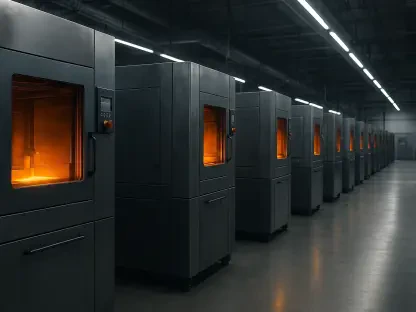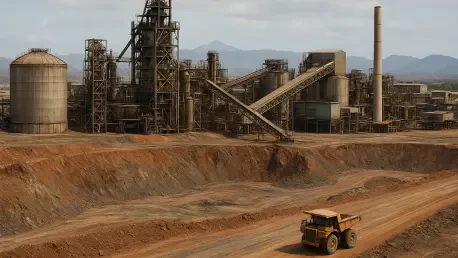

Reconstructing the specialized infrastructure needed for rare earth separation and metal production represents a much greater challenge for the West than simply opening new mines. For decades, the global technology sector viewed rare earth elements as mere commodities, subject to the same supply-and-demand fluctuations as copper or iron ore. However, this perspective ignored the strategic foresight with which China approached the sector. By moving beyond the role of a simple extractor, the nation transformed its geological luck into a sophisticated industrial stronghold that dictates the pace of global innovation. This dominance was not an accident of nature but the result of a calculated industrial strategy that leveraged trade barriers to pull the world’s high-tech manufacturing base into Chinese territory. In 2026, the consequences of this shift are visible in every smartphone, electric vehicle motor, and wind turbine produced, as the world struggles to replicate a process that took decades to perfect.
The Strategy of Industrial Relocation
The cornerstone of this transformation was the “Industrial Relocation Thesis,” a concept that suggests export restrictions were used as a lure rather than a simple trade barrier. By creating a system where rare earth minerals were significantly more expensive to buy abroad than they were within the domestic market, the government created a massive economic incentive for foreign companies to move their factories. This was not a short-term play to increase commodity prices, but a long-term effort to capture the entire value chain of high-tech manufacturing. As international firms faced rising costs and supply uncertainty, the prospect of relocating to China became an operational necessity for survival. This strategy effectively allowed the country to import foreign expertise and intellectual property, embedding the most advanced technological applications of rare earths within its own borders while leaving the rest of the world dependent on the finished products rather than the raw materials.
Leveraging Export Restrictions for Growth
The foundation of this dominance lies in the clever application of a two-tier pricing system, which was meticulously crafted through the use of export quotas and taxes. By limiting the volume of rare earth materials that could legally leave the country, the government ensured that domestic manufacturers enjoyed access to significantly cheaper inputs than their international rivals. This artificial price disparity created an immediate competitive advantage for any company operating within the local borders. While foreign firms had to contend with skyrocketing costs and supply uncertainty on the international market, their Chinese counterparts benefited from a stable, low-cost supply of these seventeen essential minerals. This policy was not merely about generating tax revenue or manipulating commodity prices; it was a sophisticated mechanism designed to use raw material control as a lever to achieve broader industrial goals, effectively turning a natural resource into a strategic economic weapon for industrial growth.
Capturing the Downstream Value Chain
This price gap served as a powerful economic magnet, forcing international companies to face a difficult strategic crossroads. For global technology firms specializing in high-performance magnets, electric vehicles, and renewable energy components, the financial pressure of high export costs became unsustainable. Consequently, many were compelled to relocate their manufacturing facilities and research centers to the mainland to gain access to the domestic pricing structure. This forced migration allowed the nation to capture high-value segments of the supply chain that were previously the exclusive domain of Western or Japanese industry. By requiring foreign firms to bring their production techniques into the country, China successfully transformed a simple mineral monopoly into a comprehensive manufacturing stronghold. The result was a radical shift in the global division of labor, where the most advanced applications of rare earth technology became deeply embedded in the domestic landscape, far from foreign control.
Developing an Integrated Production Ecosystem
China’s long-term success also stems from what economists call agglomeration effects, where specialized research, skilled labor, and focused industrial parks work together to create a self-reinforcing loop. This flywheel effect means that once a critical mass of processors, engineers, and end-users was established in specific regions, the benefits of proximity became more valuable than the original trade barriers. Even as international pressure eventually forced some relaxation of export quotas, the sheer concentration of expertise and infrastructure made it prohibitively expensive for other countries to compete. The nation moved from a comparative advantage based on geological deposits to an ecosystem advantage built on integrated production. In 2026, this infrastructure includes specialized chemical engineering programs and proprietary separation technologies that are not replicated elsewhere in the world, making the process of decoupling extremely complex for any nation that ignored the mid-stream sector.
Balancing Regulation and Resource Management
While industrial growth was the primary objective, environmental concerns played a secondary yet strategically significant role in consolidating the sector. Rare earth mining is an inherently destructive process, often producing toxic tailings and radioactive waste that require intensive management. During earlier development phases, the country faced significant ecological damage from thousands of small, unregulated mining operations that lacked the capital for safety measures. The central government utilized export controls and strict environmental standards as tools to force the consolidation of the industry into a few large, state-owned enterprises. This move not only addressed some of the most egregious ecological issues but also allowed for much tighter control over production volumes and pricing. By framing these restrictions as environmental conservation efforts, China could defend its policies on the international stage while simultaneously strengthening its grip on the global supply of processed high-purity metals.
Investing in Future Technological Resilience
To truly challenge the existing status quo, international competitors must look far beyond the mine and focus on rebuilding a comprehensive industrial ecosystem. This transition requires massive, sustained investments in processing technology, human capital, and specialized equipment to match the integrated feedback loops perfected over the last decade. It is not enough to simply fund a single extraction project; governments and private investors must support the development of the entire downstream path, from metal alloying to the manufacturing of final components like permanent magnets. Without a complete end-to-end ecosystem, other nations will likely remain strategically tied to the Chinese industrial machine for the foreseeable future. In 2026, the focus has shifted toward building circular economies that recycle rare earths from electronics, yet even these initiatives require the same specialized chemical processing infrastructure that currently remains concentrated in a single, dominant geographic region.
Strategic Pathways for Global Supply Autonomy
The historical dominance of the rare earth industry was achieved through a masterful integration of trade policy and industrial development. It was clear that the relocation strategy successfully turned a raw material advantage into a permanent technological lead. Moving forward, the path to supply chain resilience required a departure from the reactive policies of the past. Nations that aimed for true autonomy shifted their focus toward massive public-private partnerships that prioritized the development of mid-stream chemical separation facilities. They also recognized that human capital was as important as the minerals themselves, investing heavily in metallurgical engineering and material science education. By establishing tax incentives for domestic closed-loop manufacturing, these countries began to attract the very companies that had previously migrated. Ultimately, the lesson from China’s ascent was that control of the modern world depended on owning the advanced ways to process materials.