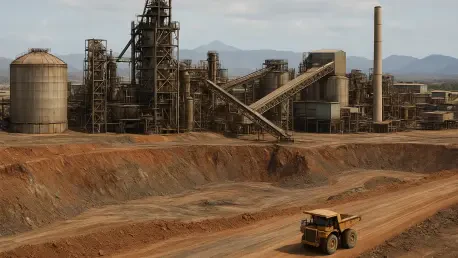

The International Energy Agency has flagged the cement sector as one of the most difficult industries to decarbonize due to the nature of limestone decomposition. As global urbanization continues to accelerate in 2026, the demand for high-strength building materials remains at an all-time high,

Formulators are increasingly favoring renewable and biodegradable ingredients that maintain the stability and sensory appeal expected by sophisticated modern consumers. This trend reflects a broader metamorphosis within the beauty and personal care landscape, which has moved significantly beyond
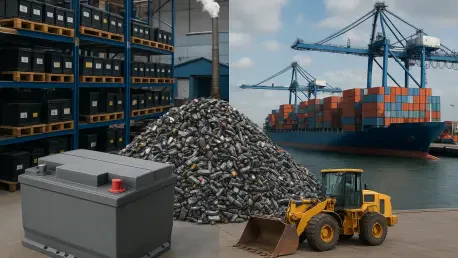
A $100 million allocation to Lilac Solutions aims to prove that sustainable extraction technologies can meet the rising demand for domestic battery-grade lithium. This move represents a central pillar of the Department of Energy’s latest $500 million investment cycle, a strategic push to decouple

Water-based dispersion coatings are emerging as the dominant technology for creating functional barriers that can be easily repulped in existing paper mills. As of 2026, the global logistics sector is navigating a pivotal transition where material science must align with aggressive environmental

A breakthrough in materials science demonstrates that copper-based frameworks can remove more than 90 percent of lead from contaminated water within one hour. This development, spearheaded by engineers at the University of Birmingham, represents a significant shift in environmental engineering

The Asia Pacific region currently controls nearly 47% of global BPA revenue due to its integrated supply chains that connect chemical plants directly to EV assembly lines. This regional dominance highlights a fundamental shift in the chemical landscape, where Bisphenol A is no longer viewed merely