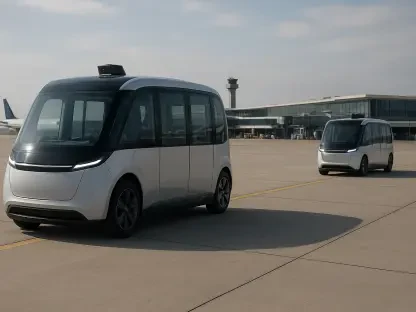

The recent approval of the world’s first Global Technical Regulation for Automated Driving Systems by the United Nations marks a fundamental shift in how the international community governs the evolution of transport. This comprehensive framework, orchestrated through the cooperation of the United States, China, and the European Union, establishes the inaugural unified set of rules for Level 3 and higher autonomous vehicles, aiming to synchronize safety protocols and certification processes across international borders. While the primary objective is to facilitate technical harmony and consumer safety, the consequences of this decision ripple far beyond the factory floor, fundamentally altering the geopolitical landscape regarding raw material acquisition. By defining exactly what a modern vehicle must be, these standards essentially dictate the global shopping list for critical minerals, turning technical compliance into a high-stakes race for resource dominance. As nations scramble to align their domestic industries with these mandates, the competition for the geological building blocks of autonomy has become a primary driver of modern international diplomacy.
The Intersection of Technology and Rare Materials
Resource Demands of Automated Systems
The transition to higher levels of vehicle autonomy introduces a level of hardware complexity that necessitates an unprecedented volume of specialized raw materials. Modern Level 3 and Level 4 systems rely on an intricate web of LiDAR, radar, and high-definition cameras to perceive their surroundings, all of which require specific minerals like gallium and germanium to function at peak efficiency. These elements are essential for the production of advanced semiconductors and optical components that can process environmental data in real-time under diverse conditions.
Furthermore, the permanent magnets used in the precision actuators of steering and braking systems depend heavily on rare earth elements, particularly neodymium and dysprosium. As global driving standards mandate these advanced safety features, the industrial demand for these specific minerals becomes non-negotiable. Manufacturers are no longer just looking for steel and plastic; they are competing for a limited supply of elements that are geographically concentrated and difficult to extract, creating a new set of logistical hurdles for the entire automotive sector.
Material Intensity and Power Architectures
Beyond the sensory hardware, the standardization of autonomous driving frameworks inherently ties the future of transport to the electrification of the global fleet. Most autonomous platforms are engineered from the ground up as electric vehicles to accommodate the significant power draw required by on-board servers and sensor arrays. This synergy effectively doubles the resource pressure on manufacturers, who must now secure vast quantities of lithium, nickel, and cobalt alongside the rare earths needed for specialized electronics.
The synchronized rollout of these standards means that every major market is moving toward these material-intensive architectures simultaneously, preventing any one region from finding relief through alternative propulsion. Consequently, a regulatory success that accelerates the adoption of self-driving technology simultaneously tightens the global market for battery minerals, transforming a technical transition into a desperate scramble for long-term supply agreements. This environment ensures that mineral availability dictates the very speed of technological progress.
Geopolitical Strategy and Supply Chain Control
China’s Integrated Regulatory and Material Strategy
China occupies a unique and formidable position in this landscape by maintaining a dominant grip on the world’s critical mineral supply while simultaneously leading the way in international standard-setting. Even as the Chinese government cooperates on the development of the United Nations framework, it is concurrently implementing its own mandatory national standards for high-level autonomy. This dual-track strategy allows China to use its massive domestic market as a testing ground to refine technologies long before they reach the global stage.
By the time international standards are fully adopted, Chinese companies are often already operating at scale, supported by a vertically integrated supply chain that spans from the mines to the final assembly line. This integration provides a significant cost advantage and ensures that their domestic manufacturers are never at the mercy of the market fluctuations that plague their foreign competitors. It is a calculated move that turns material abundance into long-term regulatory influence, effectively using the language of international cooperation to cement a position of industrial dominance.
Western Strategic Vulnerabilities and Security Risks
For Western nations, the primary challenge is the significant and growing gap between their considerable regulatory influence and their lack of material independence. Although the United States and its allies were central to the UN negotiations and hold many of the key patents for autonomous software, they remain heavily dependent on external processing for the magnets and semiconductors that make this software useful. The sophisticated AI models required for Level 4 autonomy are useless without the physical hardware to execute them, and that hardware is tied to a supply chain that Western powers do not fully control.
To mitigate these risks, Western governments are increasingly turning to industrial policies that emphasize “friend-shoring” and the development of new extraction technologies. There is a growing recognition that setting the rules for the road is only half the battle; the other half is ensuring the ability to build the vehicles that drive on them. This has led to a flurry of new investments in mining projects within North America and Australia, as well as research into synthetic alternatives to rare earth magnets, as nations race to bridge the divide between their legal frameworks and industrial capacities.
Strategic Alignment for Global Material Security
The adoption of the first global standards for automated driving shifted the focus from purely technical safety to the fundamental security of the mineral supply chain. Leaders recognized that maintaining a competitive edge required more than just legislative participation; it demanded a radical rethinking of how raw materials were sourced and processed. To navigate this new era, policymakers prioritized the creation of resilient, diversified mineral alliances that mirrored the cooperation seen in the technical drafting committees. Manufacturers were encouraged to design modular systems that could adapt to varying material availability, reducing the risk of single-source failures. This proactive approach turned a potential geopolitical bottleneck into a catalyst for innovation in material science and recycling technologies. By integrating resource strategy directly into the regulatory process, the international community moved toward a future where technological advancement was no longer tethered to a handful of fragile supply routes. The successful implementation of these strategies ensured that the benefits of autonomous transport remained accessible to all.