
The dramatic collision of a Level 4 sedan at a bustling metropolitan intersection has intensified the urgent legal debate regarding who bears the ultimate financial and moral responsibility when an algorithm, rather than a person, makes a fatal error. As the presence of autonomous vehicles on public roads continues to grow rapidly through 2026 and into the next decade, the traditional foundations of traffic law are undergoing a profound transformation. For nearly a century, the “human-in-the-loop” model has dominated the legal landscape, placing the burden of proof on individual driver negligence. However, the rise of sophisticated artificial intelligence has effectively blurred the lines between operator error and systemic software failure. This evolution necessitates a shift toward a multifaceted legal framework that integrates traditional negligence with modern product liability and digital forensics. Understanding these nuances is essential for insurers, manufacturers, and the public as they navigate this uncharted territory.
The Intersection of Human and Machine Control
Analyzing Control Shifts: Transition Periods and Hand-off Protocols
Determining the “right to control” is now the cornerstone of modern accident investigations involving semi-autonomous systems. Investigators meticulously scrutinize transition periods, which are the narrow windows of time when control is handed off from the AI to the human driver or back again. These hand-off protocols are not merely technical features but critical legal boundaries that dictate who was responsible at the precise moment of impact. If a vehicle identifies a hazard and initiates a request for human intervention, the legal focus shifts to whether the provided warning was sufficient. Courts are increasingly examining if the auditory, visual, or haptic alerts were clear enough to grab the attention of a distracted operator. When the technology fails so abruptly that any meaningful human reaction becomes physically impossible, the liability logically shifts away from the individual behind the wheel and toward the entity that designed the automated response system.
The duration and clarity of these transitions often serve as the primary evidence in high-stakes litigation against vehicle manufacturers. Current safety standards suggest that a driver requires a specific amount of lead time to regain situational awareness after being disengaged from the driving task. For example, if a system provides only a two-second warning before disengaging in heavy rain, a strong argument can be made that the manufacturer created an inherently dangerous situation. Conversely, if a driver ignores multiple cascading alerts over a ten-second period, the burden of negligence remains squarely on their shoulders. These disputes require expert testimony from human factors engineers who specialize in reaction times and cognitive load. By dissecting these transition periods frame-by-frame, legal teams can establish whether the machine provided the operator with a fair chance to prevent the disaster. This granular analysis is becoming the new standard in courtroom battles over autonomous crashes.
Navigating the Ambiguity Zone: Issues in Semi-Autonomous Driving
Semi-autonomous driving creates a perilous “ambiguity zone” where the distribution of tasks between human input and automated decision-making becomes dangerously overlapping. In these scenarios, the core of the legal debate centers on whether the vehicle’s sensors failed to detect a visible obstacle or if the human driver was negligent in their duty to monitor the system continuously. When a car misinterprets its surroundings—such as mistaking a white tractor-trailer for the bright sky or failing to recognize a pedestrian in a crosswalk—the conflict between a manufacturer’s safety promises and the actual performance of the hardware becomes the central point of contention. Jurors are often tasked with deciding if a reasonable person would have seen the danger that the AI missed. This requires a deep dive into the specific limitations of LiDAR, radar, and camera systems under varying environmental conditions. The liability hangs on whether the tech was “reasonably safe” for the environment.
Manufacturers often emphasize that their systems are assistive rather than fully autonomous, yet their marketing materials may suggest a higher level of reliability than the hardware can deliver. This creates a disconnect that legal professionals call “automation complacency,” where drivers over-rely on the technology because they believe it is more capable than it actually is. When an accident occurs in this gray area, attorneys must determine if the manufacturer provided adequate warnings about the system’s operational design domain. If a vehicle is marketed as having advanced “autopilot” capabilities but fails to handle routine highway merge situations, the liability may fall on the company for misleading the consumer. These cases often hinge on internal corporate communications regarding known system flaws and the decision to release the software despite those limitations. Proving that a driver was lulled into a false sense of security by the vehicle’s own interface is a common strategy in modern personal injury claims.
The Shift Toward Software and Product Liability
Algorithmic Accountability: Software Errors and Logic Failures
As vehicles are increasingly viewed as mobile computing platforms rather than purely mechanical machines, the focus of litigation is shifting toward software integrity. Accountability for algorithmic errors and logic failures is becoming a predominant theory in courtrooms across the country. Unlike a human driver, whose internal thought processes cannot be objectively recorded or replayed, the logic of an artificial intelligence system is permanently stored in its underlying code. This allows legal experts and software engineers to conduct a digital autopsy of the vehicle’s decision-making process. They can examine whether a crash resulted from a fundamental flaw in how the software was programmed to weight different risks, such as choosing between hitting an obstacle or swerving into another lane. If the AI’s “path planning” algorithm makes a choice that leads to injury, the scrutiny falls directly on the software developers who established those priorities. This shifts the focus from human behavior to the mathematical models.
Proving liability in these software-centric cases requires a departure from traditional eyewitness testimony toward a reliance on source code analysis. When an autonomous system makes a “logic error,” such as failing to apply the brakes because it classified a cyclist as a non-threatening static object, the legal argument must address whether this was a foreseeable defect. Attorneys now work with data scientists to determine if the training data used to develop the AI was sufficiently diverse and robust. If the system was never trained to recognize specific but common real-world scenarios, the manufacturer could be held liable for a “design defect.” This type of litigation is particularly complex because it involves interpreting how machine learning models arrive at specific conclusions. As these systems become more opaque, the challenge for the legal system is to maintain accountability without stifling the innovation that promises to reduce overall traffic fatalities. The burden of proof is moving toward demonstrating that the code was fundamentally unsafe.
Sensing and Perception: Proving Defects in Vehicle Technology
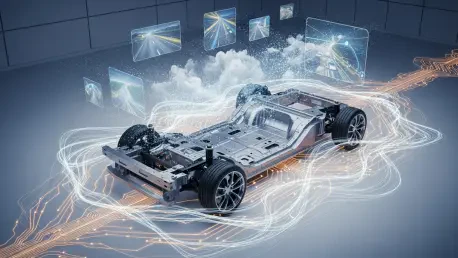
Product liability in the realm of autonomous transportation often involves demonstrating that the hardware and sensing technology were inherently inadequate for public road use. For instance, if a vehicle’s cameras are blinded by the low-angle sun or if its radar fails to detect a stationary object due to signal interference, the legal argument focuses on whether the manufacturer integrated sufficient hardware redundancy. A vehicle that relies on a single type of sensor may be deemed defective if a multi-sensor fusion approach would have likely prevented the collision. In these instances, the standard of proof requires showing that the manufacturer lacked adequate safeguards or failed to implement the most current safety technologies available at the time of production. This forces companies to stay on the cutting edge of sensor technology or face significant legal exposure. The core question becomes whether the “perception stack” of the vehicle met the industry’s prevailing safety standards for reliability and accuracy.
Beyond hardware failure, the legal system also evaluates the adequacy of the warnings and instructions provided to the end-user regarding the system’s operational limits. If a manufacturer knows that its sensing technology performs poorly in heavy snow but fails to inform the driver that the system should be deactivated in such conditions, it may be held liable for “failure to warn.” These cases involve examining the user manual, the in-car display messages, and even the dealership’s sales pitch to determine if the risks were clearly communicated. When a sensor fails because of a recurring software bug that the manufacturer was aware of but did not patch, the liability can escalate into claims of gross negligence. The legal standard is not perfection, but rather whether the manufacturer took all reasonable steps to ensure the vehicle’s “eyes” could see clearly in the environments where it was intended to operate. This technical scrutiny ensures that the push for automation does not bypass the necessity for rigorous hardware validation.
Systematic Safety Reform: Establishing Future Liability Standards
The final analysis suggested that the focus must shift toward creating standardized liability protocols that prioritize victim compensation and technological transparency. The legal system demonstrated that while manufacturers frequently blamed human error, the root cause often resided in the systemic design of the autonomous interface itself. To address these challenges, lawmakers explored “no-fault” insurance models for highly automated vehicles, which functioned similar to those used in the aviation industry to streamline the compensation process for injured parties. Additionally, the mandatory implementation of external communication lights on autonomous cars helped pedestrians understand the vehicle’s intent, reducing collision risks. As the industry matured from 2026 into 2027, the focus remained on refining these legal frameworks to ensure they kept pace with the rapid advancement of artificial intelligence. Establishing clear standards for AI behavior on public roads was identified as the next step in securing a more accountable future for transportation.