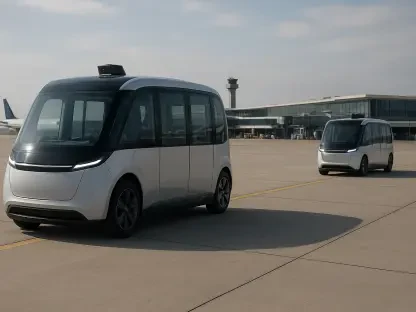

The framework agreement signed in mid-2025 has officially moved into its operational phase, transforming Dubai into a critical case study for global autonomous scaling. This collaboration represents a watershed moment where Baidu’s sophisticated Apollo Go software architecture merges with Uber’s expansive ride-hailing network to solve the persistent last-mile challenge in high-density urban environments. By bypassing the traditional slow-burn approach of localized testing, the partnership utilized the regulatory flexibility of the United Arab Emirates to deploy hundreds of autonomous vehicles in record time. This shift signals a departure from purely domestic competition within China and North America, aiming instead for a unified international standard of mobility. Industry analysts observed that the speed of this deployment was primarily driven by the modular nature of Baidu’s sixth-generation hardware, which integrated seamlessly with Uber’s established dispatching algorithms. The success of this initial phase suggested that the era of closed-loop proprietary ecosystems might be ending, replaced by a collaborative model where hardware specialists and platform giants share the heavy lifting of global logistics.
Integrating Apollo Technology with Global Networks
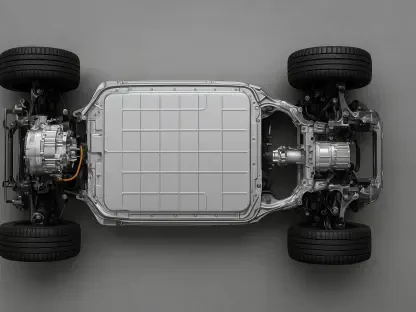
Baidu’s contribution to this alliance centers on its Apollo platform, which has surpassed 100 million cumulative kilometers of autonomous driving in varied weather conditions. The current hardware suite utilizes a combination of long-range LiDAR, ultra-high-definition cameras, and ultrasonic sensors that create a redundant, 360-degree safety envelope. Unlike earlier iterations that required significant human oversight, these vehicles now operate with a high degree of confidence in complex traffic circles and during the intense heat of desert climates. The real-time mapping updates provided by the Baidu cloud infrastructure allow for sub-centimeter accuracy, a necessity for navigating the rapidly changing skyline of the Middle East. Furthermore, the integration of generative AI within the vehicle’s decision-making engine enabled the system to predict erratic human driver behavior with a ninety-five percent accuracy rate. This technological maturity provided the necessary confidence for Uber to open its interface to these foreign-made autonomous units, creating a hybrid fleet that serves as a blueprint for future expansions into Europe and Southeast Asia.
While Baidu provided the brain and the body, Uber functioned as the central nervous system by leveraging its massive existing user base and sophisticated demand-prediction software. The integration allowed Uber users in Dubai to request a robotaxi through the same application they used for standard rides, significantly lowering the barrier to entry for first-time autonomous passengers. This seamless transition proved vital for rapid adoption, as consumers valued the familiarity of the Uber interface over the novelty of a new autonomous-only app. Behind the scenes, Uber’s dynamic pricing and routing engines were optimized to accommodate the unique requirements of electric autonomous vehicles, such as automated charging schedules and preventative maintenance windows. This synergy ensured that the robotaxi fleet maintained a higher utilization rate compared to traditional human-driven cars, which often remain idle during shift changes. By offloading the operational complexity of fleet management to Uber’s automated backend, Baidu was able to focus strictly on refining its driving algorithms, demonstrating a division of labor that could dominate the mobility-as-a-service market from 2026 to 2030.
Strategic Implementation and Future Directives
Moving beyond the initial success in the Middle East, the partnership aimed to penetrate the Southeast Asian market, where complex traffic and high population density provided a different set of challenges. The strategy involved customizing the Apollo Go sensor suite to handle the unique monsoon seasons and the high volume of two-wheeled vehicles common in cities like Jakarta and Bangkok. This adaptability was key to proving that the system was not a fair-weather solution but a robust platform capable of handling any global environment. Strategic alliances with local telecommunications providers ensured that the 5G and 6G connectivity required for low-latency remote assistance was consistently available. As the fleet size grew, the data flywheel effect accelerated, with each new kilometer driven contributing to a more intelligent and safer global driving model. The competitive advantage gained by Baidu and Uber through this early mover status created a significant moat against newcomers who lacked the combined assets of hardware and platform reach. Industry observers noted that this expansion path was designed to establish a de facto standard for autonomous operations before more fragmented competitors could coalesce around a rival protocol, ensuring that the influence of this partnership would be felt for years to come.
The successful integration of these systems established a new precedent for how urban planning and mobility must intersect in the coming years. City planners discovered that prioritizing autonomous lanes and dedicated pickup zones significantly enhanced the efficiency of the Baidu-Uber fleet, leading to a recommendation that all future smart city developments include autonomous-ready infrastructure. Stakeholders across the automotive sector recognized that the hardware-software divide was no longer a barrier but a strategic opportunity for specialized collaboration. Investment was redirected toward standardized communication protocols between different autonomous brands to ensure city-wide interoperability. The industry moved toward a multi-modal future where robotaxi fleets functioned as the backbone of public transit, connecting with high-speed rail. It was determined that the key to success lay in continuous engagement with public safety officials and transparent data-sharing. By 2028, the focus shifted to integrating clean energy sources to ensure the carbon footprint of these fleets remained minimal. The lessons learned from the Dubai deployment provided a roadmap for municipal governments to transition to human-centric urban spaces.