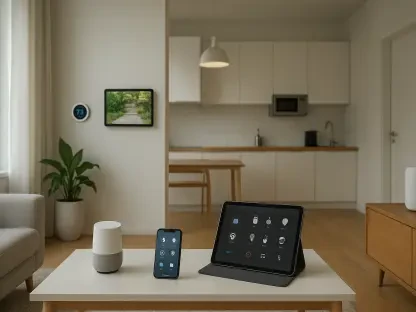

The trend toward more intelligent appliances is creating a surge in demand for reliable, integrated UVC functionality that can fit within sleek hardware designs. At the Consumer Electronics Show, which continues to serve as the ultimate barometer for the global technology industry, this shift is palpable among engineers and product designers alike. Hosted annually by the Consumer Technology Association, the event is far more than a simple exhibition; it is a high-stakes arena where the future of innovation is defined through foundational component choices. As electronics become increasingly sophisticated, the demand for integrated, feature-rich components has led to a significant interest in Ultraviolet (UV) Light Emitting Diode (LED) technology. Manufacturers are no longer satisfied with bulky, inefficient components; instead, they seek semiconductor solutions that offer both miniaturization and high power density, ensuring that the next wave of smart home devices and wearables can achieve both safety and high performance. This evolution signifies a broader move toward specialized functionalities that enhance the utility of everyday consumer devices without compromising aesthetics.
The Transition from Traditional Lighting to Semiconductor Innovation
Advantages of UV LED Chip-on-Board Technology
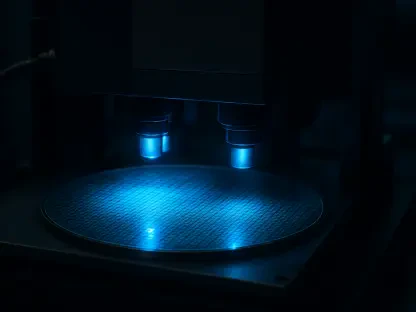
The landscape of lighting technology is undergoing a systematic transformation as traditional formats like mercury vapor and fluorescent lamps are phased out in favor of LED alternatives. Conventional UV sources have long been plagued by high energy consumption, hazardous material content, and slow warm-up times that hinder the user experience in modern portable devices. In contrast, UV LED Chip-on-Board (COB) technology mounts multiple chips directly onto a single substrate, creating a compact light engine with immense power. This configuration results in superior thermal management and a concentrated light output that is far more efficient and durable than older lighting methods. By reducing the distance between the semiconductor and the heat sink, COB modules prevent overheating in confined spaces. This advancement allows designers to integrate powerful sterilization or curing capabilities into small-form-factor devices without compromising the lifespan of the internal circuitry or the structural integrity of the plastic housing.
Beyond pure performance, the move toward UV LED COB is accelerated by global environmental mandates, such as the Minamata Convention on Mercury. These international regulations make semiconductor-based solutions the only viable path forward for manufacturers who must comply with strict safety and sustainability standards. Traditional UV lamps contain toxic substances that pose significant disposal challenges and environmental risks, which is increasingly unacceptable to modern eco-conscious consumers. By adopting UV LED technology, companies can market their products as mercury-free and fully compliant with the latest green manufacturing protocols. This shift not only mitigates legal risks but also aligns with the broader corporate social responsibility goals that dominate the current tech landscape. As a result, the transition to solid-state lighting is not merely a technical upgrade but a strategic necessity for brands aiming to maintain their global market access and reputation for environmental stewardship from 2026 to 2028.
Operational Efficiency and Design Integration
The architectural advantage of COB packaging extends beyond heat dissipation to encompass optical precision and beam uniformity. When multiple LED dies are clustered together, they function as a single light source, which eliminates the multi-shadow effect often seen with discrete LED components. This uniformity is critical for applications like high-resolution 3D printing and industrial curing, where inconsistent light intensity can lead to structural failures in the final product. Furthermore, the modular nature of COB technology enables manufacturers to scale the power output according to specific design requirements, whether for a tiny wearable sensor or a large-scale air purification system. This versatility ensures that engineers can maintain a consistent design language across different product tiers while utilizing the same underlying technology platform. The adoption of these high-density arrays will likely become the standard for any consumer electronic device requiring high-intensity ultraviolet light in a constrained physical footprint.
The operational benefits of this transition are equally compelling, particularly regarding the “instant-on” capability of semiconductor light sources. Unlike traditional mercury vapor lamps that require a warm-up period to reach full intensity, UV LED COB modules provide immediate, high-intensity light at the flip of a switch. This capability is a game-changer for consumer electronics, where user experience is measured in seconds. For instance, a handheld sanitizer or a water purification cap must function the moment the user activates it to be truly effective and convenient. The ability to cycle the light on and off rapidly without degrading the lifespan of the component also contributes to significant energy savings and extended device longevity. This efficiency allows for smaller battery packs and longer runtimes in portable electronics, which remains a primary concern for consumers who demand power on the go. This reliability transforms UV functionality from a secondary feature into a dependable core utility that consumers can trust for daily use.
Market Leadership and Specialized Spectrum Applications
Strategic Spectrum Categorization: Customizing Ultraviolet Solutions
Zhuhai Tianhui Electronic Co., Ltd. has positioned itself as a pivotal player in this technological evolution by bridging the gap between raw semiconductor chips and functional modules. With a vertically integrated business model, the company provides a comprehensive range of UV wavelengths tailored to specific market needs. This versatility is crucial for the diverse ecosystem of products seen in the current market, where a single manufacturer may need different UV solutions for curing, medical therapy, or sterilization within a single product line. The ability to source UVA, UVB, and UVC solutions from a single specialized provider simplifies the supply chain and ensures spectral consistency across a brand’s entire portfolio. By offering everything from low-power packages to high-density COB arrays, such firms provide the essential infrastructure that allows consumer electronics brands to innovate across multiple categories simultaneously. This strategic support is vital for companies looking to lead in the competitive tech space.
The application of these wavelengths is highly specialized, requiring a deep understanding of photochemistry and semiconductor physics to achieve the desired results. UVA is primarily used for the curing of adhesives and inks in desktop fabrication and industrial printing, while UVB serves the medical and analytical instrument sectors where precision is paramount. Most notably, UVC technology is gaining massive traction for Germicidal Irradiation, allowing for chemical-free sterilization of air and water in home appliances. By optimizing the chip layout within a COB module, manufacturers can achieve the precise spectral irradiance needed to deactivate pathogens at the molecular level. This level of customization ensures that each device is not only effective but also safe for consumer use, preventing leakage of harmful radiation while maximizing the disinfection rate. This technical mastery of the UV spectrum allows for the creation of products that were previously impossible with legacy lighting technology.
Practical Integration: Transforming the Consumer Experience
The practical integration of UV LED COB solutions is giving rise to a new generation of “intelligent” consumer products that prioritize health and security. In the realm of digital health, UVC LEDs are being built into self-cleaning water bottles and smart refrigerators that sanitize their own interiors, meeting a growing public demand for integrated hygiene. These applications rely on the compact nature of COB packaging to fit into sleek, modern designs without sacrificing the intensity required to effectively eliminate bacteria and viruses. Beyond health, these technologies are revolutionizing personal manufacturing and security through high-power UVA arrays. These arrays are the backbone of modern desktop 3D printers, providing the uniform light needed for precision resin curing. Simultaneously, small-scale UV sources are being integrated into retail devices and even smartphones for specialty authentication, such as banknote verification, proving the diverse utility of this specialized semiconductor technology.
The integration of UV LED COB technology represented a pivotal shift in how manufacturers approached hygiene and manufacturing efficiency within the consumer space. Decision-makers recognized that the path to market dominance required a departure from bulky, legacy systems in favor of modular semiconductor designs. This realization led to the widespread adoption of customized UVC arrays that prioritized both user safety and hardware longevity. Moving forward, the focus turned toward optimizing the power-to-size ratio further, ensuring that even the smallest wearable devices could offer medical-grade sterilization. Stakeholders who invested in these foundational technologies early secured a competitive advantage, setting a new standard for what consumers expected from their smart appliances. By focusing on spectral precision and thermal reliability, the industry established a roadmap for hardware generations that blended utility with sophisticated design and environmental responsibility.