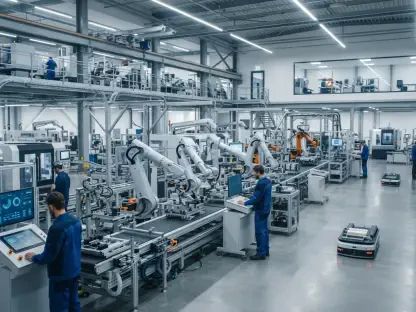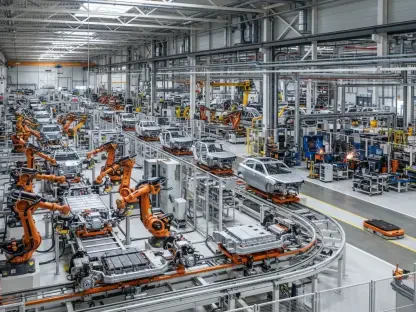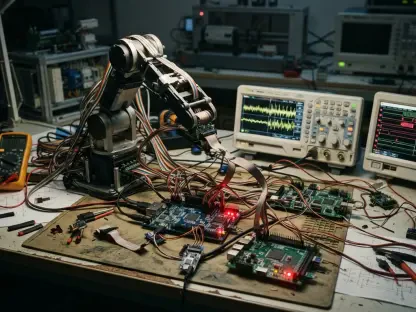

The pharmaceutical industry stands at a critical juncture where the monumental success of laboratory-based drug discovery must now be matched by equally sophisticated advancements in large-scale manufacturing infrastructure. For decades, the spotlight remained firmly fixed on the molecular breakthroughs occurring within sterile research environments, often leaving the actual production process to rely on legacy systems and rigid, linear workflows. However, the current landscape demands a fundamental restructuring of how treatments move from the petri dish to the patient. By repositioning the factory floor as a central hub of technological innovation, manufacturers are finally aligning their production capabilities with the rapid pace of scientific discovery. This transformation ensures that high-tech medicine is no longer a niche luxury but a reliably delivered commodity that can reach global populations with unprecedented speed and efficiency. The shift toward intelligent production represents a necessary evolution.
Navigating a New Era of Production Complexity
Modern medicine has moved far beyond the era of simple chemical pills, embracing intricate modalities like mRNA platforms, cell therapies, and personalized gene editing techniques. These advanced treatments require environments that are far more sensitive and reactive than traditional chemical manufacturing lines. Furthermore, this scientific progress is occurring alongside a global push for regionalized supply networks, intended to bolster national security and reduce the inherent risks of overextended global logistical routes. As therapeutic pathways become increasingly specialized and patient-specific, the physical systems that build them must evolve into flexible, modular entities. These systems are being engineered to handle heightened operational pressures while simultaneously maintaining sustainable costs in a volatile market. The transition to more resilient production models allows companies to mitigate the complexities of modern biology while ensuring that supply chains remain robust against unforeseen disruptions.
Statistics indicate that the healthcare sector is adopting artificial intelligence more than twice as fast as many other industrial fields, yet a significant disparity persists between clinical applications and industrial execution. While many healthcare systems and specialized physicians have already integrated algorithmic assistants into their diagnostic workflows, the manufacturing floor remains a vast reservoir of untapped potential. Bridging this specific gap is essential for translating revolutionary laboratory breakthroughs into scalable, real-world solutions that can reach patients without bureaucratic or logistical delays. The focus is shifting toward creating a seamless pipeline where digital intelligence governs every stage of the product lifecycle, from initial chemical formulation to final packaging. By addressing the “next frontier” of industrial automation, the pharmaceutical sector can ensure that the promise of advanced medicine is not hampered by the limitations of outdated manufacturing methodologies or slow reaction times.
Harnessing Data for Precision Operations
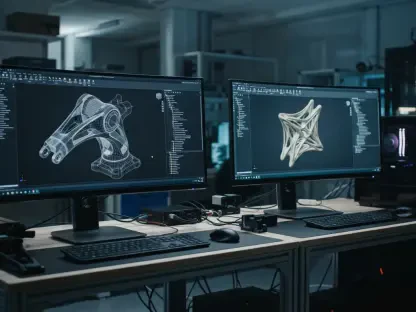
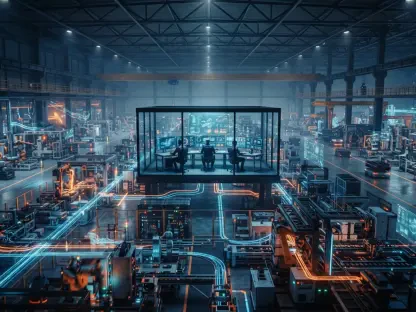
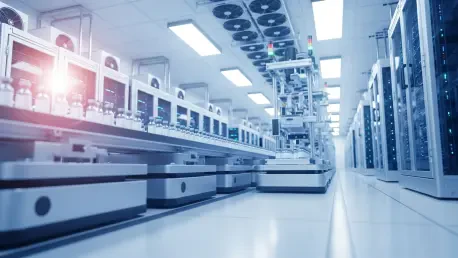
The modern factory of the future relies heavily on the implementation of digital twins and real-time telemetry to transform standard operations from reactive responses into proactive management strategies. By creating high-fidelity virtual replicas of entire production environments, companies can simulate facility operations and identify potential bottlenecks before any physical construction begins. These digital models allow engineers to experiment with different configurations and stress-test systems under varying conditions, ensuring that the final physical plant is optimized for maximum throughput. Furthermore, predictive analytics permit maintenance teams to anticipate mechanical failures well before they occur, which drastically reduces the incidence of costly downtime. Through continuous monitoring of equipment health and environmental parameters, manufacturers maintain a steady, uninterrupted flow of life-saving products. This level of precision is becoming the baseline requirement for staying competitive in an industry.
Strategic investments in yield optimization are already delivering measurable returns, with several leading manufacturers reporting production increases of nearly ten percent through the use of AI-powered analytics. This gain in efficiency is profound, as it allows for the production of millions of additional doses without the need to expand the physical footprint of an existing facility. Major industry players, such as Sanofi, Eli Lilly, and Moderna, are currently leading this charge by integrating high-performance computing clusters and advanced algorithmic tools into their core operations. These technologies ensure total quality control by monitoring chemical reactions at the molecular level and providing full transparency across the entire supply chain. Such advancements not only lower the per-unit cost of complex drugs but also significantly increase the accessibility of these treatments for patients in underserved regions. The result is a more equitable distribution of medical resources, powered by the sheer computational force.
Prioritizing the Human Workforce in a Digital Environment
Despite initial concerns that increased automation might eventually replace human workers, the current industrial shift emphasizes human-centric augmentation rather than wholesale replacement. Artificial intelligence is being deployed to handle the most monotonous routine data processing tasks and to identify complex patterns that would be invisible to the human eye. This leaves the ultimate oversight and critical decision-making responsibilities to skilled professionals who understand the nuances of the regulatory landscape. In this collaborative model, algorithms act as sophisticated tools that enhance human expertise rather than subverting it. Ensuring that accountability and professional judgment remain at the heart of the manufacturing process is vital for maintaining the high safety standards required in pharmaceutical production. This synergy between machine precision and human intuition creates a safer, more reliable environment where experts are empowered to focus on high-value problem-solving rather than administrative data entry.
As more than half of all current industry roles are expected to be fundamentally redefined by digital integration in the coming years, the workforce must cultivate a new set of core competencies. Data literacy, digital risk awareness, and critical reasoning are becoming just as essential as traditional expertise in mechanical or chemical engineering. The successful employee of the future must be comfortable interpreting AI-generated insights and translating them into actionable operational changes on the floor. Empowering employees with these digital tools allows teams to solve multifaceted problems with a level of precision and coordination that was previously unattainable through manual methods. Companies are increasingly investing in internal training programs that bridge the gap between biological sciences and data science, creating a new class of “biotech-digital” professionals. This shift ensures that the human element remains the most versatile asset in the factory, capable of navigating the complexities of production.
Scaling Innovation Through Cross-Sector Collaboration
Transforming the industrial landscape at scale requires a collaborative “triple-helix” approach that involves active participation from industry leaders, academic institutions, and government bodies. Pharmaceutical companies must move beyond isolated, small-scale pilot programs and fully integrate digital capabilities across their entire global organizational structure and supply chain. At the same time, engineering schools and vocational training programs must modernize their curricula to ensure that the next generation of technicians and scientists is fully prepared for a digital manufacturing environment. This educational realignment is necessary to produce a workforce that can maintain and innovate upon the complex systems now being deployed. By fostering a culture of continuous learning and interdisciplinary cooperation, the industry can create a sustainable ecosystem where technological advancements are rapidly adopted and refined. This holistic approach ensures that innovation is shared as a broader standard for the entire pharmaceutical sector.
Policymakers also recognized that intelligent manufacturing stood as a vital matter of public health and national resilience, rather than just a corporate priority. By supporting diverse innovation ecosystems and funding large-scale reskilling initiatives, governments helped to accelerate the transition toward future-ready industrial networks that prioritized patient outcomes over legacy processes. This collective effort ensured that the pace of pharmaceutical production finally aligned with the rapid speed of scientific discovery, making modern medicine deliverable to everyone who needed it regardless of their geographic location. The successful integration of predictive systems and automated oversight established a new benchmark for global manufacturing excellence. Industry leaders moved toward decentralized production models that reduced environmental impact while maximizing local availability. These strategic actions transformed the factory floor into a dynamic environment where data and biology worked in harmony to solve medical challenges.