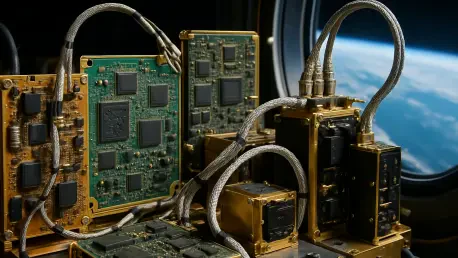

The global demand for sophisticated satellite electronics has reached an unprecedented peak as private and public sector players accelerate their deployment of massive constellations in low Earth orbit. To address this rising pressure on the aerospace supply chain, the French electronics specialist EREMS recently inaugurated a massive expansion of its headquarters in Flourens, effectively doubling its production and testing surface area to meet the rigorous standards of modern space missions. This strategic move represents a significant milestone for the European aerospace ecosystem, as it ensures that critical components for power management, data processing, and payload control remain available during a period of high international competition. By investing in state-of-the-art infrastructure, the company has positioned itself as a pivotal hub for the design and manufacturing of flight-ready hardware that must survive the harsh environments of space while maintaining extreme reliability and longevity.
Strategic Expansion: Infrastructure and Capacity Growth
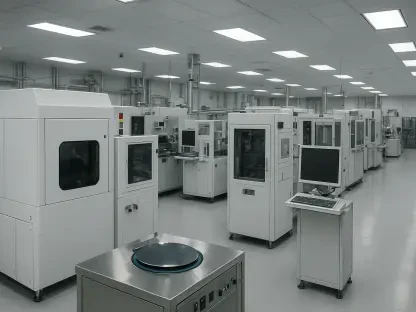
The centerpiece of this industrial expansion involves the integration of high-grade cleanrooms designed to handle the delicate assembly of space-grade printed circuit boards and sensitive sensors. These facilities adhere to ISO 7 and ISO 8 standards, providing a controlled environment where particulate contamination is virtually non-existent, which is a mandatory requirement for long-term satellite functionality. The added floor space allows for a more streamlined workflow, separating the initial research and development phases from the high-volume assembly lines now required by commercial satellite operators. This architectural shift facilitates a higher throughput of complex systems, such as power distribution units and battery management systems, which are essential for the survival of spacecraft in orbit. The expansion also incorporates advanced thermal vacuum chambers and vibration test benches, enabling the company to verify the structural integrity of its electronics under simulated launch conditions.
The shift toward modular and standardized electronics has allowed the company to participate more effectively in the NewSpace movement, where cost-effectiveness and rapid deployment are prioritized. This new facility serves as a testing ground for innovative manufacturing techniques that bridge the gap between traditional, high-cost space hardware and more accessible commercial-off-the-shelf components. By utilizing the doubled capacity, the engineering teams have been able to dedicate specific lines to the production of standardized platforms that can be easily customized for various mission profiles, from signal intelligence to Earth observation. This versatility is supported by a robust supply chain management system that ensures the traceability of every electronic component, a feature that remains a non-negotiable standard for space-faring hardware. The ability to scale production while maintaining such high levels of oversight provides a unique advantage for partners looking to grow alongside their own constellation schedules.
Stakeholders recognized that the successful completion of this expansion set a new benchmark for the agility required in the modern aerospace manufacturing sector. Industry experts noted that the integration of digital twins and predictive maintenance tools within the new facility allowed for an unprecedented level of control over the production environment. It became clear that the focus shifted toward sustainable manufacturing practices, where the reduction of energy consumption in cleanrooms and the recycling of precious metals from prototyping waste became standard operational procedures. The initiative established a framework for future modular expansions, suggesting that the ability to scale infrastructure in response to real-time market shifts was a vital component of long-term viability. By prioritizing these strategic upgrades, the organization effectively anticipated the requirements for more complex lunar missions, ensuring that reliability remained the cornerstone of all future deep-space exploration.