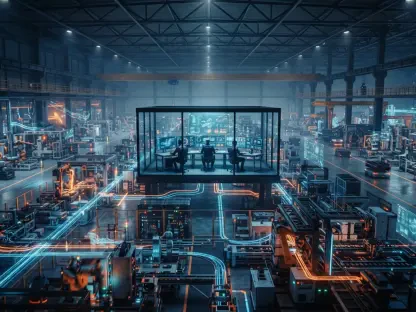

The movement of a single container ship through a narrow maritime passage often determines whether a farmer in the Midwest can afford fertilizer or if a hospital in London can operate its medical imaging equipment. While the Strait of Hormuz remains a primary focus due to its role in energy transport, its influence extends far deeper into the global economy, controlling the flow of a third of the world’s liquefied natural gas and essential industrial precursors. When these maritime chokepoints tighten, the resulting disruptions move with a velocity that traditional logistics systems cannot match, leaving corporations to manage crises using outdated information. The shift from a “just-in-time” philosophy to a “just-in-case” strategy has rendered old management methods not only inefficient but fundamentally dangerous to business continuity.
The Invisible Thread That Keeps Modern Life From Unraveling
Global trade functions as a delicate web where a disturbance in one strand vibrates through the entire structure. The reliance on specific transit points means that industrial components and consumer goods are often one geopolitical event away from a total standstill. For instance, the agricultural sector depends heavily on specialized chemicals that must pass through volatile regions, meaning a localized conflict can quickly become a global food security issue. Businesses that previously ignored these distant variables now find that their entire operational stability is tied to the physical security of remote waterways and land corridors.
This interconnectedness has transformed the nature of logistics from a back-office function into a primary strategic concern. In the current landscape, the ability to track a cargo vessel is no longer sufficient; companies must understand the systemic impact of that vessel being delayed by even forty-eight hours. The legacy systems used by most firms often result in “chasing ghosts,” where managers react to data that is already several days old. This lag creates a perpetual state of catch-up, where the financial and operational costs of a disruption are fully realized before any mitigation strategies can be implemented.
Why the Global Supply Chain Is More Vulnerable Than Ever
The fragility of modern trade stems from a combination of aging physical infrastructure and a surge in geopolitical friction. Beyond the traditional maritime routes, new bottlenecks have emerged in the “Gulf Skies” and specialized air corridors where regulatory shifts can ground cargo flights without warning. These air chokepoints are particularly critical for high-value, low-volume goods such as pharmaceuticals and microchips. As regional conflicts create sudden “no-go” zones, the administrative burden of finding alternative routes adds a layer of complexity that human planners struggle to navigate in real time.
High-tech manufacturing faces unique risks due to the concentration of raw material sources. Helium, which is vital for the semiconductor industry and medical technology, is produced in high volumes in only a few specific areas. A stalemate in a single shipping lane could effectively freeze the production of automobiles and consumer electronics worldwide. When these physical limitations are combined with escalating tariff wars, the global trade network becomes a high-stakes puzzle. The administrative friction of changing regulations often moves faster than the physical movement of goods, creating a environment where a cargo shipment might be legally stranded while still in transit.
The Agentic Revolution: Moving From Reaction to Autonomy
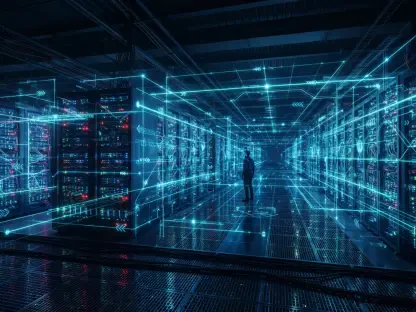
Traditional artificial intelligence has served as a sophisticated alert system, but agentic AI represents a transition toward actual problem-solving. While older platforms relied on “batch-based” processing—essentially looking at a snapshot of the past—agentic systems operate on an event-driven model. This technology creates a mesh of autonomous agents that can monitor individual containers and cross-reference their status against global demand patterns. If a port closure occurs, the system does not merely send an email; it initiates an immediate search for alternatives, evaluating the cost and time trade-offs of rail, air, or secondary sea lanes.
The primary advantage of this autonomous approach is the ability to run thousands of “what-if” simulations in a fraction of a second. An agentic system can identify that a specific component on a delayed ship is required for a production line starting in three days and can automatically trigger a small-batch air shipment to fill the gap. This level of granular visibility ensures that micro-decisions are made at the speed of the crisis. By delegating these complex, multi-variable tasks to AI agents, human managers are freed to focus on high-level strategy rather than the minute details of rerouting individual palettes of goods.
Expert Consensus on the Cost of Inaction
Industry analysts and organizations like the International Energy Agency have noted that the greatest risk to modern enterprises is structural exposure caused by internal data silos. When the department managing warehousing cannot see the real-time financial implications of a delay, the company loses its ability to prioritize high-value shipments. Experts argue that the “nervous system” of an organization—spanning its finance, procurement, and logistics arms—must be unified into a single data stream. This integration is no longer a luxury but a requirement for surviving the baseline level of volatility seen in the current market.
Logistics leaders have reached a consensus that “black swan” events are now the standard operating environment. Research into corporate performance indicates that firms failing to transition to real-time data movement are essentially flying blind. These organizations often discover a problem only after it has impacted their quarterly earnings, at which point the damage to customer trust and market share is already done. The consensus is clear: the cost of upgrading to an autonomous, event-driven infrastructure is significantly lower than the cumulative cost of repeated, unmanaged supply chain failures.
A Framework for Building a Resilient, AI-Driven Logistics Core
Navigating this era of volatility required a fundamental shift in how businesses approached their infrastructure. The first step involved the implementation of an event-driven data platform that dissolved the boundaries between departments. By ensuring that the CFO and the warehouse manager viewed the same real-time figures, companies eliminated the friction that usually slowed down critical decision-making. This foundation allowed for the deployment of agentic AI to handle the micro-decisions that human planners often missed, such as redistributing inventory across regional hubs before a storm or a strike could disrupt local delivery.
The successful integration of these technologies demonstrated that supply chains could be transformed from a vulnerability into a competitive advantage. Companies that adopted the agent mesh model maintained seamless customer experiences even when global maritime lanes faced significant closures. This transition established a new standard where resilience was built directly into the software, allowing for autonomous re-planning and proactive risk management. Ultimately, the adoption of these agentic tools provided the only viable pathway for businesses to thrive in an environment defined by constant, unpredictable change.