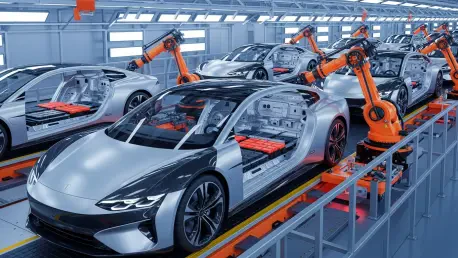

The global automotive industry has reached a definitive milestone where electric propulsion is no longer viewed as an experimental alternative but as the primary benchmark for all modern transportation technology. This transformation has been driven by a confluence of rapid engineering breakthroughs and a fundamental shift in consumer expectations that prioritized sustainability without sacrificing performance. As the market enters this mature phase, the primary challenges of the past, such as limited range and sparse charging networks, have largely been addressed through systemic innovation and aggressive infrastructure investment. Buyers in 2026 are finding themselves in a position where choosing a battery-electric vehicle is often the most sensible financial decision rather than a niche lifestyle choice. This period represents the culmination of years of intense research and development, resulting in a diverse fleet of vehicles that cater to every imaginable demographic and use case.
Economic Forces: The Drivers of Competitive Pricing
The current market landscape is characterized by a fierce and relentless price war that has brought electric vehicle ownership within reach of the average consumer. Major international manufacturers have significantly reduced their manufacturing costs through the implementation of massive, integrated production facilities and more efficient supply chain management. This competitive pressure has been amplified by the entry of aggressive brands from overseas that have challenged established legacy automakers to rethink their pricing structures and feature sets. Consequently, the price gap between electric models and their traditional internal combustion counterparts has narrowed to the point of near parity in many segments. Government incentives continue to play a supportive role, but the intrinsic decrease in battery production costs remains the most significant factor in driving down sticker prices across the board.
Beyond the initial purchase considerations, the financial stability of operating an electric vehicle has become a compelling argument for widespread adoption. Utility providers and private charging networks have established more predictable pricing models, allowing drivers to accurately forecast their monthly transportation expenses with greater precision than ever before. Advanced energy management software within modern vehicles now allows for seamless integration with home energy systems, enabling owners to take advantage of off-peak charging rates automatically. This ecosystem of financial predictability, combined with the inherently lower maintenance requirements of electric drivetrains, has shifted the total cost of ownership in favor of electrification. As a result, the secondary market for used electric vehicles has also begun to stabilize, providing a reliable entry point for budget-conscious buyers who were previously hesitant to enter the market.
Small Cars: The Resurgence of Purposeful Urban Design
Manufacturers have successfully revitalized the compact car segment by embracing a philosophy of retro-modern aesthetics that blends nostalgic design with cutting-edge technology. For several years, the profitability of small electric cars was hindered by high battery costs, but the advent of more energy-dense and cost-effective chemistries has changed the equation. Modern hatchbacks now offer striking visual identities that pay homage to classic models while providing the efficiency and connectivity expected by today’s urban dwellers. These vehicles are designed to navigate crowded city streets with ease, offering a level of agility and parking convenience that larger SUVs simply cannot match. This resurgence of the small car is not merely a matter of economy; it is a celebration of efficient space utilization and bold styling that appeals to a younger, design-conscious demographic.
The focus in this segment has shifted toward refining the driving experience to ensure that smaller vehicles feel substantial and premium despite their compact footprints. Engineering teams have prioritized steering precision and suspension tuning to create a “warm” and engaging personality for these cars, moving away from the clinical feel of earlier prototypes. Interior quality has also seen a significant upgrade, with sustainable materials and high-resolution displays becoming standard even in entry-level models. By treating the compact electric car as a desirable object rather than a utilitarian compromise, brands have tapped into a growing market of consumers who value character and maneuverability. This approach has proven that electrification can breathe new life into traditional vehicle categories, making them relevant for a new generation of drivers who prioritize urban practicality.
Aerodynamics: The New Frontier for Range Efficiency
A major design shift toward “streamliner” silhouettes has become the hallmark of the mid-sized sedan and station wagon segments. Instead of simply installing larger and heavier battery packs to increase range, engineers are now obsessed with reducing drag coefficients to maximize every kilowatt-hour of energy. This focus on aerodynamic efficiency has led to the development of sleek, low-slung profiles that cut through the air with minimal resistance, significantly extending high-speed cruising range. These vehicles often feature active aerodynamic elements, such as motorized shutters and retracting door handles, which optimize airflow in real-time based on driving conditions. This commitment to efficiency has allowed manufacturers to achieve impressive range figures while maintaining a sophisticated and futuristic aesthetic that distinguishes these models from the boxier shapes of the past.
The move toward dedicated electric architectures has been instrumental in enabling these aerodynamic breakthroughs, as designers are no longer constrained by the bulky components of internal combustion engines. By placing the battery flat in the floor and utilizing compact electric motors, brands have been able to extend wheelbases and lower hood lines, creating silhouettes that were previously impossible to achieve. This is particularly evident in the growing popularity of electric station wagons, which offer the cargo capacity of an SUV with the superior handling and efficiency of a sedan. These “long-roof” models represent a logical choice for families who require versatility but are unwilling to sacrifice the aerodynamic benefits that lead to shorter charging stops during long-distance travel. The industry has reached a consensus that solving range anxiety is as much about the shape of the vehicle as it is about the chemistry of the battery.
Family Transport: Innovation within the SUV Category
The SUV remains the most fiercely contested segment of the market, but the current generation of crossovers has moved past the “brute force” approach to electrification. Modern family SUVs are now designed with sophisticated weight management strategies that utilize lightweight alloys and high-efficiency heat pumps to maintain performance in all weather conditions. By focusing on front-wheel-drive configurations for standard models, manufacturers have been able to reduce mechanical complexity and improve energy consumption without compromising the interior space that families depend on. This shift has resulted in vehicles that feel surprisingly nimble and responsive, dispelling the notion that a large electric SUV must necessarily feel heavy or cumbersome on the road.
At the higher end of the SUV market, software integration and cabin experience have become the primary areas of differentiation. The traditional dashboard filled with physical buttons has been replaced by expansive, high-resolution interfaces that utilize augmented reality and voice-activated controls to manage everything from navigation to climate. These vehicles serve as mobile living rooms, offering a level of connectivity and entertainment that keeps passengers engaged during long journeys. Furthermore, next-generation battery technology in premium SUVs now allows for significantly faster charging times, with many models capable of adding hundreds of miles of range in less than twenty minutes. This combination of interior luxury and technological prowess has solidified the electric SUV’s position as the gold standard for modern family transportation.
Luxury Transport: The Evolution of High-Capacity EVs
The electrification of the largest vehicle categories has finally reached a point where interior volume and luxury are no longer compromised by the presence of large battery packs. Large seven-seat vehicles have emerged as legitimate contenders in the luxury space, providing a serene and vibration-free environment that internal combustion engines cannot replicate. These high-capacity models utilize their massive footprints to house large-scale battery arrays that provide ample range even when the vehicle is fully loaded with passengers and cargo. The silent operation of electric motors enhances the sense of luxury, making these vehicles ideal for long-distance cruising and executive transport where comfort and privacy are paramount.
In the flagship luxury sedan sector, the focus has shifted toward creating a comprehensive “chauffeur-driven” experience that rivals the world’s most prestigious traditional limousines. Rear-seat passengers are now treated to cinema-grade displays, reclining massage seats, and advanced noise-cancellation technology that isolates the cabin from the outside world. This emphasis on the passenger experience is supported by sophisticated air suspension systems that read the road ahead and adjust in milliseconds to ensure a perfectly smooth ride. While these vehicles are capable of staggering acceleration, their true value lies in the effortless way they deliver power and the technological sophistication of their interiors. As a result, the electric limousine has become the ultimate status symbol for those who demand the pinnacle of comfort and environmental responsibility.
Performance Driving: Bridging the Emotional Gap
A significant challenge for the electric vehicle industry was addressing the perception that battery-powered cars lacked the soul and mechanical engagement of traditional sports cars. By 2026, performance divisions have successfully bridged this emotional gap through the creative application of software and haptic feedback. High-performance electric models now feature simulated gearshifts and curated auditory signatures that mimic the crescendo of a high-revving engine, providing the driver with the tactile cues they need to feel connected to the machine. These systems are not merely gimmicks; they are sophisticated tools that help drivers judge speed and deceleration during spirited driving, making the experience more intuitive and rewarding.
This evolution has forced even the most traditional performance brands to adapt their strategies, leading to a new era of “software-defined” driving dynamics. By precisely controlling the torque at each individual wheel, engineers can manipulate the handling characteristics of a car to suit the driver’s preference, ranging from rock-solid stability to playful oversteer. This level of adjustability allows a single vehicle to function as a comfortable daily commuter and a focused track machine at the touch of a button. The result is a generation of performance cars that are not only faster than their predecessors but also more versatile and engaging. The emotional connection to the vehicle is now being forged through the seamless interaction between human input and intelligent software, proving that the thrill of driving is very much alive in the electric age.
Industry Trends: Dedicated Platforms and Alternative Energy
The most successful vehicles currently on the market are those built on dedicated electric platforms rather than those adapted from older, multi-energy designs. These ground-up architectures allow for optimal placement of components, resulting in better weight distribution, more interior space, and superior crash safety. Manufacturers that invested early in these bespoke platforms are now reaping the rewards of higher efficiency and lower production costs, while those who attempted to “convert” existing gasoline models are finding it increasingly difficult to compete on performance and packaging. This shift underscores the importance of fundamental engineering in a market where software and electronics often take center stage.
While battery-electric vehicles are the dominant force in 2026, the industry continues to explore and refine alternative zero-emission technologies for specific applications. Hydrogen fuel cell technology has found a stable niche in heavy-duty trucking and long-haul transport, where the rapid refueling times and lower weight of hydrogen tanks offer a clear advantage over massive battery packs. Simultaneously, research into synthetic e-fuels continues to provide a potential pathway for maintaining classic internal combustion engines and specialty high-performance cars without increasing the carbon footprint. Despite these various avenues, the sheer efficiency and established infrastructure of battery-powered systems have made them the primary choice for the vast majority of consumer vehicles. The coexistence of these technologies ensures a versatile and resilient transportation ecosystem that can meet a wide variety of global needs.
Navigating the Path Forward for Sustainable Mobility
The transition to electric mobility has successfully navigated its most turbulent phase by focusing on the total ecosystem of the driver. Stakeholders in the automotive and energy sectors collaborated to standardize charging protocols and streamline the payment process, which significantly reduced the friction of long-distance travel. Buyers who moved into the electric market found that the reliability and performance of their vehicles surpassed their initial expectations, leading to a surge in brand loyalty and positive word-of-mouth. This period of growth was supported by a renewed focus on battery recycling and sustainable mineral sourcing, ensuring that the environmental benefits of electrification were not undermined by its supply chain. The industry moved past the novelty of electric drive and began to treat it as a mature, refined technology that served the needs of the public.
Looking toward the immediate future, the focus must now remain on the continued expansion of the secondary market and the long-term health of the power grid. Ensuring that older electric vehicles remain viable and maintain their value will be crucial for protecting consumer investments and encouraging a healthy turnover of the fleet. Municipalities and grid operators must continue to implement smart-charging solutions that balance the load of millions of vehicles while maximizing the use of renewable energy sources. The successful integration of these systems will determine how effectively the global community can meet its climate goals while maintaining the freedom of personal mobility. By maintaining a commitment to transparency and user-centric innovation, the automotive world can ensure that the progress made so far leads to a truly sustainable and efficient transportation future.