
Kwame Zaire is a veteran manufacturing expert specializing in production management and predictive maintenance. With a career focused on the intersection of high-tech equipment and industrial safety, he is a leading voice in the evolution of pharmaceutical packaging systems. In this discussion, we explore the strategic implications of the $60 million expansion at Schott Pharma’s Pennsylvania facility, examining how modern automation and federal partnerships are reshaping the domestic supply chain for life-saving biologics and sterile injectables.
How did the collaboration with federal authorities influence the scale of this $60 million project and its impact on the domestic supply chain?
The partnership with the U.S. Biomedical Advanced Research and Development Authority, or BARDA, was the catalyst that allowed this expansion to reach its ambitious $60 million scope. By securing this federal support, the facility in Lebanon, Pennsylvania, has transitioned into a critical hub for “local-for-local” manufacturing, ensuring the U.S. isn’t dependent on foreign production for essential drug containers. This investment creates a reinforced supply chain where the hum of new production lines translates into faster access to vaccines and emergency medicines. It represents a strategic shift where domestic capacity is prioritized to protect national health during critical periods.
What technical advancements were integrated during this expansion to specifically handle the delicate requirements of modern biologics?
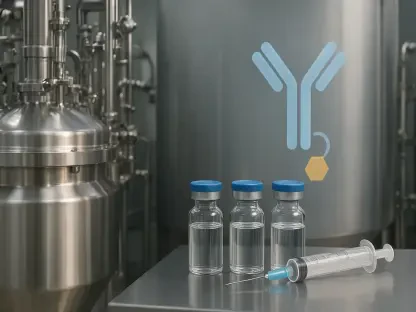
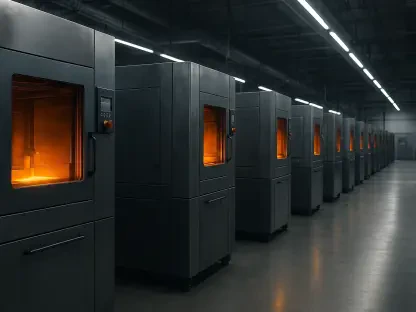
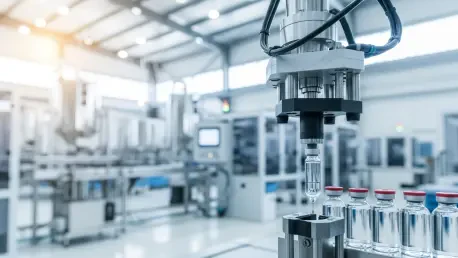
The project introduced sophisticated automation and converting technologies that have more than tripled the local capacity for high-value pharmaceutical solutions. This site is now one of only two Schott Pharma facilities worldwide capable of producing EVERIC pure vials, which are engineered for extreme chemical durability and uniform inner surfaces. These features are essential for maintaining the stability of complex drug formulations over a long shelf life, preventing degradation of the medicine. When you observe these machines in operation, you realize the level of dimensional consistency required to ensure every vial meets the rigorous standards of the modern biologics industry.
How does the focus on ready-to-use vial configurations simplify the manufacturing process for companies handling temperature-sensitive medicines?
The shift toward adaptiQ pre-washed and pre-sterilized ready-to-use (RTU) vials is a massive operational victory for pharmaceutical manufacturers. By eliminating several manual preparation steps, these configurations significantly reduce the risk of contamination and allow for much greater filling flexibility on the production floor. This is particularly vital for sensitivity-heavy products like GLP-1 therapies and antibody-drug conjugates, where any delay in the process can compromise the treatment. It streamlines the path to regulatory compliance, making the entire journey from the lab to the patient much more reliable and efficient for contract manufacturing organizations.
Given the recent €100 million investment in Hungary, how does the Pennsylvania facility fit into the broader global strategy for drug containment?
This expansion is a cornerstone of a long-term global growth strategy designed to meet a surging demand for specialty pharmaceutical packaging. While the Hungary site focuses on cartridge manufacturing starting in June 2025 with its own investment of more than €100 million, the Pennsylvania facility serves as a primary U.S. producer for sterilized vials. This dual-continent approach allows for a resilient global network that can pivot based on regional needs, whether it’s insulin production in Europe or emergency therapies in North America. It’s about building a specialized footprint that can handle the massive growth we are seeing in biosimilars, GLP-1 therapies, and obesity treatments.
What is your forecast for the future of pharmaceutical containment systems?
I expect we will see an even deeper integration of smart manufacturing where predictive maintenance and real-time data monitoring become the standard for every vial produced. As we move further into the era of personalized medicine and highly unstable biologics, the packaging will no longer be seen as just a container but as an active component of drug stability. We will likely see a continued trend toward localized, high-tech hubs that can rapidly scale production for novel drug formulations without the logistical hurdles of international shipping. Ready-to-use solutions will eventually become the mandatory standard for safety and speed in global healthcare systems.