
The global industrial landscape is currently experiencing a monumental paradigm shift as high-performance metal alloys are no longer restricted to traditional forging or casting methods. This transition from conventional subtractive techniques to advanced additive manufacturing has reached a critical tipping point where precision, speed, and material efficiency converge to redefine what is physically possible in engineering. As the market progresses, the global metal 3D printing sector is positioned for an era of unprecedented expansion, with financial forecasts suggesting a rise from the valuation near USD 1.23 billion in 2025 toward a staggering USD 6.45 billion by 2035. This growth reflects a profound move toward decentralized production models that prioritize specialized components over mass-produced generic parts. By leveraging these technologies, modern manufacturers are successfully reducing their carbon footprints and eliminating the material waste typically associated with milling or casting heavy industrial equipment.
Technological Foundations: The Pillars of Advancement
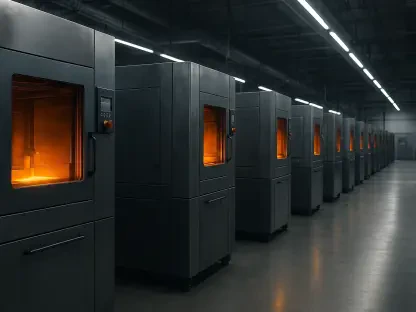
The foundational elements driving this industrial metamorphosis are rooted in the sophisticated interplay between material science and high-intensity laser systems. Selective Laser Melting and Electron Beam Melting have emerged as the primary engines of this change, allowing for the creation of internal cooling channels and lattice structures that were once impossible to fabricate. Unlike traditional methods that require expensive tooling and molds, additive processes utilize specialized metal powders such as titanium, inconel, and stainless steel to construct parts with near-perfect density. This capability ensures that every gram of material is utilized effectively, which is particularly vital for high-stakes sectors where every ounce of weight reduction translates into significant operational savings. Moreover, the refinement of powder atomization techniques has resulted in more consistent particle sizes, leading to superior surface finishes and mechanical properties that often surpass those found in traditional counterparts.
Beyond the physical hardware, the digital thread connecting conceptual design to the factory floor has become the backbone of modern additive manufacturing workflows. The integration of generative design software allows engineers to input performance parameters and let algorithms determine the most efficient shape, often resulting in organic, bionic-looking components that maximize strength-to-weight ratios. This digitalization eliminates the need for physical prototypes that consume time and resources, enabling a rapid iterative cycle that accelerates the entire innovation pipeline. Furthermore, the ability to store parts as digital files rather than physical inventory is fundamentally altering how companies manage their spare parts and supply chains. By maintaining a digital library of components, manufacturers can produce items on demand at the point of need, effectively ending the era of overproduction and the associated costs of maintaining massive warehouses for industrial spares.
Market Leadership: Key Innovators and Strategic Players
The trajectory of the global 3D printing metal market is being meticulously charted by a cohort of innovative organizations that have pioneered high-throughput industrial systems. Companies such as EOS GmbH and SLM Solutions Group AG have introduced multi-laser configurations that significantly reduce the build time for large-scale components without compromising on structural integrity. These systems utilize synchronized laser beams to scan the powder bed simultaneously, a feat of engineering that has bridged the gap between low-volume prototyping and serial production. In tandem with hardware improvements, the development of holistic ecosystems by players like 3D Systems Corporation has provided a streamlined path for manufacturers to adopt these technologies. By combining proprietary software, specialized metal powders, and high-precision printers, these firms ensure that the transition from a computer model to a finished industrial component is as seamless and repeatable as possible.
Complementing these heavy industrial systems, companies like Renishaw plc and Desktop Metal are focusing on the precision and accessibility of metal printing for a wider range of applications. Renishaw has leveraged its deep expertise in metrology to integrate advanced sensor arrays and monitoring tools directly into the printing chamber, allowing for real-time quality control that is essential for medical implants and aerospace parts. Meanwhile, the drive toward more affordable and user-friendly platforms has seen the rise of bound metal deposition and other high-speed extrusion technologies that bring metal printing to smaller fabrication shops. These advancements are democratizing the ability to produce complex metal parts, allowing small to medium enterprises to compete with larger corporations in niche markets. This shift is particularly evident in the production of custom tooling, where the ability to rapidly print a specialized piece of equipment can save weeks of downtime in a traditional factory.
Global Impact: Sector Applications and Regional Expansion
The most transformative impacts of metal additive manufacturing are currently being felt in the aerospace and healthcare sectors, where the demand for hyper-customized, high-performance parts is highest. In the aerospace industry, the ability to consolidate multiple assemblies into a single printed part has led to significant reductions in weight and complexity, which directly lowers fuel consumption and greenhouse gas emissions for modern aircraft. Similarly, the medical field has embraced 3D-printed titanium for orthopedic and dental implants, as the technology allows for the creation of porous structures that mimic natural bone, promoting faster healing and better long-term integration for patients. These applications demonstrate that the value of 3D printing metals lies not just in the manufacturing process itself, but in the superior functionality of the final products. This value proposition is driving a steady migration of critical components from traditional production lines.
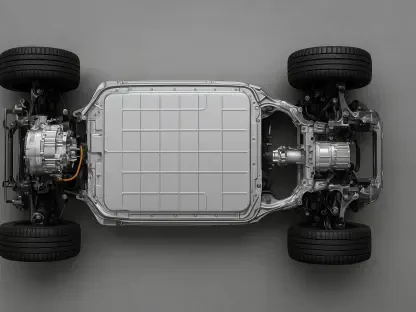
From a regional perspective, the geography of manufacturing is shifting as the Asia-Pacific region accelerates its adoption of smart factory technologies to challenge the current lead held by North America. While North American firms continue to dominate the defense and aerospace segments due to early institutional investments, the rapid industrialization in countries like China and India is fueling a massive demand for additive solutions in consumer electronics and automotive sectors. This regional expansion is closely tied to the global push for electric vehicles, where 3D-printed metal components are being used to develop more efficient thermal management systems and lightweight battery housings. As these technologies mature, the integration of artificial intelligence will likely lead to a decentralized production model where local print farms replace centralized factories. This shift would allow for a more resilient global supply chain, where digital files are transmitted across borders and printed locally.
Strategic Execution: Implementation and Future Readiness
The strategic shift toward metal additive manufacturing provided a clear path for industries to overcome the limitations of traditional material processing. It was established that the move from subtractive to additive methods successfully reduced industrial waste and enabled the creation of geometries that were previously considered impossible. Leaders in the field prioritized the integration of metrology and multi-laser systems, which ensured that high-speed production did not come at the cost of structural reliability or precision. Regional players across North America and the Asia-Pacific region coordinated their efforts to build decentralized supply chains, which effectively mitigated the risks associated with global logistics disruptions. Furthermore, the adoption of digital twin technology and generative design allowed engineers to optimize parts for performance rather than just manufacturability. These collective advancements solidified 3D printing as a cornerstone of modern industrial strategy.
Organizations implemented specialized training programs to bridge the skills gap in additive design and ensure that the workforce could handle sophisticated hardware. They also invested in standardized testing protocols to ensure part consistency across various printing platforms, which was a critical step for widespread industrial adoption. Decision-makers evaluated their supply chain vulnerabilities and transitioned to digital inventory systems to reduce overhead and storage costs. Collaborative efforts between material scientists and software developers produced more robust simulation tools that predicted thermal stresses before the printing process even began. These measures ensured that companies remained competitive in a rapidly evolving market while maintaining high safety standards for critical components. By focusing on these strategies, the global manufacturing community successfully integrated 3D-printed metals into the broader production ecosystem and paved the way for autonomous innovations.