
Billion Rise Knitting has engineered its Vietnam operations to mirror the technical expertise and consistency of its original manufacturing base in Qingyuan, China. This strategic pivot involves a capital injection of approximately $100 million, signaling a profound commitment to establishing a high-capacity manufacturing hub in the Thanh Hoa province of Vietnam. By expanding its geographic footprint, the company is effectively addressing the growing demand for flexibility and resilience in the global textile supply chain. This move is particularly relevant for international apparel brands specializing in high-performance sportswear and intricate intimate apparel, where technical precision is non-negotiable. As a vertically integrated manufacturer, Billion Rise is not just seeking cheaper labor; it is building a sophisticated ecosystem that integrates advanced fabric development with large-scale production capabilities. This initiative serves as a blueprint for how modern textile firms can navigate geopolitical shifts while maintaining the highest levels of industrial excellence across different territories.
A Phased Vision: Scaling Industrial Excellence in Thanh Hoa
The architectural and industrial foundation of this expansion rests on a massive 320,000-square-meter facility, meticulously designed to unfold through a phased development strategy. The first stage, which covers about 110,000 square meters, has already reached full operational status, allowing the company to immediately serve its global clientele from this new location. This initial success demonstrates Billion Rise’s ability to execute complex infrastructure projects in a foreign market while adhering to strict timelines. The sheer scale of the facility reflects a long-term belief in Vietnam’s rising prominence as a specialized textile hub capable of handling high-volume orders. This physical expansion is strategically segmented to ensure that each stage of the factory’s growth is matched by a corresponding increase in logistical support and technical staffing. By prioritizing a phased rollout, the company manages the inherent risks of such a large-scale investment while gradually scaling its regional influence through targeted growth.
Looking ahead to the subsequent phases of this industrial roadmap, the second stage of development is currently in progress and is slated for completion by the third quarter of 2027. This specific phase is dedicated to significantly enhancing the site’s internal capabilities regarding specialized knitting, advanced dyeing, and intricate printing processes. Following this, the final expansion phase is expected to reach its conclusion by the third quarter of 2029, at which point the entire complex will be fully optimized. Once these milestones are achieved, the Thanh Hoa facility is projected to reach an annual production capacity of 100 million meters of fabric, a figure that underscores its potential to become a dominant force in Southeast Asian textile manufacturing. This level of output is essential for meeting the massive requirements of global retailers who demand both high quantity and technical consistency. The completion of these phases will ultimately transform the region into a central node for technical fabric production.
Strategic Integration: Redefining Vertical Manufacturing and Technology
The decision to establish a primary presence in Vietnam is rooted in a strategic “China-plus-one” philosophy, which seeks to complement rather than replace the company’s existing operations in Qingyuan. This dual-hub strategy provides a necessary safety net for international brands that are increasingly wary of over-reliance on a single geographic source for their high-performance textiles. By maintaining twin centers of excellence, Billion Rise offers its partners a unique level of logistical flexibility, allowing them to shift production volumes or balance their sourcing portfolios according to changing economic or regulatory environments. This approach is the result of over a decade of meticulous planning, ensuring that the transition for brand partners is as seamless as possible. The Vietnam facility is essentially a functional clone of the Chinese operation, utilizing the same rigorous quality control protocols and technical standards. This ensures that a fabric produced in Thanh Hoa is identical to one manufactured in Qingyuan.
Furthermore, this strategic diversification directly addresses the evolving needs of supply chain resilience, which has become a primary concern for retailers in the current decade. The ability to offer two distinct manufacturing origins under a single management structure simplifies the procurement process for global brands while mitigating risks associated with trade barriers or regional disruptions. Partners can now split their sourcing orders between China and Vietnam without having to manage multiple vendors or navigate different quality benchmarks. This integration provides a level of stability that is rare in the technical textile sector, where fabric performance and aesthetic consistency are often difficult to replicate across different locations. By investing so heavily in mirroring its Chinese technical expertise, Billion Rise has created a reliable bridge between two of the world’s most important manufacturing regions. This synergy not only optimizes production schedules but also allows for more creative collaborations between fabric developers.
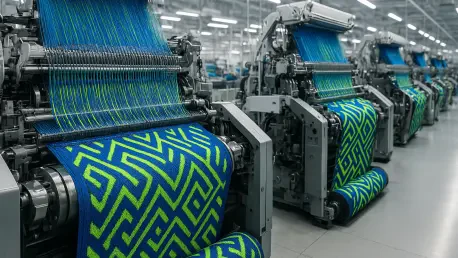
At the heart of the new facility’s operational success is a commitment to vertical integration, which allows the company to oversee every stage of the fabric lifecycle. From the initial development of synthetic materials to the final stages of finishing, Billion Rise manages the entire process in-house, ensuring complete control over quality and innovation. The Thanh Hoa plant is equipped with both warp and weft knitting machinery, enabling the production of a wide variety of fabric structures suitable for everything from compression leggings to delicate lingerie. This technical versatility is further enhanced by advanced printing capabilities, including high-definition digital and heat-transfer printing. These technologies allow the company to meet the rapidly changing aesthetic demands of the fashion industry while maintaining the performance characteristics required for athletic wear. By keeping these complex processes under one roof, the company reduces lead times and minimizes the potential for communication errors that often occur when multiple subcontractors are involved.
Beyond physical machinery, the company is leveraging digital transformation to redefine how it interacts with brand partners and manages its product development. Under the guidance of sales and marketing leadership, the firm has integrated Artificial Intelligence and 3D visualization tools into its core workflow. These digital assets allow brands to identify unmet market needs or “white spaces” and visualize new material concepts without the need for costly and time-consuming physical prototypes. This move toward a digital-first approach significantly accelerates the design cycle, allowing brands to bring innovative products to market faster than ever before. For example, 3D material libraries allow designers to see how a specific fabric will drape or move on a virtual model, facilitating more informed decision-making early in the development process. By combining this high-tech digital front-end with a massive physical production capacity, Billion Rise is effectively bridging the gap between innovative design and industrial-scale manufacturing.
Future Pathways: Establishing Sustainable and Resilient Supply Chains
Billion Rise successfully integrated environmental stewardship into its core operational model, establishing a precedent for technical textile manufacturing. By implementing advanced wastewater filtration and widespread solar power, the company addressed the heavy ecological footprint often associated with high-volume dyeing and finishing. This proactive shift toward greener production allowed the firm to align perfectly with the evolving ethical standards of major global retailers. These initiatives provided a blueprint for how technical fabricators could reduce their carbon emissions while simultaneously optimizing energy costs and operational efficiency. The transition to renewable energy sources and the minimization of chemical waste proved to be essential components of the factory’s long-term viability. Brand partners observed these changes as a necessary evolution, rewarding the manufacturer with increased loyalty and long-term contracts. This move solidified the facility’s role as a leader in sustainable industrial practices within the region.
Looking toward future considerations, the company moved beyond traditional manufacturing by leveraging its international sales network to strengthen its market position. The establishment of specialized offices in major global hubs like Singapore and the United States allowed the firm to maintain closer ties with designers and procurement teams. This global reach, combined with the technical power of the Thanh Hoa facility, suggested that the next phase of industry growth would depend on a blend of localized manufacturing and digital design tools. Industry leaders were encouraged to consider how a similar “China-plus-one” strategy could mitigate regional risks while maintaining high production standards. The successful rollout of the Vietnam hub demonstrated that vertical integration, when paired with strategic geographic expansion, offered a sustainable solution to modern supply chain volatility. By prioritizing these advanced infrastructures, the organization ensured that it remained a cornerstone of the technical apparel market.