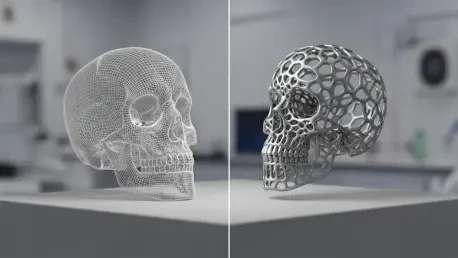

The transition from conventional surgical procedures to a fully integrated digital-to-physical workflow represented a seismic shift in how modern medicine addressed complex anatomical challenges at the Levin Center for Surgical Innovation and 3D Printing. Situated within the Ichilov Medical Center, this facility stands at the forefront of global personalized medicine by managing the entire lifecycle of a medical implant—from initial diagnostic imaging to the final manufacturing and implantation—entirely in-house. This centralized approach, often referred to as “Point-of-Care” manufacturing, effectively bridges the longstanding gap between clinical practice and industrial engineering, allowing for the creation of tailored anatomical solutions with unprecedented speed and precision. By removing the need for external third-party vendors, the hospital has streamlined the surgical process, ensuring that the transition from a virtual model to a physical titanium or polymer implant is both seamless and highly controlled. This innovative model has not only reduced the logistical complexities often associated with custom medical devices but has also empowered surgeons to take a direct hand in the design and fabrication of the tools they use. Consequently, the hospital has transformed into a high-tech manufacturing hub, providing hyper-personalized care that significantly improves patient outcomes while setting a new standard for modern orthopedic surgery.
Streamlining the Surgical Lifecycle: From Design to Quality
Precision Modeling: From Digital Visualization to Physical Reality
The inception of a patient-specific implant begins with the conversion of high-resolution CT and MRI scans into dynamic, three-dimensional digital models that provide an exhaustive map of the patient’s unique anatomy. This digital visualization phase enables a multidisciplinary team of orthopedic surgeons and bio-engineers to engage in sophisticated virtual surgeries, allowing them to test various approaches before the patient ever enters the operating room. By simulating the precise removal of bone and establishing exact resection margins within a specialized software environment, the team can craft a data-driven strategy that ensures the physical implant will integrate perfectly with the remaining biological structure. This level of meticulous planning is essential for complex reconstructions where millimeters of difference can determine the success or failure of a procedure. The ability to manipulate these 3D models from every angle gives clinicians a level of anatomical clarity that traditional imaging cannot provide, drastically reducing the risk of intraoperative surprises. Furthermore, this virtual environment serves as a critical communication tool, allowing engineers to translate the clinical requirements of the surgeon into the geometric specifications necessary for high-precision manufacturing.
Once the digital planning phase reaches completion, the Levin Center moves directly into the physical manufacturing of the device using industrial-grade 3D printers located on the hospital campus. These advanced machines utilize titanium alloys or specialized polymers to build the custom-fit implants layer by layer, ensuring that every contour of the digital model is accurately reproduced in the final physical hardware. This seamless transition from virtual design to production allows the hospital to deliver sterile, ready-to-use implants directly to the surgical suite in a fraction of the time required by traditional manufacturing methods. By bypassing the traditional supply chain, the center maintains complete control over every aspect of the process, including the critical sterilization and quality assurance steps that are vital for patient safety. This localized manufacturing capability is particularly beneficial for complex cases that require a fast turnaround, as it eliminates the weeks of waiting often associated with external custom orders. The result is a highly agile system where the distance between a patient’s diagnosis and their personalized surgical solution is minimized, allowing for faster intervention and more efficient use of hospital resources.
Industrial Rigor: Ensuring Long-Term Biological Compatibility
As the center enters its second decade of operation, the scope of its production has evolved from creating temporary surgical guides to manufacturing permanent, load-bearing implants that are designed to stay in a patient’s body for life. This shift represents a significant increase in both clinical responsibility and technical complexity, as these devices must meet rigorous standards for biomechanical durability and long-term biological compatibility. Engineers at the center focus on designing implants that can withstand the repetitive mechanical stresses of daily movement while ensuring that the materials used do not trigger adverse reactions within the human body. This requires a sophisticated understanding of how titanium surfaces interact with bone tissue over several years, necessitating a design philosophy that prioritizes both structural integrity and biological harmony. Moving into the realm of advanced medical manufacturing has transformed the hospital’s role, placing it at the forefront of medical device innovation. These permanent implants are not merely structural replacements but are active components of the patient’s skeletal system, requiring a precision of fit that ensures proper load distribution and prevents the degradation of surrounding healthy bone.
To support this mission of high-stakes manufacturing, the Levin Center achieved international ISO certification, a milestone that is typically reserved for large-scale medical technology corporations rather than hospital-based facilities. By implementing these strict industrial protocols for software validation and material selection, Ichilov has proven that clinical innovation can meet the highest global regulatory standards for safety and reliability. This certification serves as a formal validation of the hospital’s internal quality management systems, transforming the facility from a clinical center with a 3D printer into a verified medical manufacturing system. Surgeons can operate with the highest level of confidence, knowing that each custom-printed device has undergone the same rigorous testing and documentation as any mass-produced medical hardware. This regulatory achievement also facilitates a more structured approach to innovation, allowing the team to document the performance of new designs and materials in a way that contributes to the broader medical community’s understanding of 3D-printed solutions. By adhering to these global standards, the center has established a blueprint for how decentralized, hospital-based manufacturing can provide the same level of quality as industrial giants while remaining focused on individual patient needs.
Expanding Clinical Frontiers: Material Science and Intelligence
Specialized Reconstruction: Transforming Oncology and Trauma Care
The clinical impact of in-house 3D printing is most profoundly felt in the field of orthopedic oncology, where custom titanium implants are used to reconstruct skeletal structures after the removal of aggressive tumors. For many patients, these bespoke solutions represent the only alternative to limb amputation, as they provide a level of structural restoration that standard, off-the-shelf implants simply cannot achieve. These tailored reconstructions are designed to match the exact void left by the tumor removal, incorporating specific features that allow for the reattachment of muscles and ligaments to restore as much function as possible. This personalized approach to oncology surgery not only improves the functional outcomes for patients but also significantly enhances their long-term quality of life by preserving their physical independence. The ability to produce these complex reconstructions in-house means that oncology teams can act quickly, reducing the time a patient must wait for surgery while ensuring that the final implant is a perfect anatomical match. This intersection of oncological expertise and advanced engineering has redefined the boundaries of what is possible in reconstructive surgery, offering hope to patients facing some of the most challenging musculoskeletal conditions.
Beyond oncology, the center’s manufacturing capabilities have proven critical during national emergencies, specifically in the production of customized cranial and facial implants for trauma victims and injured soldiers. In these high-pressure scenarios, the ability to rapidly scan a patient and print a perfectly fitting titanium plate in a matter of hours has drastically shortened the timeline for neurological and reconstructive rehabilitation. These trauma-specific implants are designed to restore both the protective function of the skull and the aesthetic appearance of the face, which is vital for the psychological recovery of the patient. Furthermore, the center is advancing the use of porous “lattice structures” within its designs to encourage natural bone growth directly into the titanium implant, a process known as osseointegration. This biological bonding creates a more stable and permanent connection between the patient’s skeletal system and the artificial hardware, reducing the likelihood of long-term implant failure. By combining rapid-response manufacturing with advanced material science, the Levin Center has created a trauma care model that is both biologically sophisticated and logistically agile, ensuring that even the most complex injuries receive the best possible personalized treatment.
The Future of Integration: Mixed Reality and Bio-Printing
The center is also pioneering the integration of Mixed Reality technologies to unify multiple data streams during complex surgical procedures, providing clinicians with a comprehensive digital overlay of the surgical site. By wearing holographic headsets, surgeons can visualize internal anatomy, such as the exact location of a tumor or critical blood vessels, directly on the patient’s body in real-time. This system integrates data from surgical robotics, real-time vital signs, and pre-operative 3D models into a single, intuitive interface, reducing the need for surgeons to look away from the operating table. This holographic guidance provides a significant safety advantage during high-stakes maneuvers, as it allows for a more precise execution of the digital surgical plan developed earlier in the process. The use of mixed reality also facilitates better communication within the surgical team, as every member can view the same holographic data, ensuring that everyone is aligned on the surgical strategy. As this technology continues to evolve, it is expected to become an indispensable part of the modern operating room, further bridging the gap between digital planning and physical execution while minimizing the cognitive burden on the surgical staff.
To conclude the evolution of this medical model, the Levin Center established a framework where the convergence of engineering and surgery became the standard for high-complexity healthcare. Clinicians and researchers determined that the transition toward bio-printing and the use of hybrid materials represented the next logical phase in the pursuit of regenerative medicine. By analyzing the long-term success of titanium lattice structures, the team identified opportunities to integrate living tissue into 3D-printed scaffolds, effectively bridging the gap between mechanical support and biological regrowth. The hospital successfully implemented training programs that allowed the next generation of surgeons to master these advanced tools, ensuring that the decentralized manufacturing model remained sustainable and scalable. Leaders in the medical community recognized that the success of the point-of-care approach provided a clear roadmap for reducing systemic healthcare costs while simultaneously improving the precision of patient care. Ultimately, the integration of mixed reality and hyper-personalized manufacturing proved that a data-driven, collaborative environment could solve even the most daunting anatomical challenges. These developments paved the way for a future where every medical intervention was guided by a deep digital understanding of the individual patient, marking the definitive end of the era of one-size-fits-all medical solutions.