
The recent interim agreement between the U.S. and Iran has sparked a critical turning point for global energy security and maritime logistics. After a grueling 110-day period where the Strait of Hormuz was effectively sealed, major shipowners have finally begun the arduous process of moving their vessels through this strategic bottleneck. Kwame Zaire, a seasoned expert in manufacturing and maritime equipment, joins us to discuss the operational complexities of reopening a waterway that once carried a fifth of the world’s crude oil. We explore the logistical backlog of hundreds of stranded ships and the dangerous reality of navigating a passage still littered with naval mines.
The sudden movement of major tankers after months of paralysis is a significant development, but what does the atmosphere on the water look like for these crews who have been stranded since February?
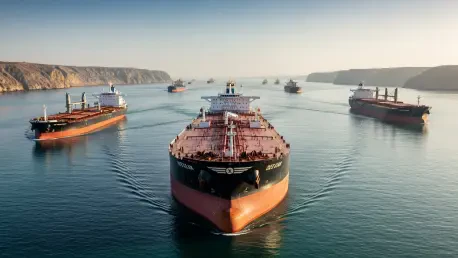
It is a mix of profound relief and extreme caution for the crews who have been marooned for 110 days in the Persian Gulf. Seeing vessels from major entities like the Grimaldi Group, Cosco, and NYK finally begin their transit is a historic milestone, yet the environment remains incredibly tense. The closure of this waterway triggered a global energy crisis because it normally handles one-fifth of the world’s crude oil supply, and that pressure hasn’t just vanished with a signature on an agreement. Even as the U.S. Navy lifts its blockade to allow movement into Iranian ports, the maritime data shows a slow trickle of progress, with only six verified crossings on Wednesday followed by 11 on Thursday.
With reports indicating that the main central passage of the strait is still compromised, how are navigators managing the physical dangers of the remaining naval threats?
The primary challenge right now is that the central “highway” of the Strait of Hormuz is essentially a no-go zone due to an estimated 80 mines that require clearing. This forces every captain to utilize the smaller northern route through Iranian waters or the southern route through Omani waters, which are the only paths currently deemed fully open. To put it in perspective, this is like taking a massive multi-lane freeway and forcing all the traffic onto the narrow hard shoulder because the middle lanes are blocked by debris. These alternative routes lack the capacity of the central passage, and we are looking at a timeline of weeks or potentially months before the main corridor is safe enough for standard operations.
Beyond the immediate danger of mines, the sheer scale of the backlog is staggering; how do you even begin to coordinate the exit of so many diverse vessels?
The logistical bottleneck is immense, with estimates showing that 550 merchant ships are currently lined up and preparing to exit the Persian Gulf. This is not a uniform fleet; it includes a complex mix of 160 tankers, 200 bulk carriers, 60 container ships, and at least 10 vehicle carriers, all of which have different draft requirements and speeds. Managing this exit strategy through the narrower side routes requires surgical precision to avoid collisions or further delays that could reignite market volatility. We are seeing a slow, phased approach where even sanctioned Iranian tankers are joining the flow, but the process of clearing over five hundred ships through “shoulder” routes will be a test of international maritime coordination.
What is your forecast for the full restoration of trade through the Strait of Hormuz?
My forecast for the Strait of Hormuz is that we will see a staggered recovery where “normal” transit volumes won’t return until the 80 mines in the central route are completely neutralized. While the opening of the northern and southern paths provides a vital pressure valve, they cannot replace the throughput of the main highway, meaning energy prices will likely remain sensitive to these logistical constraints. We must prepare for a transition period of several months where the maritime industry prioritizes safety over speed to ensure that the 550 stranded vessels can reach their destinations without further incident. Ultimately, the diplomatic agreement has opened the door, but the physical reality of clearing the water means the global supply chain won’t feel a full sense of relief until the central corridor is officially declared safe for all.