
The rapid decentralization of the global space economy has catalyzed a shift where private enterprises now dictate the pace of orbital innovation rather than acting as mere contractors to national agencies. Skyroot Aerospace has transitioned from an ambitious research startup into a sophisticated commercial entity, marking a critical milestone for the Indian aerospace sector. By moving beyond the experimental phase, the firm has positioned itself to address the growing discrepancy between the high demand for satellite deployment and the limited availability of reliable launch vehicles. This review examines the technological and economic framework that supports its objective of democratizing access to space through cost-effective and modular engineering.
Evolution of Private Spaceflight and the Skyroot Business Model
The trajectory of Skyroot reflects a broader industry movement toward the commercialization of low Earth orbit, where the traditional monopoly of government agencies has given way to lean, agile startups. Founded by veterans of the Indian Space Research Organisation, the company successfully bridged the gap between institutional expertise and the operational flexibility required in a competitive market. Their business model prioritized the elimination of bureaucratic overhead, focusing instead on rapid prototyping and vertical integration to reduce the costs associated with satellite insertion.
Unlike many competitors that rely solely on government grants, Skyroot adopted a multi-tier revenue strategy that combined launch services with high-precision manufacturing. This evolution was not merely about building a rocket but about creating a sustainable financial ecosystem within the aerospace supply chain. By aligning its goals with global demand for small-satellite constellations, the company moved toward a model that favored high-frequency missions over the occasional, massive payloads typical of the previous decade.
Technical Architecture and Revenue-Generating Components
The Vikram-1 Orbital Rocket and Launch Infrastructure
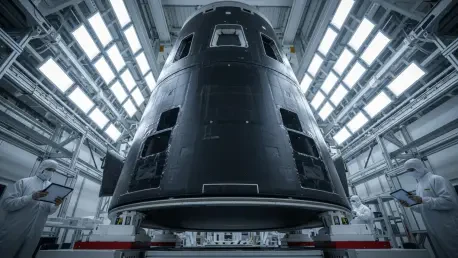
The Vikram-1 represents a masterclass in utilizing modern materials science to solve age-old aerodynamic challenges. Its primary structure consists of high-strength carbon-fiber composites, which significantly reduce the vehicle’s dry mass compared to traditional aluminum alloys, thereby maximizing the payload capacity relative to total weight. By employing solid-state propulsion, Skyroot simplified the logistical complexities of orbital flight, as these motors are easier to store and handle than liquid-fuel counterparts, allowing for shorter turnaround times between launches.
Current infrastructure at the Sriharikota launch site demonstrates a high state of readiness, indicating that the hardware is no longer theoretical but operational. The rocket was designed for modularity, meaning the stages can be swapped or modified to suit specific mission requirements without necessitating a total redesign. This flexibility is central to the firm’s ability to offer rapid deployment schedules to commercial clients who cannot afford the multi-year wait times associated with heavy-lift vehicles.
The Space Systems Division and Hardware Manufacturing
To mitigate the volatile nature of the launch industry, the Space Systems division was established as a high-margin manufacturing hub. This segment focuses on producing specialized components like composite motor cases and payload adaptors for an international client base. By monetizing these sub-systems, Skyroot secured a stable cash flow that sustains its primary research and development during the gaps between major launch windows. This vertical integration ensures that the company remains a vital supplier to the broader aerospace market even when its own rockets are not on the pad.
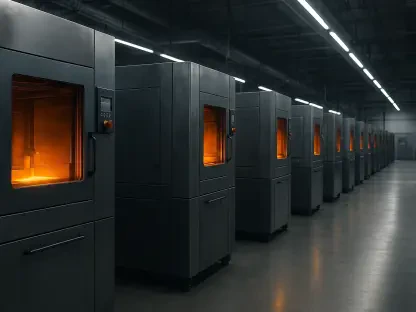
The manufacturing capability is a strategic hedge against the high risks of orbital insertion. While a single launch failure can be catastrophic for a startup, a robust manufacturing division provides a level of financial resilience that is rare in the “New Space” sector. This division utilized advanced 3D printing and automated composite winding techniques to lower production costs, allowing the firm to undercut established international competitors on component pricing without sacrificing technical precision.
Emerging Trends in the Global Launch Market
The industry has moved decisively toward the “space taxi” model, a trend that Skyroot has leveraged to distinguish itself from massive rideshare programs. While large providers like SpaceX offer lower prices per kilogram, they often require small satellites to be secondary payloads, meaning those satellites are dropped off in orbits that may not be optimal. Skyroot’s strategy focuses on dedicated missions that provide precise orbital placement, catering to operators who require specific altitudes or inclinations for Earth observation and specialized telecommunications.
Moreover, the integration of private firms into national space policies through frameworks like IN-SPACe has accelerated the validation of these commercial strategies. The global market is currently suffering from a supply-side bottleneck where the production of small satellites has outpaced the availability of small rockets. Skyroot positioned itself to fill this void by offering a dedicated service that treats small-satellite operators as primary customers rather than afterthoughts, effectively capturing a niche that larger launch providers find less profitable to serve.
Real-World Applications and Sector Deployment
Skyroot’s technological output finds its most significant application in the expansion of global connectivity and environmental monitoring. By providing reliable access to orbit, the company enables the deployment of large-scale constellations that monitor climate change, urban sprawl, and agricultural yields in real-time. These applications are critical for developing nations that require high-resolution data for infrastructure planning but lack the massive budgets traditionally needed to commission dedicated launches.
Beyond Earth observation, the firm has actively targeted international markets in Europe and North America, offering its manufacturing services to other private space firms and defense agencies. This cross-border deployment of technology demonstrates that the firm is not localized but is a global competitor. Its ability to manufacture bespoke aerospace components has allowed international partners to reduce their own development cycles, fostering a collaborative environment that accelerates the overall growth of the private space sector.
Technical Obstacles and Market Challenges
Success in the orbital launch market is never guaranteed, and Skyroot faces the quintessential “valley of death” common to aerospace startups. The primary hurdle is the consistent execution of orbital insertion, as any failure during the maiden flight of the Vikram-1 could jeopardize investor confidence and stall future contracts. While the firm has proven its suborbital capabilities, the jump to orbital velocity involves significantly higher thermal stresses and more complex navigation requirements that test the limits of their carbon-fiber architecture.
Financially, the company must navigate a period of high capital expenditure and negative EBITDA before reaching its long-term growth targets. Competition from established peers like Rocket Lab and Firefly Aerospace remains fierce, and Skyroot’s valuation currently reflects a discount due to its lack of a sustained flight history. Managing the high burn rate associated with quintupling its workforce while waiting for regulatory clearances and favorable weather windows remains a delicate balancing act for the management team.
Future Outlook and Strategic Growth Projections
Looking forward, the company intends to scale its operations to support a high-frequency launch cadence that was previously unimaginable for a private Indian firm. Projections suggest a massive expansion of both revenue and human capital, with plans to employ thousands of specialized engineers to drive the development of reusable launch technology. The shift toward reusability will be the next major technical milestone, as it is the only viable path to further reducing the cost per kilogram and maintaining competitiveness against global giants.
The strategic focus will likely shift toward integrated satellite services, where Skyroot provides not just the transport, but the entire orbital infrastructure for its clients. This would involve developing proprietary satellite buses and long-term orbital management systems. If the company successfully maneuvers through its upcoming orbital trials, it is expected to become the cornerstone of a new era in space exploration, where the barriers to entry for smaller nations and private enterprises are permanently lowered.
Conclusion: Assessment of Skyroot’s Commercial Viability
The review of the commercial strategy indicated that the firm successfully identified a critical gap in the small-satellite market. The strategic decision to diversify into hardware manufacturing proved to be an essential safeguard that provided financial stability during the high-stakes development of the Vikram-1 rocket. Analysts observed that the “space taxi” model offered a compelling value proposition to satellite operators who required precision over sheer volume. It was determined that the company’s emphasis on modularity and carbon-fiber engineering offered a necessary technological advantage over traditional metal-based systems.
Ultimately, the assessment concluded that the long-term success of the endeavor relied on the transition to reusable architectures to ensure sustained profitability. The organization demonstrated a clear path toward becoming a global aerospace leader by leveraging its deep technical roots and aggressive market positioning. Future growth was predicated on maintaining a high launch frequency and successfully navigating the complex international regulatory landscape. The strategy established a robust foundation for the Indian private space sector, proving that cost-effective innovation was achievable without compromising technical integrity.