
Kwame Zaire is a seasoned manufacturing expert who bridges the gap between complex electronics and heavy industrial equipment. With a professional focus on production management, he has become a respected thought leader in the fields of predictive maintenance, quality assurance, and operational safety. His insights are particularly valuable as we witness the transition of spacecraft from experimental prototypes to mass-produced vehicles capable of sustaining human life across the solar system. Our discussion covers the massive structural upgrades found in the latest V3 Starship, the critical role of these systems in NASA’s Artemis missions, and the logistical challenges of balancing safety with the ambitious goals of private space tourism to the moon and Mars.
The latest iteration of the Starship platform stands at an imposing 407 feet and features significant engineering overhauls. From a manufacturing and safety perspective, what do these structural changes tell us about the evolution of this heavy-lift system?
The jump to the V3 model is more than just adding a few feet to the height; it is a fundamental refinement of the rocket’s architecture intended to handle much higher stresses. By increasing the total height to 407 feet, the engineering team has managed to pack in significantly more engine thrust while redesigning the steering mechanisms with fewer but much larger and stronger grid fins. One of the most impressive technical feats is the new fuel transfer line, which is remarkably the size of an entire Falcon 9 first-stage booster, designed specifically to feed the 33 main engines. You can feel the shift toward long-term reliability in the stainless steel hull, which now houses vastly more navigation and computer power to ensure the spacecraft remains stable even when it reaches altitudes of 120 miles.
During the 12th test flight, we witnessed a mix of spectacular success and expected mechanical failure. How do you evaluate the performance of a spacecraft that successfully deploys satellites but ultimately erupts in flames upon impact?
In the world of rapid prototyping and iterative design, a flight that reaches the Indian Ocean after traveling halfway around the world is a massive goal for humanity. Even though some of the engines failed during the booster’s attempt at a controlled return, the ship maintained its heading 120 miles above the Earth while successfully releasing its payload of 20 mock Starlink satellites. The sight of those modified, camera-equipped Starlinks ejecting was a sensory milestone that provided us with our first clear, high-definition views of the craft while it was actually in flight. While the final impact resulted in a fireball, the fact that the ship plummeted upright and under seemingly full control until the very last second shows that the flight software and docking cones are maturing toward actual mission readiness.
NASA is currently balancing its hopes between two major private players for the Artemis program. How do the trajectories of Starship and the Blue Moon lander compare as we approach the 2028 landing goal?
The race between these two giants is heating up because the stakes involve billions of dollars and the first return of humans to the lunar surface since the Apollo 17 mission in 1972. While SpaceX has already conducted 12 test flights and reached the fringes of space multiple times, the competition at Blue Origin is still readying its prototype for a first moonshot later this year. NASA is playing a smart hand by planning a docking trial for the Artemis III mission next year, where astronauts in an Orion capsule will practice meeting up with these landers in Earth’s orbit. The ultimate goal for the Artemis IV mission in 2028 is to establish a permanent base near the lunar south pole, and having two viable lander options ensures that safety and redundancy remain the top priorities for the crew.
We are seeing a surge in private citizens, from seasoned entrepreneurs to bitcoin investors, booking passage to the moon and Mars. What does this shift toward private interplanetary travel mean for the rigorous standards of aerospace quality and safety?
The entry of private citizens like Dennis Tito and Chun Wang into the flight manifest represents a seismic shift in how we view the “customer” in aerospace manufacturing. When you have individuals booking the first-ever interplanetary missions to Mars or polar orbits in Dragon capsules, the pressure on predictive maintenance and quality control becomes incredibly personal and urgent. We are no longer just talking about professional astronauts with years of survival training; we are looking at a future where stainless steel ships must be fully reusable and “caught” by giant mechanical arms at the launch pad to ensure rapid turnaround. This commercial demand forces the industry to treat every sensor and every piece of navigation hardware with the same scrutiny we would use for a commercial airliner, despite the extreme and unforgiving environment of deep space.
What is your forecast for the next decade of lunar and Martian exploration?
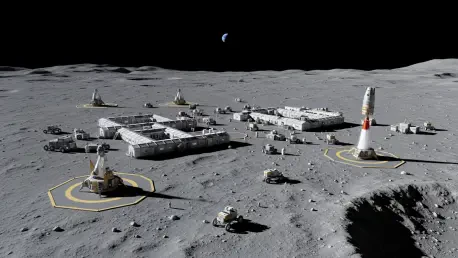
I believe we are standing on the precipice of a permanent human presence beyond Earth, where the lunar south pole becomes a bustling hub for both human researchers and autonomous robots. Within the next few years, the successful docking of the Orion capsule with platforms like Starship will prove that we can move people and heavy cargo across the void with repeatable, industrial precision. By 2028, once we see those first two astronauts step back onto the lunar dust, the focus will shift from the basic question of whether we can get there to the more complex logistical challenge of how we stay there. The transition to fully reusable rockets will drop the cost of spaceflight so significantly that missions to Mars will move from the realm of science fiction to a scheduled, everyday reality for both scientists and private explorers.