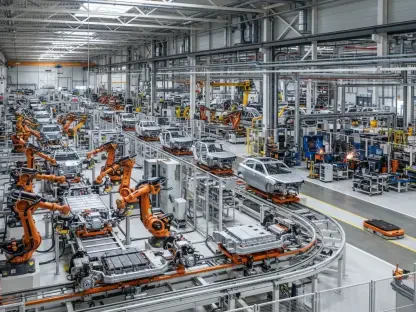

As autonomous systems reshape the modern battlefield and commercial logistics, the global race for aerial supremacy has shifted from the cockpit to the assembly line. The ‘Drone Dominance’ initiative seeks to move the United States beyond mere parity with global rivals to a position of absolute technological leadership. This comprehensive strategy, orchestrated by the White House and federal agencies, represents a fundamental pivot in national security and industrial policy. Instead of simply purchasing more aircraft, the government is now focused on reconstructing the domestic drone industrial base from the ground up. This involves an end-to-end overhaul of the entire lifecycle, ensuring that every element, from the specialized minerals used in airframes to the lines of code governing flight maneuvers, is both secure and resilient. By systematically eliminating vulnerabilities within the global supply chain, the current administration is establishing a manufacturing foundation that is entirely independent of foreign adversaries.
Industrial Synergy: Building a Comprehensive Ecosystem
Redefining the Domestic Production Landscape
A critical turning point in this policy evolution occurred during the inaugural “Drone Dominance” industry summit, which signaled a fundamental change in the federal approach to the unmanned aircraft sector. By gathering nearly one hundred representatives from specialized fields such as solid-state battery technology, high-resolution thermal sensors, and high-efficiency electric motors, the government demonstrated that a drone’s security is only as strong as its most basic component. This approach fosters a holistic ecosystem where the entire technological stack is scrutinized, ensuring that every screw and sensor meets rigorous national standards. The focus has transitioned from final assembly to the microscopic details of the production chain, aiming to move the nation toward a position of absolute global leadership in unmanned systems. This shift ensures that domestic manufacturers are not merely assembling foreign parts but are creating entirely indigenous systems that can withstand the pressures of modern geopolitical competition and supply disruptions.
Merging Military and Commercial Interests
The administration is intentionally blurring the lines between military and commercial supply chains to create a more robust and sustainable industrial base. Recognizing that a healthy defense industry requires a thriving commercial market to maintain continuous innovation and a highly skilled workforce, federal investments in critical technologies like advanced semiconductors are designed to produce a significant trickle-down effect. This dual-use strategy allows commercial drone manufacturers to access high-quality domestic alternatives to foreign-made components, creating the economies of scale necessary to make American drones price-competitive on the global stage. By synchronizing the requirements of the Department of Defense with the needs of the commercial logistics sector, the government is fostering a unified market that incentivizes private capital to flow into domestic high-tech manufacturing. This alignment ensures that the industrial base remains warm and capable of surging production during times of crisis, while providing a stable foundation for ongoing technological breakthroughs.
Supply Chain Transparency: Ensuring End-to-End Integrity
Mapping the Lifecycle of Critical Materials
One of the most significant pillars of the current policy is the requirement for total transparency through a rigorous mapping mandate for defense supply chains. Contractors are now required to provide a granular bill of materials that traces every single part back to its geographic and corporate origin, addressing the deep complexities of modern electronics and the sourcing of critical minerals. By tracing components from the raw material extraction stage to the finished product, the government can identify and mitigate potential risks at the very start of the production cycle. This proactive stance ensures that foundational materials are not sourced from regions that pose a significant geopolitical risk to national security or involve unethical labor practices. This transparency allows for the early identification of bottlenecks and dependencies, enabling the Department of Commerce to coordinate with domestic suppliers to fill gaps in the supply chain before they become critical failures in national defense capabilities.
Safeguarding Digital Infrastructure and Code
While physical hardware remains a primary focus, the “Drone Dominance” initiative also incorporates a sophisticated digital layer focused on software integrity and robust cybersecurity. Federal regulators have shifted the narrative from a simple focus on where a device was physically made to a more nuanced investigation of who has access to the data it generates and transmits. This shift means the origin of a drone’s flight control code and data processing algorithms is now considered just as vital as the origin of its circuit boards or motor controllers. New cybersecurity frameworks are being implemented to strictly restrict software associated with foreign entities, ensuring that hardware security is not undermined by compromised data transmission or vulnerable software architectures. By enforcing these digital standards, the government ensures that American drones are not only physically durable but also digitally sovereign, protecting sensitive mission data from interception or manipulation by sophisticated foreign cyber actors.
Federal Investment: Forging Strategic Autonomy
Accelerating Domestic Manufacturing Capacity
The path to technological sovereignty is paved with massive, multi-agency efforts to build a resilient and scalable industrial base capable of meeting future demands. The administration is not merely setting regulatory rules; it is providing significant federal investment to build domestic capacity for critical components such as advanced sensors, high-performance motors, and lightweight composite materials. This government support is designed to meet private industry innovation halfway, ensuring that the domestic supply chain can serve national needs without interruption or reliance on external actors from 2026 to 2030 and beyond. These investments are specifically targeted at small and medium-sized enterprises that form the backbone of the drone supply chain, providing them with the capital needed to upgrade facilities and implement automated manufacturing processes. By strengthening these specialized suppliers, the government is creating a dense network of domestic providers that can compete with state-subsidized industries from rival nations.
Achieving Strategic Autonomy: The Path to Flight Sovereignty
The emerging vision for the drone industry established a framework for absolute strategic autonomy, where the United States insulated its technological interests from foreign interference. By aligning defense procurement with commercial standards and strict cybersecurity regulations, the government built a sustainable, high-tech industrial base that prioritized security over short-term cost savings. The message to the industry remained consistent throughout this transition: the source of every component mattered, and the ultimate objective was a future where the entire drone lifecycle was entirely American-made. To maintain this momentum, stakeholders prioritized the integration of artificial intelligence within these secure supply chains to further automate monitoring and threat detection. These actions secured the domestic landscape against volatility while providing a clear roadmap for other high-tech sectors to follow in reclaiming their industrial sovereignty. The initiative successfully transitioned from a policy concept to a functional reality, ensuring that the next generation of flight remained grounded in domestic innovation.