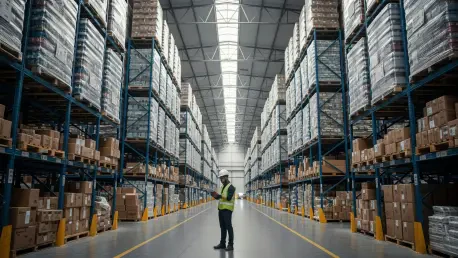

The sight of sprawling industrial warehouses overflowing with finished goods that no one can afford represents a harrowing paradox for the West African manufacturing powerhouse. Currently, the Nigerian industrial landscape is navigating an unprecedented crisis where production expenses have far outpaced what the average consumer can reasonably pay at the checkout counter. Faced with a staggering backlog of unsold inventory estimated at ₦2 trillion, many prominent firms have adopted a desperate survival tactic: selling finished goods at prices well below the actual cost of production. This trend highlights a severe disconnect in the national economy, as companies struggle to find a middle ground between escalating operational costs and a market that has largely stopped buying non-essential items. At the heart of this strategy is the urgent need for liquidity, as businesses prioritize cash flow to meet pressing financial obligations such as debt servicing and payroll.
The Liquidity Crisis: Prioritizing Cash Over Profit
Maintaining a healthy capital base has become secondary to the immediate requirement of keeping doors open and equipment running through the current fiscal cycle. While clearing these vast stockpiles provides a temporary reprieve for overcrowded storage facilities, it simultaneously erodes the internal investment capacity of these industrial firms. Financial analysts have observed that while this move keeps businesses afloat in the short term, it represents an unsustainable practice that fundamentally threatens the future of the entire industrial landscape if market conditions do not stabilize quickly. The decision to offload goods at a loss is a calculated risk taken by boards who fear that holding inventory longer will only lead to further depreciation. This aggressive price slashing is not a sign of competitive health but rather a distress signal indicating that the relationship between supply and demand has been severed by external pressures.
A primary driver of this manufacturing crisis is the sharp decline in household purchasing power caused by persistent inflation that has reached historic highs recently. As the cost of living continues to spike, the average consumer is forced to spend almost all available income on basic survival needs like food and essential medicine, leaving nothing for manufactured goods. This profound shift in spending habits creates a cycle where manufacturers attempt to pass on their own rising costs for energy and logistics, only to find a market that is physically unable to absorb the price increases. The result is a stagnant marketplace where high-quality domestic products sit on shelves because the price tag, though reflective of production costs, is simply out of reach for the majority of the population. This lack of demand has forced a radical rethink of pricing strategies across sectors, further complicating the recovery path for established brands and new market entrants.
Structural Bottlenecks: Energy and Currency Pressures
Beyond weak demand, manufacturers are being squeezed by several structural bottlenecks that inflate production expenses to levels that are no longer globally competitive. Unreliable power grids have long been a thorn in the side of industrial growth, necessitating the constant use of expensive alternative energy sources like industrial-grade diesel and gas-powered turbines. These energy costs can account for up to forty percent of total production expenses, making it nearly impossible to maintain affordable pricing for the end-user. Additionally, extreme currency volatility makes the import of essential raw materials and specialized machinery prohibitively costly for firms that rely on global supply chains to maintain their operations. The inability to predict the cost of future imports has paralyzed long-term planning, leading many factory managers to prioritize moving current stock at any price to secure the hard currency needed for the next production cycle.
Furthermore, many firms are suffering from the fallout of inventory hedging, where they aggressively overstocked raw materials during the previous fiscal year to guard against inflation. This strategy backfired as the cost of holding that inventory, coupled with high-interest debt used to finance the purchases, became a burden that the current sales volume could not support. Manufacturers now find themselves trapped in a situation where they must liquidate finished products simply to pay back the interest on loans that were originally taken out to ensure production continuity. This financial trap is exacerbated by the lack of specialized storage for certain sensitive industrial chemicals, which forces a quick sale before the materials degrade entirely. The cumulative effect of these pressures is a manufacturing sector that is running to stand still, burning through its equity just to maintain a presence in a market that offers very few signals of immediate relief or consumer resurgence.
Strategic Recovery: Policy Interventions and Market Stabilization
This manufacturing distress had significant ripple effects on the construction and housing sectors, which relied heavily on locally produced materials like cement and steel. In the immediate term, developers enjoyed a temporary windfall as they purchased these essential supplies at a discount due to the desperate price-slashing of major industrial producers. However, the long-term outlook became far more concerning as it became clear that if manufacturers continued to operate at a loss, they would eventually be forced to cut production capacity or close down operations entirely. Such closures led to future supply shortages and a total reliance on expensive imports that further drained national foreign exchange reserves. Stakeholders recognized that stabilizing the sector required a comprehensive set of policy interventions aimed at lowering the hidden costs of doing business and restoring the basic viability of the domestic supply chain.
Decision-makers eventually prioritized infrastructure improvements and worked to reduce energy costs by providing more direct access to localized power solutions for industrial clusters. They also focused on providing access to more affordable financing for industrial players to replace high-interest commercial debt with long-term development loans. Ultimately, the health of the manufacturing base depended on the recovery of the consumer market, as sustainable growth was only possible when households regained enough purchasing power to support local industry. By focusing on job creation and wage stability, the government sought to recreate a virtuous cycle where production met an empowered consumer base. These measures formed the foundation of a recovery strategy that aimed to prevent a total industrial collapse and ensure that the manufacturing sector could return to profitability without sacrificing the affordability of essential goods for the public.