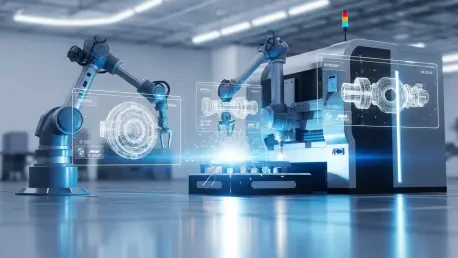

The global manufacturing landscape has reached a pivotal juncture where the primary obstacle to operational excellence is no longer the scarcity of data but the overwhelming abundance of it. Factories today are generating petabytes of information through high-speed sensors and automated logging systems, yet much of this intelligence remains inert and disconnected from the decision-making process. AI agents represent a sophisticated evolution in industrial technology, designed to provide the contextual intelligence necessary to navigate this complexity effectively. Unlike earlier iterations of artificial intelligence that focused on narrow, repetitive tasks, these agents utilize deep reasoning to synthesize disparate data points into a cohesive narrative. By moving beyond simple pattern recognition, they empower manufacturers to identify the underlying causes of production anomalies that were previously obscured by the sheer volume of noise. This transformation shifts the focus from merely documenting what occurs on the factory floor to understanding the intricate web of variables that dictate product quality and operational efficiency.
Overcoming Data Silos and Traditional Limitations
Strategic Integration: Bridging the Gap Between Data and Insights
Modern industrial facilities are typically outfitted with an array of sophisticated hardware, including programmable logic controllers and high-resolution inspection systems, yet these components often operate in isolation. This fragmented architecture creates significant hurdles for quality engineers who must manually aggregate data from various dashboards to investigate a single defect. When a production line experiences a sudden drop in yield, the time-sensitive nature of the situation requires immediate answers that siloed systems cannot provide. Instead of a unified view, technicians are forced to play the role of digital detectives, piecing together timestamps from mechanical sensors with visual data from quality checkpoints. This laborious process not only delays the resolution of critical issues but also increases the likelihood of human error during the analysis. In a fast-paced environment where every minute of downtime translates to lost revenue, the inability of these systems to communicate with one another represents a significant bottleneck that prevents facilities from reaching their full potential.
Operational Context: Addressing the Limitations of Machine Vision
Traditional machine vision has successfully automated the initial stages of quality control by identifying surface-level defects like scratches or misalignment, but these systems are inherently limited by their narrow scope. A standard camera setup is programmed to categorize an image as a pass or a fail based on pre-defined parameters, yet it possesses no awareness of the broader manufacturing environment. Once a defect is flagged, the traditional vision system considers its task complete, leaving the critical work of determining the root cause to human operators. For example, a system might detect a crack in a composite component but fail to note that the curing oven’s temperature spiked moments before the part arrived at the inspection station. Because these legacy systems lack the capacity for historical comparison or cross-functional reasoning, they cannot provide the insights needed to prevent the recurrence of the issue. This creates a reactive cycle where the same problems are identified repeatedly without any meaningful progress toward a permanent solution through process optimization.
The Mechanics and Logic of AI Agents
Cognitive Frameworks: Empowering Production Through Multi-Agent Architecture
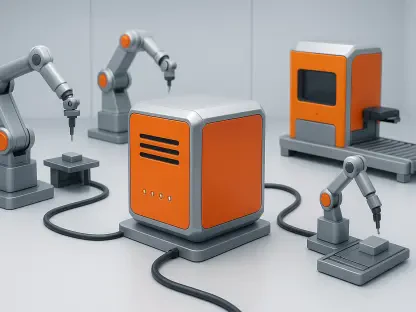
The architecture of modern AI agents represents a departure from monolithic software designs, utilizing a multi-agent framework where specialized modules collaborate to solve complex problems. Within this ecosystem, vision agents handle the heavy lifting of real-time image processing, while monitoring agents continuously track electrical loads, fluid pressures, and thermal signatures across the assembly line. A central reasoning agent acts as the conductor for this orchestra, pulling together the various data streams to form a comprehensive understanding of the production status. Additionally, the integration of natural language interfaces allows plant managers and floor operators to interact with the system using conversational American English, asking specific questions about performance trends or recent failures. This collaborative approach ensures that the intelligence is not just deep, but also accessible to the individuals who need it most. By breaking down the barriers between complex data science and daily operations, this architecture creates a more responsive and intelligent manufacturing environment.
Real-World Application: Automated Root-Cause Analysis in Practice
Practical applications of this technology, such as the inspection of high-precision laser welds, demonstrate the power of automated root-cause analysis in a real-world setting. If a vision agent identifies an incomplete weld during a routine check, the reasoning agent does not simply record the error; it immediately cross-references the event with the machine’s performance metrics. It might discover that the laser’s power output dipped slightly at the exact millisecond the defect occurred, and then further analyze historical records to see if this pattern matches a maintenance issue from a previous month. Instead of requiring an engineer to spend hours or days meticulously digging through log files and sensor readings, the AI agent generates a concise report that points directly to the failing component. This level of automated insight allows for near-instantaneous adjustments to the production process, drastically reducing scrap rates and ensuring that high-value components meet stringent safety standards. Such precision is vital for industries where even a minor failure can have catastrophic consequences.
Knowledge Management and Future Readiness
Institutional Memory: Preserving Human Expertise and Process Efficiency
Beyond immediate production gains, these intelligent systems serve as a critical repository for institutional knowledge, which is becoming increasingly vital as the manufacturing sector faces a shift in workforce demographics. For decades, experienced engineers have relied on intuition and years of hands-on practice to troubleshoot complex machinery, but this expertise often disappears when these veterans retire. AI agents address this risk by documenting and learning from every resolved issue, effectively training on the collective wisdom of the organization’s most skilled employees. When a junior technician encounters a novel problem, they can query the system to find out how similar challenges were handled in the past, receiving guidance that is tailored to the specific machine and process. This democratization of knowledge ensures that critical operational insights are preserved and disseminated across the entire workforce, rather than being confined to a few individuals. By building this digital memory, manufacturers can maintain a high standard of excellence regardless of personnel changes.
Future Implementation: Strategic Steps and Long-Term Excellence
The implementation of AI agents established a new paradigm for industrial excellence by transforming raw data into a strategic asset for continuous process improvement. Organizations that successfully integrated these systems moved away from the reactive troubleshooting models of the past and embraced a future defined by proactive optimization and reasoning. It became clear that the path to long-term competitiveness required a commitment to high-quality data infrastructure and the deployment of intelligent layers capable of breaking down departmental silos. Moving forward, stakeholders prioritized the standardization of data protocols to ensure seamless communication between diverse machine types and AI modules. Strategic investments focused on developing internal talent to work alongside these agents, treating them as partners in the pursuit of zero-defect manufacturing. Leaders also recognized the necessity of auditing AI decision-making processes to ensure transparency and reliability in mission-critical environments. Ultimately, the shift toward contextual intelligence empowered the industry to achieve unprecedented levels of precision.