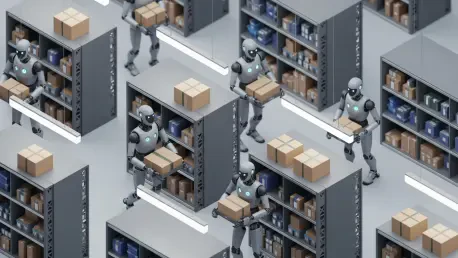

The industrial landscape has shifted dramatically as companies move beyond specialized robotic arms to embrace general-purpose humanoid platforms that can walk, lift, and interact with human tools. This evolution is not merely a cosmetic update to existing automation but represents a fundamental change in how labor is distributed within the factory setting. Manufacturers are now deploying these bipedal machines to handle tasks that were previously deemed too complex for fixed robotics, such as sorting irregular objects or navigating cluttered warehouse aisles. In the current market of 2026, the primary driver for this adoption is the severe labor shortage affecting the logistics and automotive sectors, forcing a reliance on versatile machines that can adapt to various roles without requiring extensive hardware reconfiguration. These robots are no longer just prototypes showcased in laboratory environments; they are active participants in production cycles, proving their ability to perform strenuous duties while maintaining high levels of precision and reliability. As companies scale their pilot programs, the focus has moved toward long-term operational viability and the integration of these sophisticated units into the existing workforce.
Engineering for Industrial Durability and Precision
Actuation and Power Systems: The Core of Physical Capability
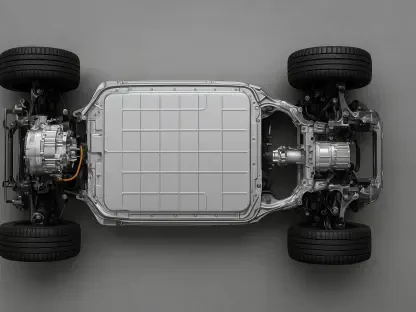
The mechanical integrity of a humanoid robot depends heavily on the integration of high-torque density actuators and efficient power management systems that sustain long shifts. In the current production environment, engineers favor custom-designed electric motors paired with high-ratio strain wave gears to achieve the necessary strength for lifting heavy payloads while maintaining compact limb profiles. These actuation units must provide smooth, jitter-free movement to ensure safety when operating in close proximity to human coworkers or delicate machinery. Furthermore, the shift toward solid-state battery technology has provided a safer and more energy-dense power source, allowing these robots to operate for extended periods without frequent recharging interruptions. Effective thermal management remains a priority, as the heat generated by dozens of active joints can degrade electronic components if not dissipated through advanced liquid cooling or passive heatsink designs. This focus on hardware longevity is essential for reducing the total cost of ownership in industrial settings where downtime is prohibitively expensive.
Sensory Integration: Navigating the Industrial Floor
Beyond pure strength, the dexterity required for industrial assembly necessitates a complex network of tactile sensors and force-torque feedback loops located in the robot’s hands and feet. These sensors allow the machine to feel the resistance of a bolt being tightened or the fragile surface of a glass component, adjusting its grip force in real-time to prevent damage. This level of fine motor control is achieved through high-speed edge computing, which processes thousands of data points per second to maintain balance and coordinate complex multi-joint movements. By utilizing decentralized processing units within the limbs, the robot can react to sudden environmental changes, such as a floor obstruction or an accidental bump, faster than a centralized processor could manage. This localized intelligence ensures that the humanoid remains stable even when carrying off-center loads or traversing uneven surfaces common in older warehouse facilities. The result is a machine that combines the raw power of traditional automation with the nuanced touch once exclusive to human workers.
Integrating Intelligence and Scalable Production
Vision-Language Models: The Role of Autonomous Decision Making
The software architecture driving these modern humanoids has moved toward end-to-end neural networks that utilize vision-language models to interpret complex verbal or visual instructions. This allows factory supervisors to assign new tasks without writing a single line of code, as the robot can observe a human performing a sequence and then replicate it through imitation learning. These systems are trained on massive datasets in simulation before being deployed to physical hardware, a process that significantly reduces the time required for on-site calibration and troubleshooting. In 2026, the ability of a robot to recognize and navigate around dynamic obstacles—such as forklifts or moving carts—is handled by multi-modal perception systems that fuse data from LiDAR, depth cameras, and ultrasonic sensors. This comprehensive environmental mapping enables the humanoid to calculate optimal paths through a facility while predicting the movement of nearby objects to avoid collisions. Such autonomy is vital for large-scale operations where hundreds of robots must coordinate their movements.
Strategic Integration: Reflecting on Operational Success
The deployment of these systems required a fundamental shift in how corporations approached capital expenditure and labor management during the mid-2020s. Decision-makers learned that the successful implementation of humanoid robots was dependent on creating a seamless digital twin environment for testing before any physical hardware arrived on the factory floor. They also prioritized the development of standardized maintenance protocols which ensured that specialized technician teams could service machines from different vendors using a unified toolset. These organizations effectively mitigated the risks associated with early adoption by phasing in robotic assistants alongside human supervisors rather than attempting an overnight replacement of the workforce. The resulting increase in throughput and decrease in workplace injuries provided a clear justification for the significant upfront costs associated with high-end bipedal robotics. Ultimately, the industry realized that the primary challenge was not just mechanical but cultural, requiring a reimagined synergy between machine precision and human ingenuity.