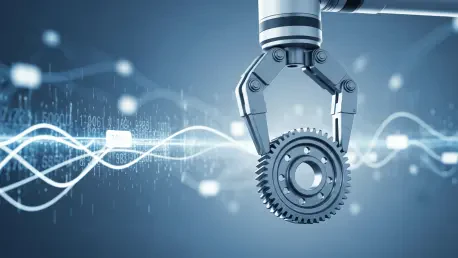

Manufacturers today find themselves at a critical crossroads where the traditional reliance on manual CNC tending or rigid pneumatic setups is no longer sufficient to meet the aggressive production schedules demanded by global supply chains. As Advanced Workshop Robotics (AWR) integrates sophisticated electric grippers from OnRobot into their automated workflows, they are addressing a fundamental bottleneck that has historically plagued machine shops: the lack of adaptability in part handling. While older systems often required extensive retooling and manual intervention for every new part run, the current shift toward intelligent electric actuation allows for real-time adjustments and precise force control. This evolution is particularly crucial in high-mix, low-volume environments where the time spent on setup can often outweigh the actual machining time. By utilizing advanced end-of-arm tooling, AWR has managed to streamline the transition between different workpieces, ensuring that the CNC machine remains active and productive throughout the entire shift.
Evolution of Control: Moving Beyond Pneumatic Constraints
The transition from pneumatic to electric gripping technology represents a significant leap in the ability of robotic arms to interact with delicate or precisely machined components. Pneumatic grippers, while robust and cost-effective, typically offer binary control—they are either fully open or fully closed—which can lead to surface damage on softer materials or misalignment when dealing with intricate geometries. In contrast, the electric grippers deployed by AWR provide nuanced control over both the finger position and the gripping force, allowing the robot to handle everything from heavy steel blanks to thin-walled aluminum tubes with the same hardware. This versatility is achieved through integrated sensors and software that communicate directly with the robot controller, enabling the system to detect the presence of a part and confirm a secure hold before the machining cycle begins. Such feedback loops are essential for maintaining high quality standards and preventing the costly tool crashes that often occur when a part is seated incorrectly.
Furthermore, the reduction in infrastructure requirements when moving away from compressed air systems cannot be overstated in terms of facility flexibility and energy efficiency. Pneumatic lines are often prone to leaks and require constant maintenance, whereas electric grippers simply require a digital connection and power from the robot’s tool flange. This plug-and-produce capability allows AWR to redeploy robotic cells across different CNC centers with minimal downtime, effectively turning their automation assets into mobile units that can go where the demand is highest. The software-defined nature of these grippers means that an operator can program a new part’s dimensions and required grip force in minutes through a graphical interface, rather than spending hours fabricating custom mechanical stops or adjusting air pressure regulators. This level of agility is what separates modern digital manufacturing from the rigid automation of previous decades, fostering a more responsive production environment that can pivot to new market demands without massive reinvestment.
Operational Versatility: Customizing the Grip for Complex Geometries
Achieving a reliable grip on irregular or multifaceted workpieces has long been a hurdle for standard robotic tending, yet the modular design of current electric grippers offers a definitive solution. By employing a wide range of interchangeable fingertips and adjustable stroke lengths, AWR has successfully automated the handling of parts that were previously considered too complex for anything other than human intervention. These grippers often feature built-in intelligence that allows them to recognize the width of a part automatically, which is vital when a single tray contains multiple iterations of a design or when the raw castings have slight dimensional variances. This adaptability ensures that the robotic system remains resilient against the minor inconsistencies that are common in raw materials, thereby reducing the rate of false stops and error signals that can paralyze an unattended night shift. Moreover, the ability to fine-tune the gripping point on the fly means that the same robot can perform secondary operations, such as deburring or cleaning the part.
In the final analysis, the strategic implementation of electric end-of-arm tooling provided a blueprint for shops looking to survive in a competitive landscape. Moving forward, organizations should prioritize hardware offering deep data integration, as the telemetry provided by these grippers—such as cycle counts and motor temperature—became the foundation for predictive maintenance. It was discovered that by analyzing these data points, facility managers were able to identify wear on machine vises before a failure occurred. For those seeking to replicate these gains, the first step involved a thorough audit of cycle times to identify where manual handling created the most significant lag. Once identified, the deployment of collaborative systems with force sensing allowed for safer human-robot interaction. By moving away from rigid fixtures toward programmable solutions, manufacturers successfully insulated their operations against labor shortages and fluctuating designs, ensuring long-term viability in the market.