
The exponential rise in power density within modern semiconductor architectures and aerospace propulsion systems has pushed traditional cooling methods to their absolute physical limits. As engineers struggle to dissipate heat from increasingly compact components, the emergence of 3D-printed metamaterials offers a transformative solution that leverages structural complexity to control thermal energy in ways previously deemed impossible. Unlike conventional bulk materials, metamaterials derive their properties from their geometric configuration rather than their chemical composition alone. This shift in paradigm allows for the creation of heat sinks and exchangers that possess tailored thermal conductivity and convective efficiency. By utilizing additive manufacturing, designers can now fabricate intricate lattice networks and triply periodic minimal surfaces that provide an unprecedented ratio of surface area to volume. This evolution represents a departure from subtractive manufacturing constraints.
Optimizing Heat Transfer: The Role of Geometric Complexity
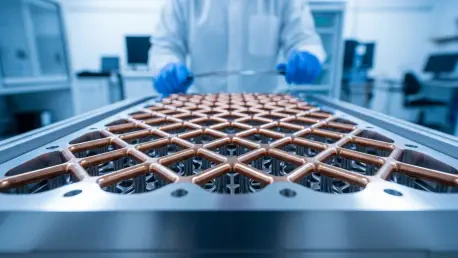
The capability to manipulate heat flow relies heavily on the internal architecture of the thermal management device, where 3D printing excels at producing complex internal voids and branching structures. Engineers have increasingly turned to Triply Periodic Minimal Surfaces, such as gyroids and diamonds, because these geometries naturally induce turbulence in coolant fluids without the significant pressure drops associated with traditional finned designs. Such structures are mathematically optimized to maximize heat transfer by ensuring that fluid stays in contact with the heated surface for longer periods while maintaining a high flow rate. Furthermore, the integration of these features directly into the chassis of a component eliminates the need for thermal interface materials, which often act as a bottleneck in heat dissipation. By printing the cooling system as a monolithic part, the thermal resistance between the heat source and the cooling medium is drastically reduced.
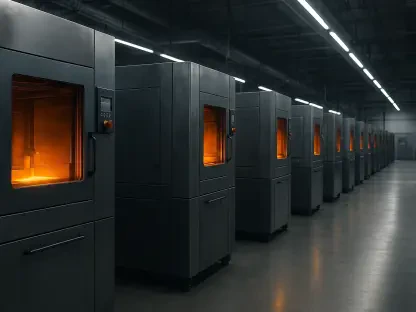
Beyond mere geometry, the selection of materials in the 3D printing process plays a vital role in enhancing the performance of these metamaterial-based thermal solutions. Advanced metal alloys, such as copper-chromium-zirconium or high-conductivity aluminum, are now frequently used in powder bed fusion processes to create parts with thermal properties that rival or exceed forged alternatives. The precise control over the laser parameters during the printing phase allows for the localized adjustment of material density and porosity, creating a gradient of thermal conductivity within a single component. This means an engineer can design a part that is highly conductive near a chip but more insulative in areas where heat needs to be contained or redirected. This level of functional grading was functionally unattainable with traditional casting or machining techniques, which typically produce uniform material properties throughout. This material control is essential for modern needs.
Strategic Implementation: Material Science and Performance Validation
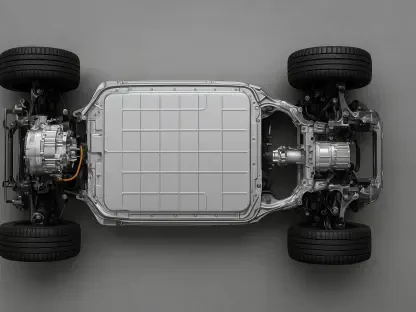
Real-world implementations of these technologies are already manifesting in the high-density liquid cooling market, specifically within hyperscale data centers that house intensive AI workloads. Conventional cold plates often suffer from localized hotspots where the coolant cannot reach effectively, but 3D-printed metamaterials allow for the creation of micro-channel networks that are custom-tailored to the heat map of a specific processor. These internal channels can branch like biological vascular systems, delivering fresh coolant directly to the most thermally stressed regions while removing waste heat with high efficiency. This targeted approach not only prevents hardware throttling but also allows for a significant reduction in the overall volume of coolant required, which lowers the energy consumption of the entire facility. Moreover, the lightweight nature of these lattice structures makes them ideal for mobile applications, such as electric vehicle battery enclosures, where weight reduction is as critical as cooling.
The shift toward metamaterial-based thermal management necessitated a fundamental change in how engineering teams approached the design-to-production lifecycle. Industry leaders recognized that traditional CAD tools were insufficient for modeling such complex geometries, prompting the adoption of generative design software that utilized simulation-driven algorithms to define optimal structures. Research and development teams successfully integrated automated validation workflows to ensure that the printed lattices met the rigorous structural and thermal requirements of the aerospace and defense sectors. To capitalize on these advancements, organizations prioritized the training of their workforce in additive manufacturing design principles and invested in in-situ monitoring technologies to detect defects during the printing process. These proactive steps ensured that the transition from prototypes to flight-ready hardware was seamless and cost-effective. The move effectively solved key bottlenecks.