
The massive steel turbines that hum deep within the concrete hearts of hydroelectric dams have long been considered the unshakeable titans of the global renewable energy landscape. These giants operate under extreme hydraulic pressure and abrasive conditions, necessitating a maintenance cycle that historically demanded months of downtime and millions of dollars in logistical expenses. However, the emergence of advanced metal 3D printing technologies has begun to fundamentally alter the way engineers approach the restoration of critical infrastructure. Instead of casting entirely new components in distant foundries or waiting for specialized replacement parts to arrive via international shipping routes, facility managers now look toward on-site additive manufacturing. This transition represents a significant leap in precision and metallurgical integrity. By leveraging Directed Energy Deposition and large-scale powder bed fusion, the energy sector finds ways to revitalize aging assets without the prohibitive costs of traditional manufacturing methods.
1. Advancements in Metal Additive Manufacturing
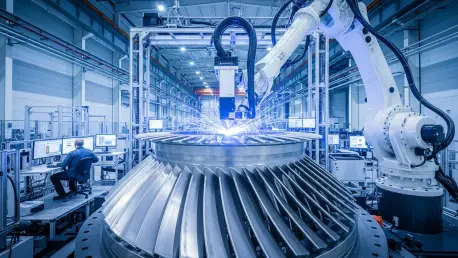
The implementation of cold spray technology proves particularly effective for restoring worn surfaces on Francis turbine runners where cavitation damage often compromises structural efficiency. This process involves accelerating metal powders to supersonic speeds, causing them to plastically deform and bond to the substrate upon impact without the need for high heat. By avoiding the heat-affected zones typical of traditional welding, engineers preserve the original metallurgical properties of the turbine while adding a layer of high-performance alloy. Furthermore, Directed Energy Deposition systems are being utilized to build up lost material on complex vane edges with a level of accuracy that was previously impossible without manual grinding. These robotic systems follow precise digital blueprints, ensuring that the repaired geometry matches the original design specifications within microns. This level of digital control eliminates the variability inherent in human-led repair efforts and allows for specialized coatings that enhance the overall resilience of hardware.
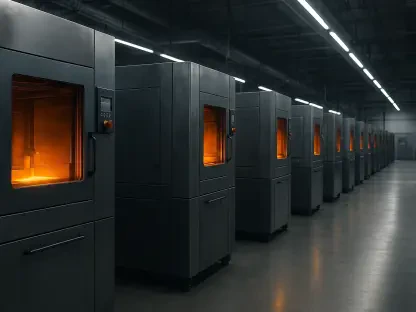
Beyond the technical precision of the printing process itself, the shift toward decentralized manufacturing redefines the logistics of power plant maintenance. Traditionally, a damaged runner had to be removed from the powerhouse, loaded onto a specialized heavy-lift transport, and sent to a foundry capable of handling parts weighing several tons. This process often resulted in the facility being offline for extended periods, leading to significant revenue loss and potential grid instability. Modern 3D printing modules are increasingly being designed for portability, allowing them to be deployed directly into the turbine hall or a nearby maintenance shop. This “factory in a box” approach minimizes the physical distance between the point of failure and the point of repair, effectively collapsing the supply chain. By producing replacement parts or performing restorative overlays on-site, utility companies reduce their carbon footprint and mitigate the risks associated with global shipping delays or the high costs of transporting oversized freight.
2. Integrated Solutions for Operational Resilience
The integration of multi-material printing capabilities allows for the creation of components that are functionally graded, featuring different properties in different regions of the same part. For instance, a turbine blade can be printed with a tough core to handle structural loads while the outer surface is fused with a hard, erosion-resistant cobalt-chromium alloy. This capability is a game-changer for hydroelectric facilities that deal with high silt content in their water sources, which typically causes rapid wear on standard steel components. In the past, achieving such a hybrid structure required complex cladding processes that were prone to delamination. Additive manufacturing solves this by creating a metallurgical bond at the atomic level between the different layers of metal. This results in a component that is far more durable than one made from a single material or treated with a traditional surface coating. As material science continues to evolve, the library of printable alloys is expanding to include high-entropy materials.
The transition to 3D printing in the hydroelectric sector ultimately provided a clear roadmap for the modernization of the broader renewable energy industry. Stakeholders who invested in these additive technologies successfully reduced their operational overhead and increased the availability of their power generation assets. It became evident that the ability to perform high-precision repairs on-site was no longer a luxury but a fundamental requirement for maintaining grid stability. Engineers discovered that the integration of digital workflows and advanced metallurgy allowed for a level of fleet flexibility that was previously unimaginable. Future considerations centered on the standardization of 3D-printed alloys and the certification of additive processes across different regulatory jurisdictions. By moving away from reactive maintenance and embracing proactive, additive-based restoration, the industry established a more sustainable and resilient infrastructure. The lessons learned from these early implementations suggested that the next step involved full-scale production.