
The global robotics market has reached a startling inflection point in the middle of 2026, where high-tech humanoid machines that once cost as much as luxury vehicles are now being sold for prices comparable to a high-end smartphone or a mid-range laptop. This shift is most visible in the Chinese manufacturing sector, where the emergence of “cabbage-priced” robots—a term used for sophisticated goods that have become as cheap and common as basic vegetables—is fundamentally disrupting the technological hierarchy. On major international e-commerce sites, some humanoid models are now retailing for as little as $1,250, signaling a massive drop in the barrier to entry for this technology and forcing a global conversation about the long-term viability of low-cost hardware. Unitree Technology has been at the center of this price collapse, with flagship models seeing a 72% reduction in their market value over just the last two years. This dramatic trend has forced industry analysts to ask whether these budget machines can actually perform useful industrial labor or if they are merely sophisticated toys designed for the entertainment and education sectors. The tension between a low price point and functional utility has become the defining debate of the current robotics era.
The Economics of the Robot Price War
Market Drivers: The Shift to Mass Production
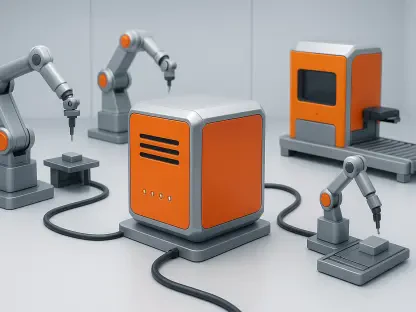
The rapid decline in consumer robot prices is largely due to the maturation of the global supply chain, which has moved from artisanal, small-batch assembly to large-scale industrialization. Manufacturers are moving away from custom-built architectures that require expensive CNC machining and are instead adopting standardized designs that can be mass-produced using high-precision molds and injection molding techniques. This shift significantly reduces the manufacturing cost per unit, allowing companies to pass those savings on to consumers, research institutions, and small-scale laboratories that previously found the technology cost-prohibitive. By focusing on a “platform-first” approach, these companies have turned what was once a bespoke engineering challenge into a streamlined manufacturing process that mirrors the production lines of the consumer electronics industry.
Furthermore, the industry is reaping the rewards of a massive technological spillover from the electric vehicle and smartphone sectors, where billions of dollars have already been spent on R&D for high-density batteries and efficient motors. Components like high-torque actuators, advanced LiDAR sensors, and mobile computing platforms are becoming cheaper because they share common hardware parts with high-volume consumer goods. This allows robot makers to access high-quality internal components at a fraction of what it would have cost to develop them from scratch just a few years ago. As the supply chain for these parts continues to scale, the downward pressure on prices remains constant, making it possible for entry-level models to appear more capable than their price tags would suggest to a casual observer.
Consumer Trends: Aggressive Growth Strategies
Competition for global market share is another major factor driving prices down to levels that were unthinkable even eighteen months ago. Many robotics startups are intentionally slashing their profit margins to near-zero or even selling units at a loss to boost shipment volumes and capture early dominance in the emerging humanoid ecosystem. This aggressive pricing is a tactical move designed to build brand recognition and secure a large user base, which in turn helps attract more venture capital from investors who prioritize market penetration over short-term profitability. In this environment, the “race to the bottom” in pricing serves as a brutal filter, where only the companies with the most efficient manufacturing processes or the deepest financial reserves are likely to survive the current market shakeout.
The focus of these low-cost manufacturers has also expanded to include educational institutions and tech hobbyists who serve as the primary testing ground for these new machines. By seeding the market with thousands of affordable robots, companies are creating a vast community of developers who are building the software applications that will eventually define the utility of the hardware. This community-driven development model offsets the costs of internal software engineering, as thousands of independent users contribute to open-source libraries that improve the movement and functionality of the robots. While this strategy has successfully lowered the cost of entry, it has also created a flooded market where distinguishing between a high-performance tool and a sophisticated novelty has become increasingly difficult for the average buyer.
The Industrial Reality Check
Material Engineering: Durability Versus Disposability
In stark contrast to the rapidly falling prices in the consumer market, industrial-grade humanoid robots are experiencing price stability or even slight increases due to the demands of the factory floor. These machines are built for 24/7 operation in demanding environments, requiring high-performance materials and extreme precision that budget parts simply cannot provide. Manufacturers like Inovance and Efort have even announced price hikes for their latest factory-ready hardware to account for the superior engineering required to ensure long-term reliability. A robot that must perform thousands of repetitive tasks per day without failure requires specialized alloys, high-grade reducers, and heat-dissipation systems that are far beyond the specifications of a $1,250 hobbyist model intended for light indoor use.
Budget robots under the 100,000 yuan mark often lack the advanced sensors needed for precision work, such as high-fidelity six-axis force sensors or sophisticated tactile feedback systems in the fingertips. Without these “senses,” a robot is effectively a “dancing machine” rather than a true industrial worker, capable of impressive motion but lacking the nuance required for assembly tasks. It can move its limbs in a pre-programmed sequence, but it cannot “feel” if it is tightening a screw with too much torque or if it is holding a delicate electronic part with the correct amount of pressure. For high-stakes production lines where a single error can halt an entire facility, these cheap machines represent a significant liability rather than a cost-saving opportunity, reinforcing the divide between entertainment and industry.
Embodied Intelligence: The Hidden Cost of Software
The cost of “embodied intelligence”—the complex software stack that allows a robot to interact dynamically with its environment—remains a significant investment that low-cost models often cannot support. Training large-scale transformer models and collecting the high-quality, real-world data needed for autonomous labor is an expensive, ongoing process that requires massive server farms and teams of specialized engineers. Unlike entertainment robots that follow set scripts or basic remote-control commands, industrial robots must perceive, plan, and react to their surroundings in real-time. This level of autonomy requires a level of R&D spending that cannot be sustained by companies selling hardware at “cabbage prices,” creating a technological gap that price alone cannot bridge.
Modern industrial applications require robots to handle “edge cases”—unpredictable events that occur on a factory floor, such as a misplaced part or a human worker stepping into the robot’s path. Developing the cognitive architecture to handle these situations safely and efficiently involves millions of hours of simulation and real-world testing. Companies that prioritize low hardware costs often skimp on the high-end processing units required to run these advanced AI models locally. As a result, while a cheap robot might look like its industrial counterpart on the surface, its “brain” is often significantly less capable, making it unsuitable for the complex, unstructured tasks that are increasingly common in modern, agile manufacturing environments.
Form Versus Function in the Workspace
Geometric Stability: Trading Legs for Wheels
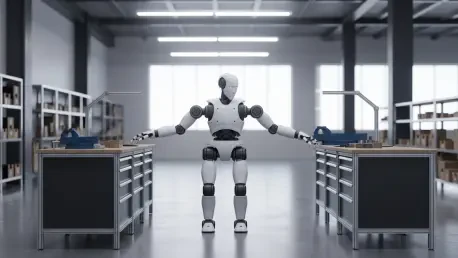
A major shift in industrial robotics is the strategic move away from the bipedal, two-legged form factor that has long dominated public perception and science fiction. While walking robots are popular for public performances and marketing demonstrations because of their human-like appearance, they are often seen as impractical and inefficient for actual work on the factory floor. The energy required to maintain balance while walking or even just standing still drains battery life much more quickly than more stable configurations. Furthermore, the risk of a software glitch or a minor physical obstruction causing a bipedal robot to fall over is a major safety concern for factory managers who prioritize uptime and worker safety above all else.
To solve the inherent stability problem of the bipedal design, many industrial manufacturers are now opting for wheeled humanoid robots that offer a hybrid approach to mobility. These machines feature a human-like torso for task handling and manipulation mounted on a stable, wheeled base that can navigate flat factory floors with much higher efficiency and speed. This design ensures that if the robot loses power or encounters a software error, it simply stops moving instead of toppling over and potentially damaging itself or nearby equipment. For factory owners, this pragmatic design choice offers a much better return on investment and lower maintenance risks, even if the resulting machine looks less like a human and more like a specialized tool.
Aesthetic Priorities: Moving Beyond the Human Form
The drive for low-cost humanoid robots often forces a compromise between aesthetic appeal and functional durability, leading to a market saturated with robots that look impressive but lack structural integrity. In the consumer space, the goal is often to mimic the human form as closely as possible to create an emotional connection or to impress onlookers during a demonstration. However, in an industrial setting, the human form is often a limitation rather than an advantage, as humans are not naturally optimized for the specific stresses of heavy manufacturing. Industrial robots are increasingly being designed with “form follows function” principles, where limbs are shaped by the requirements of the task—such as lifting heavy loads or reaching into tight spaces—rather than the need to look like a person.
This shift toward functional design is also a response to the maintenance challenges inherent in complex humanoid structures. A robot with two legs has dozens of additional points of failure compared to a wheeled or stationary model, each requiring regular calibration and potential repair. By simplifying the lower body of the robot, manufacturers can redirect their budget toward higher-quality actuators and more sensitive grippers in the upper body, where the actual work is performed. This trade-off allows for the creation of more capable industrial tools at a lower total cost of ownership, proving that the future of humanoid robotics in the factory may not be purely human-shaped, but rather human-compatible in their ability to use tools and workspaces designed for people.
Quantifying the Future of Labor
Performance Metrics: Reliability in Harsh Environments
As the industry matures, the focus of evaluation is shifting from the initial purchase price of a robot to its actual utility and long-term reliability in the field. New metrics for success have emerged, such as daily average usage time and the “Mean Time Between Failures” (MTBF), which provides a quantitative measure of how long a machine can operate without requiring human intervention. A robot that is cheap to purchase but breaks down every few days due to low-quality components is ultimately more expensive than a high-end machine that works reliably for months. Factory owners are now using these data-driven metrics to make purchasing decisions, moving away from the hype of low prices toward the reality of operational efficiency.
Real-world case studies have shown that robots are finding their greatest success in niche, harsh environments where human labor is difficult to maintain or where safety risks are unacceptably high. For example, humanoid platforms are being deployed in high-pollution injection molding plants and high-risk battery production lines where toxic fumes or extreme heat make the environment hostile to people. In these scenarios, the value of the robot is defined by its ability to solve specific labor shortages and safety challenges rather than its resemblance to a human. The success of these deployments has demonstrated that even a more expensive, high-quality robot can pay for itself in a matter of months by maintaining constant production in conditions that would otherwise require expensive safety equipment and high turnover for human workers.
Strategic Investments: Securing the Upstream Supply Chain
The investment landscape in 2026 has moved significantly toward the upstream supply chain rather than focusing solely on the companies that assemble the final robots. Rather than funding every startup that builds a “cool-looking” humanoid machine, savvy investors are now focusing on firms that produce the core components, such as high-torque density motors, harmonic reducers, and specialized AI inference chips. The goal is to identify and support the specialists who can solve specific technical hurdles or innovate manufacturing processes to make high-quality industrial parts more affordable. This shift reflects a growing understanding that the true value in the robotics industry lies in the underlying technology that enables movement and intelligence, rather than the exterior shell.
By the end of this recent market cycle, the industry had established a clear hierarchy between the “performance-grade” robots used for shows and the “industrial-grade” machines built for the assembly line. It was found that while low-cost models provided an excellent entry point for education and rapid prototyping, they were not yet ready to replace the specialized hardware required for heavy industry. Manufacturers realized that the path to widespread adoption required a balance of high-end reliability and the cost efficiencies gained from mass production. Strategic partnerships between component suppliers and robot assemblers helped stabilize the market, ensuring that the next generation of robots was both affordable and capable of surviving the rigorous demands of the modern factory floor. Future considerations focused on further refining the “torso-on-wheels” design to maximize utility across various sectors.