
The rapid evolution of modern missile and drone capabilities has fundamentally transformed the traditional concept of industrial security, forcing European defense contractors to abandon the centralized factory model in favor of highly resilient, geographically scattered production networks. This shift mirrors the tactical successes observed in Ukraine, where small, hidden workshops outlasted massive industrial complexes under fire. By 2026, the European Union has incentivized defense firms to move away from vulnerable single-site assembly lines that once served as primary targets for long-range precision strikes. Instead, the focus has moved toward a “cellular” manufacturing approach, where components are fabricated in hundreds of discreet, interchangeable locations. This strategy ensures that the destruction of one or two nodes does not paralyze the entire output of high-tech munitions, reflecting a realization that industrial survival depends on being too small to target effectively.
Security: New Industrial Geographies
Fragmentation: Small Scale Nodes
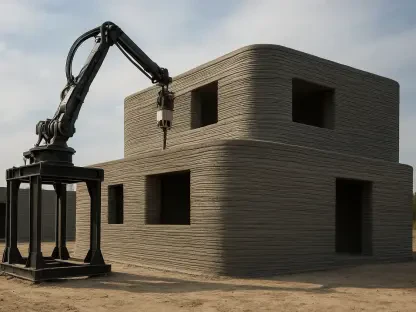
The decentralization of the European defense industrial base required a total overhaul of the traditional manufacturing blueprint that favored economies of scale over survivability. Instead of housing the entire production lifecycle within a single perimeter, companies like Rheinmetall began splitting their operations into specialized cells located in disparate rural and suburban environments. This fragmentation relies heavily on modular construction, where individual units are assembled from components manufactured in small, nondescript workshops that are virtually indistinguishable from civilian light industry. Modern CNC machining and advanced robotics have made it possible to maintain quality control across these distributed sites, ensuring that a drone fuselage made in one facility fits perfectly with electronics manufactured elsewhere. This operational change prioritized continuity over the raw cost-efficiency of centralized labor.
Protection: Underground Assets
In addition to geographical dispersal, European nations have invested heavily in the rehabilitation of Cold War-era bunkers and the construction of new, deep-seated underground manufacturing centers. These facilities are designed to house the most sensitive stages of production, such as the assembly of advanced propulsion systems and semiconductor fabrication, which cannot easily be moved to surface workshops. By placing these critical assets hundreds of feet below the surface, the industrial base gains a layer of physical protection that even the most advanced bunker-busting munitions struggle to penetrate. These sites are often integrated into existing mountain ranges or repurposed mining networks, providing natural shielding and thermal camouflage. The focus here is not just on survival, but on maintaining operational capability during active kinetic engagements, ensuring products are moved safely via internal subterranean logistics tunnels.
Integration: Digital Logistics
Connectivity: Network Control
Managing a network of hundreds of disparate manufacturing nodes requires a sophisticated digital nervous system that can synchronize operations without creating a single point of failure. The implementation of high-security “digital twins” has become the standard for maintaining consistency across the European defense grid, allowing engineers to update design specifications across the entire network simultaneously. Every local facility, no matter how small, has access to encrypted cloud-based blueprints that guide autonomous machinery in real-time. This connectivity ensures that a part manufactured in a dispersed cell today is identical to one produced in a different region tomorrow, maintaining the high tolerances required for modern aerospace systems. However, this reliance on digital communication led to a massive reinforcement of cybersecurity protocols, with each node operating behind layers of hardware-level encryption and decentralized blockchain verification.
Resilience: Strengthening the Industrial Grid
The transition to a dispersed manufacturing strategy ultimately provided a blueprint for industrial survival in a high-threat environment. European policymakers successfully recognized that the era of the massive, unshielded industrial complex had ended, necessitating a shift toward a more resilient and agile framework. This reorganization not only improved the physical security of production assets but also fostered a more innovative and competitive industrial ecosystem characterized by modularity and digital integration. To sustain this posture, leaders prioritized the diversification of local supply chains and implemented mandatory redundant energy systems for every micro-factory. By adopting the lessons learned from recent conflicts, the industry established a new standard for national defense that prioritized geographical depth. These actions effectively transformed the industrial base into a distributed network capable of withstanding systemic shocks while maintaining continuous output.