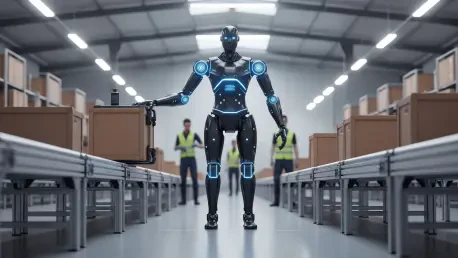

The rapid evolution of automated labor has reached a pivotal juncture where the demand for specialized, single-task machinery is being overshadowed by the necessity for highly adaptable, general-purpose robotic systems capable of navigating complex human environments. Genesis AI recently introduced Eno, a machine designed to dismantle the barriers between traditional fixed-position automation and the fluid requirements of modern industrial sectors. Unlike the rigid robotic arms of previous decades, Eno represents a shift toward embodied intelligence that can perform a variety of roles from logistics management to intricate assembly lines. This development addresses the persistent labor shortages that have plagued global supply chains since the start of 2026, offering a scalable solution that integrates seamlessly into existing infrastructure. By leveraging a humanoid form factor combined with industrial-grade durability, the system promises to redefine how warehouses and factories conceptualize their workforce, blending the precision of high-end computing with the physical versatility required for a myriad of physical tasks in unpredictable settings.
Hardware Innovations: The Mechanical Foundation of Eno
The physical construction of Eno serves as a masterclass in modern mechanical engineering, featuring a series of high-torque electric actuators that provide the robot with a range of motion exceeding that of a standard human worker. Each joint is equipped with high-resolution encoders and redundant force sensors, allowing for delicate manipulations such as handling glassware or threading small components into dense electronic boards. The chassis is built from a proprietary carbon-fiber reinforced polymer, which reduces overall weight while maintaining the structural integrity necessary for heavy lifting in rigorous environments. Furthermore, the inclusion of a swappable solid-state battery system ensures that these units can operate across multiple shifts without the prolonged downtime typically associated with electric fleet charging. This focus on mechanical resilience and energy density allows industrial operators to deploy Eno in demanding scenarios where traditional machines would often fail due to environmental constraints or lack of spatial awareness.
Beyond its physical frame, the sensory array integrated into Eno provides a comprehensive 360-degree awareness of its surroundings through a combination of solid-state LiDAR and multispectral cameras. These sensors feed data into a localized processing unit capable of executing trillions of operations per second, enabling the robot to map its environment in real-time while identifying potential obstacles or personnel. This Synthetic Nervous System allows the machine to adjust its path and pace dynamically, ensuring that safety is prioritized without sacrificing operational efficiency. The hands, or end-effectors, utilize advanced haptic feedback technology to simulate a sense of touch, which is essential for tasks that require a specific pressure threshold to avoid damaging sensitive materials. By combining high-fidelity perception with precise motor control, Genesis AI has managed to bridge the gap between abstract computational power and the gritty realities of industrial labor, creating a truly versatile tool for any facility.
Strategic Implementation: Redefining the Industrial Workflow
The software architecture powering Eno relies on a foundation of large-scale behavioral models that allow the robot to learn and execute new tasks with minimal human intervention or complex coding. Instead of requiring weeks of specialized programming for a single movement, operators can now guide the machine through a process once, allowing the AI to refine its technique through simulated reinforcement learning. This approach dramatically reduces the barrier to entry for smaller manufacturers who previously lacked the capital or expertise to implement advanced automation. From 2026 to 2028, the deployment of these adaptive systems is expected to accelerate, as the ability to switch between packing crates and quality inspections becomes a standard requirement. To facilitate this, the system uses an intuitive interface allowing staff to communicate using natural language commands, ensuring that floor managers can reassign tasks on the fly without needing deep technical knowledge of robotics.
Strategic leaders recognized that the successful integration of Eno required a fundamental shift in workforce development and facility design to accommodate a hybrid labor environment. Organizations that prioritized the reskilling of their employees to manage these advanced systems saw immediate gains in both morale and productivity as workers transitioned from repetitive manual tasks to high-level supervisory roles. The implementation process proved that a collaborative approach, rather than a total replacement strategy, yielded the highest operational resilience and long-term stability. Stakeholders took decisive action by investing in standardized protocols for robot-to-robot communication and expanding their electrical infrastructure to support decentralized charging stations. These steps ensured that the introduction of general-purpose automation acted as a catalyst for a more efficient and adaptable industrial landscape. Looking ahead, the focus remained on refining the interaction between human intuition and machine precision to unlock new levels of innovation within the global manufacturing sector.