
The traditional clatter of mechanical gears in German factories is rapidly giving way to the silent, data-driven hum of cyber-physical systems that define the next era of global production. As the Fourth Industrial Revolution matures, Germany has successfully positioned itself as the primary testing ground for the integration of digital logic into physical hardware. Market data indicates that the national Industry 4.0 sector, which held a valuation of approximately $18.60 billion in 2025, is now on an aggressive trajectory to reach a staggering $61.30 billion by 2034. This sustained growth reflects a compound annual growth rate of 14.6%, driven largely by the country’s unparalleled legacy in precision engineering combined with a newfound agility in software implementation. The shift is not merely about adding sensors to existing machines but involves a total reimagining of how value is created across the industrial value chain. By moving toward interconnected systems, German manufacturers are aiming to optimize every stage of the product lifecycle, from initial design to end-user delivery, ensuring that the domestic industrial base remains resilient against increasing international competition. This economic momentum is supported by high levels of investment from both the public and private sectors, signaling a long-term commitment to maintaining Germany’s status as the world’s leading exporter of high-tech capital goods.
The Strategic Framework: Government Influence and Policy Drivers
The German government has served as a primary architect of this industrial shift through its comprehensive “Industrie 4.0” strategic initiative, which functions as a cornerstone of the broader national High-Tech Strategy. This policy framework was designed to incentivize the adoption of the Industrial Internet of Things and advanced artificial intelligence, providing the fiscal and regulatory environment necessary for companies to modernize. By offering grants for research and development and fostering partnerships between academia and the private sector, officials have created a self-sustaining ecosystem where innovation is rapidly commercialized. Experts within the Ministry of Economic Affairs expect that the widespread implementation of these digital tools will boost national industrial output by as much as 30% over the coming decade. This strategic foresight ensures that Germany does not just react to global trends but actively shapes the standards for how smart factories operate on an international scale. The government’s role extends beyond funding, as it also works to establish common communication protocols that allow machines from different manufacturers to interact seamlessly, thereby reducing the friction often associated with complex technological upgrades.
Artificial intelligence has evolved from a niche experimental tool into the central engine powering these modern industrial advancements. In the current landscape, AI adoption in manufacturing has climbed significantly as firms move past basic automation toward more sophisticated predictive maintenance and automated quality control protocols. These advanced systems allow factory managers to anticipate mechanical failures before they occur by analyzing subtle vibrations and temperature fluctuations in real-time, effectively eliminating the risk of costly unplanned downtime. Furthermore, computer vision technology is being utilized on assembly lines to detect microscopic defects that are often invisible to the human eye, ensuring a level of quality that was previously unattainable. By integrating these cognitive technologies, manufacturers are not only improving their bottom line but are also making more efficient use of energy and raw materials. This focus on resource optimization is becoming a key competitive advantage as global markets increasingly prioritize sustainability and reduced carbon footprints. The transition to AI-driven operations represents a fundamental change in the manufacturing philosophy, where data is treated as a critical asset that informs every operational decision.
The Mittelstand Challenge: Navigating Financial and Security Hurdles
Despite the optimistic growth projections, the “Mittelstand”—the network of small and medium-sized enterprises that forms the backbone of the German economy—faces significant obstacles in this transition. Unlike major multinational corporations, these smaller firms often operate with tighter margins and lack the massive capital reserves required to completely overhaul their legacy IT infrastructure. For a traditional family-owned machine shop, the move to Industry 4.0 is not simply a matter of buying a new piece of equipment; it involves a complex and expensive restructuring of their entire organizational architecture. There is also a substantial psychological barrier, as leadership teams at these firms must weigh the long-term benefits of digitalization against the immediate financial risks of high-end software procurement and system integration. Without targeted financial instruments and more accessible, modular digital solutions, there is a risk that the technological gap between the industrial giants and the smaller suppliers could widen, potentially destabilizing the intricate supply chains that define German manufacturing.
A secondary and perhaps more pressing hurdle is the escalating concern over data security and cyber resilience in an increasingly connected environment. As factories move their operational data to the cloud and connect their shop floor machinery to the open internet, they become prime targets for industrial espionage and ransomware attacks. For many mid-sized companies, the potential loss of intellectual property or the threat of a complete production shutdown due to a security breach is a terrifying prospect that often leads to a more cautious approach to digital adoption. Protecting these systems requires a sophisticated understanding of both information technology and operational technology, a hybrid expertise that is currently in high demand but short supply. Furthermore, the legal landscape regarding data ownership and liability remains complex, leaving many firms uncertain about how to share data with external partners without compromising their competitive edge. Addressing these security concerns is vital for the continued expansion of the market, as trust in the digital infrastructure is the prerequisite for any large-scale industrial investment.
The Human Factor: Addressing the Specialized Labor Shortage
The rapid acceleration of digital manufacturing has highlighted a widening gap in specialized labor across the German industrial sector. Many firms report significant difficulty in recruiting workers who possess a dual proficiency in traditional mechanical engineering and modern data science. The demand for experts in robotics, machine learning, and cloud architecture has far outpaced the current output of the national vocational training and university systems. This shortage of talent acts as a bottleneck, forcing some organizations to delay their digital transformation projects or invest heavily in expensive internal retraining programs to upskill their existing workforce. The “human factor” has become a defining variable in the speed of market growth, as the most advanced hardware in the world remains ineffective without a workforce capable of managing and maintaining it. To combat this, industry leaders are calling for a more integrated approach to education that blends computer science with industrial trade skills, ensuring that the next generation of engineers is ready for the realities of the smart factory.
This labor shortage has also led to a shift in how companies approach organizational culture and employee retention. Organizations are discovering that successfully implementing Industry 4.0 requires more than just technical training; it demands a cultural shift toward agility and continuous learning. Workers on the factory floor are being asked to transition from manual operators to system monitors and data analysts, a change that can cause friction if not managed with transparency and support. Forward-thinking companies are using augmented reality tools to provide real-time guidance to technicians, allowing less experienced workers to perform complex maintenance tasks by following digital overlays. This approach helps to mitigate the impact of the skills gap in the short term, but the long-term solution lies in a structural overhaul of how technical expertise is cultivated. The ability of German industry to attract and develop high-tech talent will ultimately determine whether the country can meet the ambitious $61.3 billion market valuation by the end of the next decade.
Advanced Manufacturing: Digital Twins and Robotic Integration
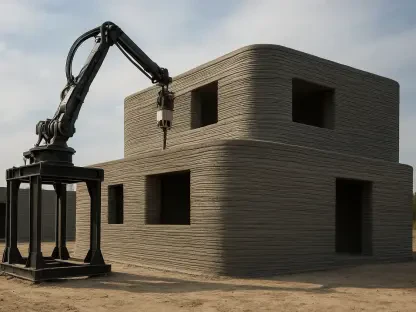
The realization of the “Smart Factory” concept relies on a suite of core technologies that create a seamless link between the physical and digital worlds. Digital twins have emerged as one of the most transformative tools in this category, allowing engineers to create high-fidelity virtual replicas of physical machines or entire production lines. These virtual models enable companies to run simulations and test various production scenarios without the risk of damaging expensive equipment or wasting materials. By identifying potential bottlenecks or mechanical issues in the digital realm, manufacturers can optimize their workflows before a single part is produced. Additionally, industrial 3D printing, or additive manufacturing, has moved beyond simple prototyping to become a viable method for producing complex, high-precision components that are impossible to create using traditional subtractive methods. This flexibility allows for the rapid customization of parts, which is essential for meeting the growing demand for personalized products in global markets.
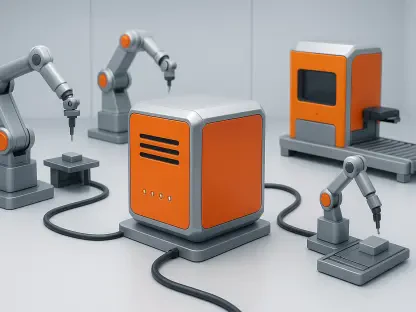
In tandem with these digital modeling tools, automated guided vehicles and collaborative robots are becoming standard features on the modern factory floor. These systems handle internal logistics and material transport with high levels of autonomy, navigating complex environments without the need for fixed tracks or human intervention. The integration of these mobile units with stationary robotic arms creates a dynamic production environment where machines can be redeployed quickly to meet changing market demands. The automotive industry remains the most significant adopter of these technologies, particularly as the sector pivots toward the mass production of electric vehicles. Major German automakers are leveraging the Internet of Things to manage the unique assembly requirements of battery electric platforms, which require a different logistical approach than traditional internal combustion engines. This technological synergy is also finding its way into the aerospace and defense sectors, where high-precision sensors and machine condition monitoring are used to maximize efficiency and ensure the highest safety standards across production facilities.
Regional Innovation: Mapping Germany’s Digital Hubs
Germany’s journey toward its 2034 market goals is being led by several regional innovation centers, each of which has developed a specialized focus within the Industry 4.0 landscape. Berlin has solidified its position as the national hub for software development and artificial intelligence research, attracting a diverse array of digital startups that provide the algorithms and platforms needed for smart manufacturing. In contrast, Munich has become the center for automotive IoT applications, benefiting from its proximity to major luxury car manufacturers and academic institutions focused on mobile technology. Stuttgart remains the traditional engineering heart of the country, where the intersection of digital startups and established vehicle manufacturers creates a unique environment for hardware-software integration. Meanwhile, Frankfurt is leveraging its logistical importance to pioneer automated warehousing solutions, and Düsseldorf is focusing on the smart grids and telecommunications infrastructure necessary to provide the high-speed connectivity required by autonomous factories. These geographic clusters allow for a high degree of collaboration, as companies can easily share expertise and resources within their specific niche.
The competitive landscape within these hubs features a sophisticated mix of historic engineering giants and global software leaders. Companies such as Siemens and Bosch provide the fundamental hardware and software platforms that serve as the operating systems for modern smart factories, offering everything from programmable logic controllers to sophisticated cloud-based analytics. They are joined by SAP, which manages the massive volumes of enterprise data generated by these systems, ensuring that shop-floor information is integrated with high-level business planning. This domestic expertise is supplemented by international technology firms that provide the raw processing power and cloud infrastructure needed to handle industrial-scale data sets. Smaller, specialized players also play a critical role, focusing on niche areas such as high-resolution machine vision or specialized sensors for harsh industrial environments. This diverse ecosystem ensures that there is a solution for every stage of the digital transition, from the initial installation of sensors to the implementation of fully autonomous, self-correcting production cycles.
Strategic Evolution: Achieving Sustainability and Autonomy
In the final analysis, the journey toward a $61.3 billion valuation demonstrated that the primary challenge was not the technology itself but the ability to scale it across diverse industrial landscapes. Stakeholders recognized that the path toward 2034 required more than just incremental hardware updates; it necessitated a fundamental shift in how industrial data was perceived as a raw material for economic growth. By prioritizing the democratization of technology, the industry ensured that even smaller enterprises could access the tools needed to participate in the global digital economy. The focus on sustainable manufacturing also proved to be a critical driver, as firms utilized digital twins and AI-driven energy management to reduce waste and lower their environmental impact. This strategic alignment between economic growth and environmental responsibility helped to solidify the “Made in Germany” brand as a hallmark of both quality and ethical production. As the market matured, the emphasis moved away from simple automation and toward the creation of truly autonomous supply chains that could self-correct and adapt to global shifts without human intervention.
The industry successfully addressed the labor gap by fostering a new era of collaboration between the public sector and private industry, resulting in a workforce that was as comfortable with code as it was with a wrench. Financial barriers were mitigated through the introduction of “Equipment-as-a-Service” models, which allowed smaller firms to adopt high-tech solutions through operational spending rather than massive capital outlays. These developments collectively ensured that the industrial base remained competitive in a rapidly changing world. Moving forward, the focus shifted toward the integration of Industry 5.0 principles, which emphasized the reintroduction of human creativity into the highly automated loop. Leaders understood that the most resilient systems were those that leveraged the speed of machines alongside the problem-solving capabilities of the human mind. This comprehensive approach allowed Germany to reach its ambitious financial targets while setting a global standard for the future of work and production.