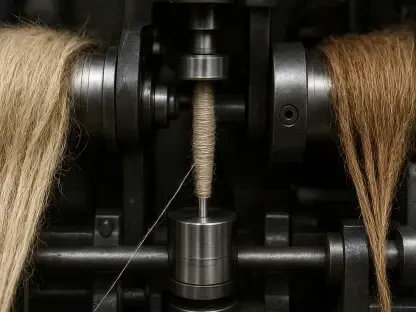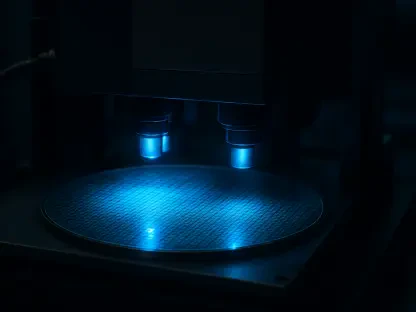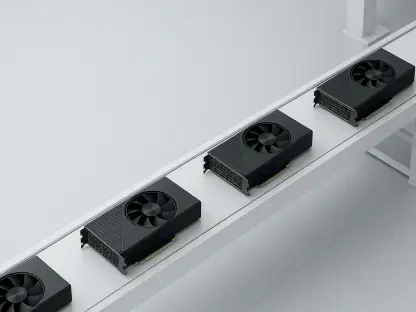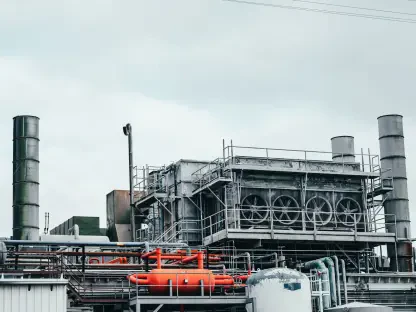

Tracing the path from the first sharpened flint stones to the sophisticated neural networks governing modern production floors reveals a trajectory of human innovation that has fundamentally reshaped the global landscape over millennia. This remarkable journey is currently defined by five distinct industrial revolutions, a sequence that began with the steam-powered mechanization of the late 18th century and has culminated in the hyper-connected, human-centric environments of the present day. Historically, these transitions were often met with profound cultural skepticism, exemplified by Charlie Chaplin’s iconic film Modern Times, which portrayed the industrial worker as a mere cog trapped within a heartless mechanical labyrinth. However, the manufacturing world of today has transcended that dark vision, replacing the soot and hazardous clatter of the assembly line with the silent, intelligent precision of the smart factory. These modern facilities prioritize seamless connectivity and environmental stewardship, turning what was once a site of manual drudgery into a sophisticated hub of technological progress and human creativity.
Part 1: The Transition Toward Robotic Autonomy and Collaborative Systems
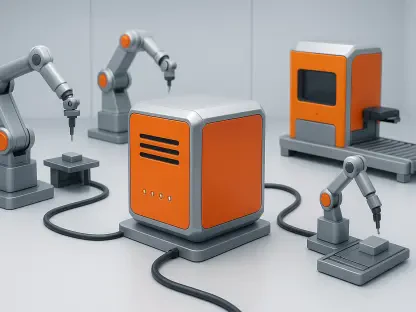
Automation in the modern manufacturing sector has transitioned from simple, repetitive mechanical assistance to highly sophisticated autonomous systems that require very little direct human intervention on the factory floor. The widespread implementation of advanced Programmable Logic Controllers and collaborative robots, frequently referred to as “cobots,” has ensured that machines no longer function in isolation or behind heavy safety cages. These robots are now equipped with sophisticated sensors and haptic feedback systems, allowing them to work safely alongside human colleagues while performing high-precision tasks such as micro-assembly or intricate welding with unparalleled speed. By integrating these flexible robotic cells, production facilities have achieved a level of scalability that was once impossible, as these units can be quickly reprogrammed to handle varying product lines or sudden shifts in market demand. This agility ensures that companies remain competitive in an era where product lifecycles are shorter and consumer expectations for customization are higher than ever.
The integration of these autonomous units has also led to the development of modular factory layouts where machines can communicate and reorganize based on real-time production needs. Unlike the rigid assembly lines of the past, modern systems utilize decentralized control mechanisms that allow individual robotic units to make local decisions, such as adjusting their pace to match the output of a preceding station. This level of autonomy reduces the risk of bottlenecks and allows for a more fluid manufacturing process that can accommodate small-batch production without the massive retooling costs traditionally associated with factory changeovers. Furthermore, the use of advanced computer vision allows these robots to identify and sort parts with varying orientations, removing the need for expensive and inflexible feeding systems. As a result, the boundary between mechanical hardware and intelligent software has blurred, creating a production environment where physical motion is constantly optimized by digital logic to ensure the highest possible efficiency.
Part 2: Harnessing the Industrial Internet of Things for Connectivity
At the core of this technological leap lies the Industrial Internet of Things, a vast and intricate network of communicating machines, embedded sensors, and cloud-based analytics platforms. By capturing massive amounts of real-time data regarding every minute vibration, temperature fluctuation, and energy spike, manufacturers have moved toward a model of predictive maintenance that anticipates equipment failure before it occurs. This connectivity essentially transforms the static factory into a responsive, living organism that can optimize its own performance without needing constant manual oversight from engineering teams. Beyond the immediate shop floor, this network extends into global supply chains, providing transparency that allows for the precise tracking of raw materials and finished goods in real time. This integration not only reduces the likelihood of costly downtime but also enhances overall resource efficiency, ensuring that every kilowatt of energy and every kilogram of material is utilized to its maximum potential within the production cycle.
Furthermore, the implementation of 5G connectivity within the factory environment has enabled ultra-low latency communication between thousands of devices simultaneously, supporting the use of mobile autonomous robots. These mobile units can navigate complex warehouse and production environments autonomously, transporting materials exactly where they are needed without the need for fixed conveyor systems or manual forklifts. This high-speed data exchange also facilitates the use of augmented reality tools for maintenance technicians, who can receive real-time digital overlays and instructions while performing repairs on complex machinery. By creating a unified digital fabric across the entire enterprise, the Industrial Internet of Things has effectively broken down the silos between the front office and the production floor. This total visibility allows management to make data-driven decisions that improve lead times and enhance product quality, while simultaneously fostering a safer and more organized workplace for every employee involved in the manufacturing process.
Part 3: Driving Precision Through Artificial Intelligence and Vision
If the physical hardware of robotics provides the strength of contemporary production, then Artificial Intelligence acts as the central nervous system, serving as the primary driver for the current shift. Complex AI algorithms are now capable of processing multidimensional datasets to uncover subtle patterns in production efficiency and consumer behavior that would be entirely invisible to human analysts. For instance, machine vision systems powered by deep learning are currently deployed to perform quality control at a microscopic level, scanning thousands of components per minute to identify surface defects or structural inconsistencies in real time. This immediate feedback loop ensures that only flawless products reach the final consumer, drastically reducing the costs associated with waste and product recalls. Moreover, AI-driven demand forecasting allows facilities to adjust their production schedules dynamically, minimizing the buildup of excess inventory and allowing for a more lean and efficient business model.
In addition to quality control and forecasting, artificial intelligence plays a critical role in the generative design process, where software explores thousands of design permutations to find the most efficient solution. By inputting specific parameters such as weight constraints, material types, and required strength, engineers use AI to “grow” parts that use the minimum amount of material while maintaining maximum structural integrity. This approach has led to the creation of organic, complex shapes that were previously impossible to manufacture using traditional casting or milling techniques. Once these designs are finalized, AI continues to optimize the actual production by fine-tuning the parameters of the manufacturing equipment in real time to account for variations in material batches or environmental conditions. This level of intelligent oversight ensures a degree of consistency and precision that far exceeds human capabilities, pushing the boundaries of what can be achieved in fields as diverse as microelectronics and heavy aerospace engineering.
Part 4: Revolutionary Design with Additive Manufacturing and Twins
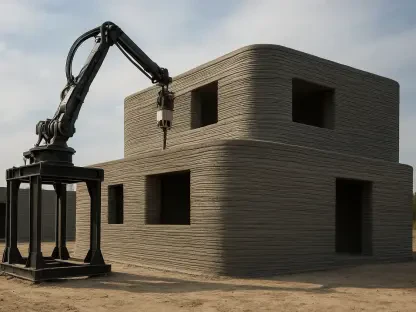
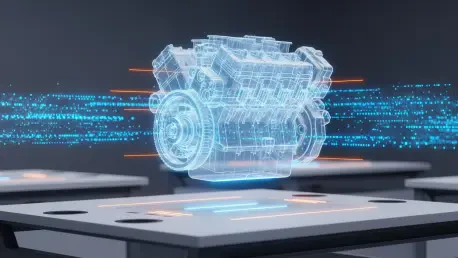
Innovative techniques such as additive manufacturing and the implementation of digital twins have further revolutionized the way products are conceptualized, designed, and constructed. Unlike traditional subtractive methods that create waste by cutting away material from a solid block, 3D printing builds objects layer by layer, enabling the creation of complex internal geometries that are essential for the aerospace and medical device industries. This capability not only reduces material consumption but also allows for the rapid prototyping of parts that were previously thought impossible to manufacture. Complementing this physical innovation is the digital twin, a virtual replica of a physical asset that resides in a high-fidelity simulation environment. By using these virtual models, engineers can test thousands of “what-if” scenarios, troubleshooting potential mechanical issues and optimizing assembly line layouts without ever risking damage to actual equipment. This synergy between the virtual and physical worlds has shortened the time-to-market for new innovations significantly.
The use of digital twins extends beyond the design phase and into the entire lifecycle of the product, allowing for continuous monitoring and optimization long after the item has left the factory. Sensors on the physical product send performance data back to its digital counterpart, enabling manufacturers to offer sophisticated after-sales services such as performance tuning or preemptive parts replacement. Simultaneously, additive manufacturing has empowered a shift toward localized production, where parts can be printed on-demand near the point of use, effectively eliminating the need for large, centralized warehouses and reducing the carbon footprint associated with global shipping. This combination of virtual simulation and flexible physical production allows for a level of mass customization that was once a theoretical dream. Consumers can now receive products that are specifically tailored to their individual needs, whether it is a custom-fitted prosthetic limb or a unique automotive component, all produced with the same efficiency as a mass-market commodity.
Part 5: Prioritizing Environmental Responsibility and Circularity
Sustainability has successfully transitioned from a peripheral corporate social responsibility concern to a core business strategy within the most advanced manufacturing sectors. The principles of Industry 5.0 emphasize the adoption of energy-efficient machinery and the integration of circular economy concepts, where recycling and the reduction of waste are intrinsically built into the production process from the outset. Many facilities have already integrated local renewable energy sources, such as on-site solar arrays or wind turbines, and are utilizing smart grid technology to manage their power consumption in real time. This shift toward environmental stewardship is not merely performative; it contributes directly to the financial bottom line by lowering operational costs and ensuring compliance with increasingly stringent global carbon regulations. By treating waste as a potential resource and optimizing energy usage through intelligent automation, manufacturers are demonstrating that high-volume production and ecological preservation are no longer mutually exclusive goals.
To further these environmental objectives, many organizations have implemented closed-loop systems where materials are recovered from end-of-life products and reintroduced into the manufacturing stream. Advanced sorting technologies, often powered by the same AI and machine vision used on the assembly line, allow for the precise separation of various alloys and polymers, maintaining the high purity levels required for high-performance manufacturing. This focus on circularity reduces the industry’s reliance on volatile raw material markets and minimizes the environmental impact of mining and processing new resources. Additionally, water recycling systems and carbon capture technologies are becoming standard features in modern industrial parks, reflecting a holistic approach to environmental management. By aligning production goals with planetary boundaries, the manufacturing sector has begun to function as a positive force for environmental restoration, proving that the tools of the fifth industrial revolution are as much about preserving the future as they are about increasing current output.
Part 6: Strategic Implementation of Human-Centric Industrial Practices
In the recent past, the manufacturing industry underwent a significant cultural transformation that successfully elevated the role of the human worker from a manual operator to an intelligent strategist. This transition occurred as companies realized that the most effective production models were those that paired the relentless precision of robotics with the creative problem-solving and intuitive judgment unique to humans. Organizations prioritized the upskilling of their staff, providing training in data science and systems management to ensure that employees could effectively oversee complex autonomous networks. This strategic shift resulted in a more resilient workforce that focused on high-level optimization and innovation rather than repetitive physical labor. By implementing these human-centric technologies and fostering a culture of continuous learning, manufacturers managed to create a flexible environment capable of adapting to the rapid pace of technological change. Consequently, the industry moved away from the fear of displacement and toward a collaborative era where technological tools empowered people to achieve unprecedented levels of productivity.
This evolution required a complete redesign of the workplace to prioritize the physical and cognitive well-being of the workforce, ensuring that technology served the person rather than the other way around. Ergonomic assistance systems, such as powered exoskeletons and smart workstations, were adopted to reduce the physical strain on workers, while intuitive software interfaces simplified the management of complex data streams. Leadership teams recognized that the human element was the most critical factor in maintaining flexibility and innovation, leading to a focus on inclusive design and the democratization of information. As these solutions were integrated, they fostered a sense of agency and purpose among employees, who were empowered to contribute to the continuous improvement of the production process. The successful navigation of this era demonstrated that the path to sustainable industrial growth lay in the harmonious integration of advanced digital tools and human ingenuity. Moving forward, the industry established a foundation where technology and humanity work in tandem to solve the most complex challenges of the modern global economy.