
The rapid convergence of advanced energy storage and sophisticated artificial intelligence has pushed industrial humanoid robotics from experimental labs directly onto the high-intensity factory floors of global battery giants. As manufacturing environments demand higher levels of flexibility and precision, the concept of embodied AI has surfaced as a primary solution. This technology integrates machine learning directly into physical forms that can interact with the material world in ways traditional fixed automation cannot. Within the current shift toward autonomous production, domestic manufacturers are increasingly dominating the field, leveraging local supply chains to outpace foreign competitors.
Introduction to Embodied AI and Industrial Humanoids
The emergence of embodied AI represents a shift from static software to agents that perceive and act within complex physical environments. These humanoids are built on a foundation of multimodal large models, allowing them to interpret visual data and execute physical tasks without rigid pre-programming. In the context of heavy industry, this evolution is particularly visible in the partnership between CATL and Galbot, where robots are no longer just tools but integral components of a self-sustaining ecosystem.
This technological transition is occurring alongside a rising dominance of domestic robotics firms in the global market. The strategic focus has shifted toward creating machines that can navigate the messy reality of factory floors. By combining high-performance hardware with adaptive AI, these systems are redefining the baseline for autonomous manufacturing in 2026.
Technical Architecture of Modern Industrial Humanoids
High-Payload Actuation and Mechanical Strength
The Galbot S1 stands out due to its dual-arm configuration, which provides a significant 50kg payload capacity. This mechanical strength is essential for handling battery modules and heavy materials that were previously reserved for human operators or specialized lift equipment. Unlike traditional robotic arms, the humanoid form allows for a more versatile range of motion, mimicking human kinetics to navigate tight industrial spaces.
The significance of this actuation lies in its ability to replace strenuous manual labor in environments where traditional conveyor systems are too rigid. The dual-arm design enables complex maneuvers, such as lifting and rotating large components simultaneously. This capability ensures that the robot can perform multi-step assembly processes with the same dexterity as a human staff member.
Vision-Centric Navigation and Obstacle Avoidance
Navigation in modern humanoids has moved away from expensive LiDAR toward vision-only positioning systems. Using 360-degree sensor arrays, the Galbot S1 achieves centimeter-level precision in real-time. This vision-centric approach allows the robot to build a spatial understanding of the factory floor, identifying obstacles and moving personnel with high reliability.
Moreover, these systems facilitate seamless integration into existing workflows without the need for extensive infrastructure changes. The use of advanced computer vision enables the robot to recognize specific parts and tools even under varying lighting conditions. This adaptability is crucial for maintaining safety and efficiency in a dynamic manufacturing environment.
Integrated Energy Solutions and Power Management
A standout feature of the current industrial humanoid generation is the synergy between the robot and its power source. Galbot utilizes CATL’s advanced battery technology, featuring bionic self-healing electrolytes and specialized cathode materials. These innovations enable continuous eight-hour operational cycles, matching the standard shift length of human floor staff.
This power management system is not merely about endurance; it is about reliability in high-intensity settings. The bionic electrolytes reduce the failure rate of the cells, ensuring that the robots remain operational without frequent maintenance. By integrating specialized energy storage directly into the bionics, manufacturers have created a closed-loop system that maximizes the utility of their own products.
Emerging Trends in the Global Robotics Market
The global landscape is witnessing a massive shift in market share as domestic Chinese manufacturers now account for over half of all global industrial robot installations. In 2026, for the first time, these local suppliers have surpassed foreign competitors in their home market, capturing 57% of the total share. This trend is driven by the rapid growth of AI startups and the consolidation of supply chains.
The rise of specialized partnerships between energy giants and robotics innovators is also a defining trend. These “closed-loop” manufacturing models allow for faster iteration and deployment of new technologies. As domestic firms continue to scale, the focus has moved from simple automation toward highly sophisticated agents capable of complex decision-making.
Real-World Applications in Heavy Industry
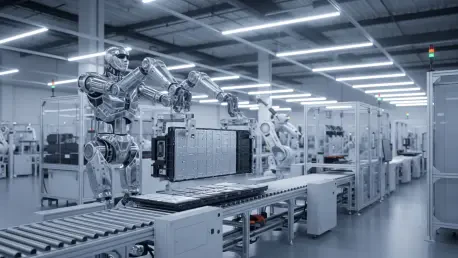
The deployment of humanoid technology is most visible in battery module and pack manufacturing lines. In these environments, robots like the Galbot S1 are tasked with material picking and high-precision handling. These roles were traditionally difficult to automate due to the varied shapes and weights of the components involved.
Beyond mere transport, these robots are being used to reduce the physical workload for human staff. By taking over the most demanding tasks, humanoids allow human workers to focus on quality control and system oversight. This transition has led to a more efficient floor layout, where robots and humans work in tandem to meet production targets.
Technical Hurdles and Market Obstacles
Despite the rapid progress, significant challenges remain in the transfer of skills from virtual training to physical reality. The “sim-to-real” gap often requires manual adjustments when a robot is moved from a simulated environment to a physical factory. Bridging this gap is essential for the rapid scalability of humanoid fleets across different industrial sectors.
Furthermore, the collection of high-quality data remains a bottleneck for training autonomous agents. While virtual simulations provide a foundation, real-world edge cases are difficult to replicate. Regulatory frameworks for autonomous agents also continue to evolve, presenting a hurdle for companies looking to deploy large-scale robot populations in public or semi-public spaces.
Future Outlook: the Road to Mass Commercialization
The industry is currently on a two-year trajectory for full-scale commercial rollout within the heavy industrial sector. Future developments are expected to focus on enhancing simulated learning techniques to reduce the need for manual on-site training. Breakthroughs in bionic power density will likely extend operational hours further, potentially allowing for 24-hour cycles.
Moreover, the long-term impact of these robots will likely include a complete overhaul of smart manufacturing standards. As humanoids become more affordable and capable, their presence will expand beyond the battery industry into general logistics and assembly. This expansion will solidify the role of embodied AI as the backbone of the next industrial revolution.
Summary and Strategic Assessment
The collaboration between CATL and Galbot provided a clear demonstration of how advanced energy storage and artificial intelligence could merge. This partnership successfully replaced physically demanding human roles with autonomous systems that maintained high precision and endurance. It showed that the transition to smart manufacturing was dependent on the seamless integration of hardware and software.
Ultimately, the strategic importance of this synergy resided in its ability to create a self-sustaining industrial model. The use of domestic battery technology to power domestic robotics highlighted a growing independence in the global supply chain. This shift toward specialized, energy-efficient humanoid agents redefined the expectations for heavy industry and set a new standard for global manufacturing.