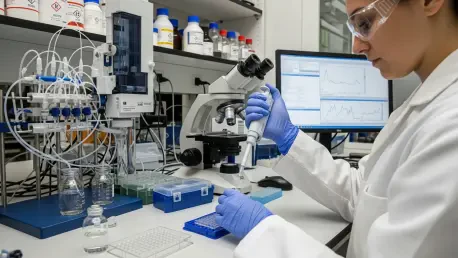

The pharmaceutical industry is currently grappling with an era of unprecedented molecular complexity that threatens to outpace traditional manufacturing capabilities. The traditional landscape of drug discovery has long been haunted by a staggering failure rate where nearly ninety percent of clinical candidates never reach the pharmacy shelf. This high attrition rate, combined with the astronomical costs of bringing a single medicine to market, has forced a radical rethinking of how drugs are designed and produced. Historically, the industry prioritized the discovery of the molecule—the eureka moment in the lab—while treating manufacturing as a secondary concern to be solved later. However, as the global demand for affordable and effective treatments grows, the focus has shifted toward an engineering-centric model. This evolution acknowledges that a brilliant molecule is useless if it cannot be manufactured reliably, safely, and at a scale that reaches millions of patients. Today, the integration of chemical engineering into the very foundation of drug development is not just a trend but a necessity for survival in a competitive global market. By merging molecular science with rigorous process engineering, developers are closing the gap between laboratory success and industrial reality, ensuring that life-saving innovations actually make it into the hands of those who need them most. This change represents a fundamental shift from a chemist-only focus to a multi-disciplinary effort that prizes scalability and consistency from the very beginning.
The Historical Transition in Drug Development
Part 1: Moving Beyond Chemist-Centric Models
Before the final decade of the twentieth century, the drug development lifecycle was dominated by synthetic organic chemists who viewed the laboratory bench as the ultimate arbiter of success. During this period, the primary goal was the successful synthesis of a target molecule, often through complex and multi-step chemical reactions that were difficult to replicate outside of a controlled, small-scale environment. These chemists focused heavily on the yield and purity of the chemical reaction itself, frequently overlooking the logistical realities of how that reaction would behave when scaled up to a thousand-liter reactor. This approach often neglected the critical downstream steps known as unit operations, such as filtration, solvent exchange, and large-scale drying. Because these engineering considerations were treated as afterthoughts, the transition from discovery to production was fraught with unexpected failures. When a process that worked perfectly in a test tube failed to perform in a manufacturing plant, it led to massive delays and increased costs. This isolation between discovery and production created a bottleneck that the industry could no longer afford as the pressure for faster market entry intensified. The inherent flaws in the chemist-centric model became undeniably apparent during the technology transfer phase, where the recipe for a drug moved from the research lab to the commercial facility.
Part 2: The Integration of Engineering Disciplines
The late twentieth century served as a pivotal turning point when the pharmaceutical industry began to embrace the rigorous data-driven methodologies of chemical engineering. This era saw the introduction of reaction calorimetry, a technique that allowed scientists to measure the heat released or absorbed during a chemical reaction with extreme precision. By quantifying the thermal profile of a synthesis, engineers could predict exactly how a reaction would behave in a large, insulated vessel where heat dissipation is much slower than in a small flask. This data was instrumental in preventing runaway reactions, which posed significant safety risks in large-scale production environments. Alongside calorimetry, advanced chromatography and mathematical modeling became standard tools for understanding the kinetics of drug formation. This shift allowed for a more granular understanding of the variables that influence product quality, such as stirring speeds, cooling rates, and the order of reagent addition. Consequently, the industry moved away from trial-and-error experimentation toward a more predictive science, where the outcome of a scale-up process could be simulated and optimized before any physical infrastructure was ever built. This proactive approach paved the way for more complex manufacturing strategies, such as continuous processing, which further enhanced the efficiency and safety of pharmaceutical production.
Modern Management and Digital Evolution
Part 3: Leveraging Automated Control and Artificial Intelligence
The evolution of quality management has progressed from the foundational principles of Quality by Design to the more sophisticated and dynamic framework of Quality by Control. While Quality by Design focused on defining a design space within which a process was expected to produce a consistent product, Quality by Control takes this concept a step further by using automated systems to actively govern the manufacturing environment. In a modern 2026 production facility, sophisticated control loops use real-time sensor data to manipulate process variables—such as pressure, temperature, and flow rates—to keep the product within its optimal specifications. This level of automation reduces the reliance on human intervention, which is often a source of variability and error in pharmaceutical manufacturing. For example, if a sensor detects a slight drift in the concentration of a key intermediate, the control system can automatically adjust the feed rate of a reactant to compensate. This transition toward active control ensures that even if raw materials vary slightly in their properties, the final output remains remarkably consistent. The result is a more resilient manufacturing process that can adapt to changing conditions without needing to stop production or risk the creation of substandard material, moving the industry closer to a future of truly optimized, data-driven production with minimal manual labor.
Part 4: Artificial Intelligence in the Manufacturing Suite
This leap in automation has fostered a data-rich environment that is perfectly suited for the application of advanced artificial intelligence and machine learning algorithms. By 2026, these digital tools have moved beyond mere novelties and are now integrated into the core of pharmaceutical manufacturing operations. Machine learning models are routinely trained on vast datasets generated by thousands of previous production runs, allowing them to identify complex patterns and correlations that are invisible to the human eye. These algorithms can predict potential equipment failures before they happen or suggest the most efficient parameters for a new drug based on its similarity to existing products. For instance, artificial intelligence can optimize the crystallization of a drug substance—a notoriously difficult process to control—by analyzing millions of data points related to solvent composition and cooling curves. This capability transforms the research and manufacturing continuum from a reactive model to a predictive one. Instead of spending months on laboratory experiments to find the perfect processing conditions, engineers can use digital twins and simulations to narrow down the most promising options in a fraction of the time. This synergy between physical engineering and digital intelligence is drastically accelerating the speed at which new therapies can be developed and scaled for global distribution, ensuring that manufacturing bottlenecks no longer delay patient access.
Sustainable Technologies and Practical Applications
Part 5: Harnessing Biocatalysis for Greener Production
One of the most significant engineering-driven breakthroughs in recent years is the widespread adoption of biocatalysis, which utilizes natural enzymes as catalysts for chemical transformations. Traditionally, the synthesis of complex pharmaceutical molecules required multiple steps involving harsh chemicals, heavy metals, and high energy consumption. Biocatalysis offers a more elegant and sustainable alternative by leveraging the incredible specificity of enzymes, which often function at room temperature and in aqueous environments. From 2026 to 2028, the industry is expected to see a significant increase in the number of manufacturing routes that incorporate at least one enzymatic step. This shift is not just about environmental responsibility; it is also about efficiency. Enzymes can perform reactions that are nearly impossible to replicate with traditional synthetic chemistry, often eliminating the need for protecting groups that add unnecessary steps and waste to a process. By streamlining these synthetic routes, manufacturers can produce complex drugs more quickly and with a much smaller physical and environmental footprint. This engineering-led reimagining of chemistry is proving that sustainability and profitability can go hand-in-hand, provided that the process is designed with the right biological tools from the outset. Furthermore, the use of biocatalysis often results in higher purity levels, reducing the need for intensive downstream purification and further lowering production costs.
Part 6: Industrial Scalability Through Refined Processing
Beyond biocatalysis, the focus on engineerable routes has led to a major refinement in how molecules are purified and prepared for final formulation. A prime example of this trend can be seen in the development of certain cholesterol-lowering peptides where traditional, expensive chromatography was replaced with streamlined crystallization. Chromatography is a powerful tool for purification, but it is often the most expensive and slowest part of a manufacturing process, requiring vast quantities of solvent and specialized equipment that is difficult to scale for global demand. By prioritizing chemical routes that result in crystallizable intermediates, engineers can use much simpler and more cost-effective filtration and precipitation techniques to achieve the necessary purity. This choice is a clear departure from the old way of thinking, where a chemist might choose the most innovative synthetic path regardless of its downstream consequences. Now, the decision-making process involves a comprehensive analysis of the entire lifecycle of the drug. If a specific chemical route allows for easier purification and higher throughput, it is often selected over more chemically elegant but less scalable alternatives. This pragmatic approach ensures that the path to a finished drug is as direct and efficient as possible, ultimately lowering the cost of treatment for patients worldwide and ensuring that supply can meet the demands of even the largest global populations.
Meeting the Demands of Molecular Complexity
Part 7: Engineering Solutions for Middle-Space Molecules
The modern pharmaceutical pipeline is increasingly defined by middle-space molecules, such as peptides and oligonucleotides, which sit between the worlds of traditional small molecules and large biologics. These complex therapies offer targeted treatment options for diseases that were previously considered untreatable, but they also present unique manufacturing challenges that demand highly flexible engineering solutions. Unlike simple small molecules, these substances often have intricate three-dimensional structures that are sensitive to the physical environment of the manufacturing plant. Furthermore, their production often requires a hybrid approach that combines the rigorous synthesis methods of chemical engineering with the delicate handling techniques of biological processing. To address this, engineers have developed modular manufacturing units that can be rapidly reconfigured to accommodate different types of molecular structures. This flexibility is essential in 2026, as companies often need to switch between producing various batches of specialized therapies within the same facility. The integration of advanced engineering principles ensures that these complex modalities can be manufactured with the same level of reliability and precision as more traditional drugs, regardless of their biological or synthetic origin. As these molecules become more common, the ability to engineer adaptable and robust manufacturing platforms will be the primary factor in determining how quickly they can be commercialized.
Part 8: Advancing Global Health Through Strategic Innovation
The transition toward an engineering-first philosophy in pharmaceutical development provided a decisive solution to the inefficiencies that once plagued the industry. By moving away from isolated laboratory discoveries and embracing integrated manufacturing systems, developers successfully lowered the barriers to producing complex, life-saving therapies. This evolution demanded that manufacturers invest heavily in digital infrastructure and collaborative research models, ensuring that every molecular breakthrough was matched by a robust and scalable production process. Organizations that prioritized these engineering disciplines managed to shorten development timelines and reduce the environmental impact of their operations, setting a new standard for global healthcare. The integration of real-time monitoring and predictive artificial intelligence created a resilient supply chain capable of adapting to the shifting demands of modern medicine. As the industry moved forward, the emphasis on manufacturability ensured that even the most intricate molecules could be delivered to patients with consistent quality and reduced cost. This paradigm shift ultimately transformed the role of the engineer from a secondary support figure into a primary architect of pharmaceutical innovation, cementing the link between scientific discovery and industrial reality. Moving forward, the focus must remain on the continuous refinement of these automated and sustainable systems to ensure that healthcare remains equitable and accessible to all populations, regardless of their geographic or economic status.