
The deployment of containerized manufacturing systems on active naval vessels signifies a transformative departure from centralized supply chains toward a highly resilient and autonomous maritime operational model. This evolution marks a significant advancement in the industrial and defense sectors, where the ability to fabricate high-precision metal components in the middle of the ocean is no longer a theoretical concept but a tactical necessity. This review explores the technical maturation of hybrid additive manufacturing (HAM), analyzing its key features, performance metrics, and the profound impact it has on modern expeditionary applications.
Evolution and Fundamentals of Hybrid Additive Manufacturing
Hybrid Additive Manufacturing (HAM) is an innovative approach that integrates the additive build-up of material with subtractive machining processes within a single platform. This technology emerged from the need to overcome the surface finish and dimensional accuracy limitations inherent in traditional metal 3D printing. By combining these methods, manufacturers leverage the geometric freedom of additive deposition alongside the high-precision capabilities of Computer Numerical Control (CNC) milling. This synergy is particularly relevant in current industrial landscapes where speed and material efficiency are critical for maintaining complex, distributed supply chains.
Core Components and Technical Integration
Directed Energy Deposition via Wire-Laser Technology
At the heart of modern hybrid systems, such as the Meltio Blue integration, is wire-laser metal deposition. This process uses a high-intensity laser to melt metal wire, building components layer by layer with high material utilization rates. Unlike powder-based systems, which present significant fire and inhalation hazards in confined spaces, wire-based deposition is inherently cleaner and safer for deployment on naval vessels. This specific implementation allows for the use of standard welding wires, which simplifies the logistics of material sourcing in remote areas.
Integrated Subtractive Precision with CNC Systems
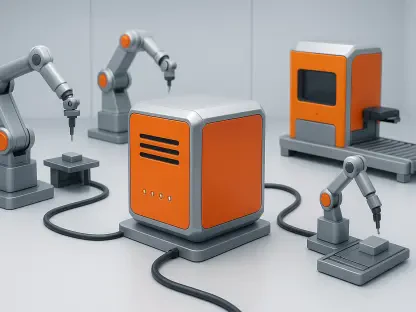
The integration of a Haas TM-1P CNC machine allows for the immediate post-processing of additive parts within the same workspace. Once the wire-laser system deposits the material, the CNC tooling can mill or drill the part to exact specifications without the need to transfer the workpiece to a separate station. This integration ensures that critical tolerances are met while eliminating the risk of alignment errors that often occur when moving parts between different machines. For functional mechanical components, this secondary machining is what makes the part usable in high-stress environments.
Containerized and Expeditionary System Architecture
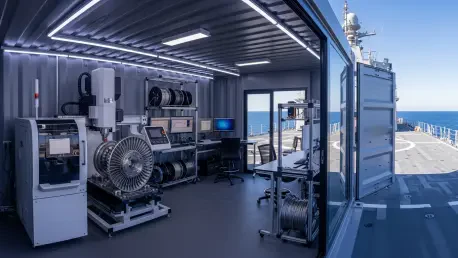
The shift toward containerized hybrid AM systems represents a major architectural leap in manufacturing portability. By housing the entire workflow—from deposition to finishing—within a standard shipping container, the technology becomes a “plug-and-play” asset. These units are engineered for rapid deployment in austere environments where traditional factory infrastructure is unavailable. This self-contained design protects sensitive optics and electronics from external contaminants, ensuring that the system remains operational in diverse climates.
Current Developments in Distributed Manufacturing
Recent innovations focus on moving away from centralized factory hubs toward distributed additive manufacturing networks. These networks, overseen by entities like the Naval Postgraduate School’s Consortium for Advanced Manufacturing Research and Education (CAMRE), use standardized hybrid systems to ensure that a digital blueprint can be printed with identical quality across different geographic nodes. This interconnectedness allows for the rapid sharing of updated part designs, ensuring that the latest engineering improvements are available to every deployed unit simultaneously.
Strategic Applications in Maritime and Defense
Operational Readiness and Sustained Naval Presence
The deployment of hybrid AM aboard the USS Essex for the RIMPAC exercise highlights the technology’s role in military readiness. In maritime operations, the inability to source a single metal component can sideline a multi-billion dollar asset for weeks. Hybrid systems allow crews to produce entirely new components or repair worn parts on-site, effectively creating a self-sustaining floating factory. This capability reduces reliance on vulnerable logistics lines and ensures that ships remain on station longer.
Point-of-Need Repair for Austere Environments
Beyond the defense sector, hybrid AM is utilized for expeditionary manufacturing in remote industrial sites, such as offshore oil rigs or mining operations. The ability to restore a worn shaft or gear using laser cladding followed by precision milling saves significant downtime. These point-of-need applications demonstrate how hybrid technology can mitigate the massive costs associated with shipping heavy machinery parts across the globe, offering a more sustainable alternative to traditional replacement cycles.
Technical and Regulatory Challenges
Material Integrity and Environmental Sensitivity
Operating high-precision lasers and CNC equipment in high-vibration or corrosive marine environments presents significant technical hurdles. Ensuring consistent metallurgical properties and preventing oxidation during the deposition process requires advanced shielding gas systems and robust environmental controls. Furthermore, the repeatability of part quality in non-controlled environments remains a primary concern for engineers, as slight fluctuations in humidity or temperature can affect the cooling rates of the molten metal.
Certification and Standardization Obstacles
The widespread adoption of hybrid AM is often hindered by the lack of standardized certification processes for 3D-printed metal parts. Regulatory bodies require rigorous testing to ensure that additively manufactured components meet the same structural benchmarks as forged or cast parts. Developing “qualification by process” standards is an ongoing effort to allow for faster implementation. Without these standards, the use of printed parts remains limited to non-critical repairs rather than primary structural components.
Future Outlook and Technological Trajectory
The future of hybrid additive manufacturing lies in the deeper integration of artificial intelligence and automated inspection. Future systems are expected to feature in-situ monitoring that can detect and correct defects during the printing process automatically, reducing the need for manual quality checks. As the technology matures, it will transition from a secondary repair tool to a primary manufacturing method for complex, multi-material components, potentially replacing traditional casting and forging in many industrial sectors.
Summary and Final Assessment
The strategic integration of hybrid additive manufacturing successfully shifted the paradigm of maritime sustainment from reactive logistics to proactive, on-site production. This transition validated the feasibility of the floating factory concept, although it also highlighted the urgent need for a unified digital thread to secure global manufacturing data. Engineers and military leaders recognized that the next logical step involved the development of autonomous, AI-driven quality assurance protocols to eliminate human error in remote environments. Ultimately, the performance of these systems established a new benchmark for expeditionary readiness that demanded a total reassessment of traditional support structures.