
Kwame Zaire is a distinguished voice in the world of high-tech manufacturing and production management, bringing years of expertise in the intricate fields of electronics and defense equipment. With a professional focus that spans from predictive maintenance to the rigorous demands of safety and quality control, Zaire has become a leading figure in navigating the complex transition from industrial assembly to deep-tech innovation. His insights are particularly relevant as global powers shift toward technological sovereignty, a subject he follows with the precision of a seasoned engineer and the strategic mind of a production leader. In this discussion, Zaire reflects on the recent developments shared at the 2026 industry summit in Bengaluru, where the future of sovereign defense capabilities took center stage.
The core of our conversation revolves around the ambitious transformation of the manufacturing ecosystem, moving away from a reliance on foreign sources toward a fully indigenous lifecycle for defense hardware. We explore the critical role that electronics and semiconductors play as the “nervous system” of modern weaponry and the logistical hurdles of achieving “last-mile” indigenization. Zaire delves into the necessity of maintaining impeccable quality standards when scaling production and how the integration of artificial intelligence and autonomous systems is fundamentally redefining the modern battlefield. Throughout the interview, the focus remains on the ethical and strategic responsibility of building a trusted, self-reliant defense infrastructure that can withstand the pressures of a rapidly changing global landscape.
Given the ambitious goal of defending sovereignty through domestically designed equipment, how do you perceive the logistical shift required to move from being an assembler to a true innovator?
Moving from assembly-led production to true innovation requires a fundamental overhaul of how we view the manufacturing floor and the entire supply chain. Currently, nearly 65 percent of defense production is happening within the country, which represents a massive leap forward and a significant departure from our historical dependence on external sources. However, the real logistical challenge lies in achieving “last-mile” indigenization, where every single component, down to the smallest resistor or sensor, is designed and manufactured locally. It is an emotional journey for many of us in the field, as we remember the restrictions of the past that stifled our progress; now, we are fueled by a collective determination to ensure our armed forces never have to wait for a foreign shipment to secure our borders. To succeed, we must move beyond the surface-level construction of platforms and develop a profound, visceral understanding of the core technologies that make these systems function under the harshest conditions.
The industry has recently emphasized that “platforms carry the mission, but electronics decide the permission of the mission.” What specific advancements in sensing and communication are currently defining this new era of defense?
In the high-stakes environment of modern warfare, the physical vehicle—be it a jet, a tank, or a naval vessel—is simply the carrier, while the electronic heartbeat provides the actual capability to succeed. We are seeing a massive surge in the development of advanced radars, electro-optics, and missile warning systems that allow a military to dominate the electromagnetic spectrum. These systems rely on incredible processing power and secure data links that must remain unhackable and resilient, creating a sensory web that monitors every move of an adversary. There is a certain intensity to watching these high-tech systems come to life during testing, knowing that their software-defined nature allows them to be updated and adapted in real-time to meet new threats. By mastering these electronic “permissions,” we ensure that our defense systems are not just present on the battlefield, but are actually empowered to dictate the outcome of the mission through superior situational awareness.
Reflecting on the historical challenges faced during earlier missile development programs, how critical is semiconductor self-reliance to the goal of total indigenization?
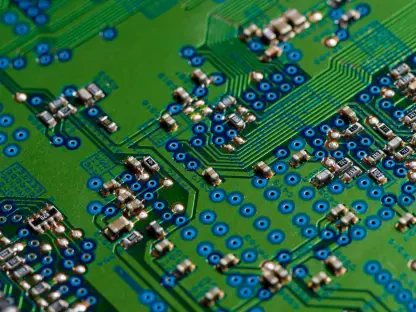
Semiconductors are the literal bedrock of every modern defense system, and without domestic control over their production, any claim of indigenization remains incomplete and vulnerable. I often look back at the earlier years of missile development when progress was periodically choked off by technology restrictions from abroad; those moments served as a painful but necessary wake-up call that we must own the entire supply chain. Building a local semiconductor ecosystem means we are no longer just buying chips off a shelf, but are instead designing the very logic and architecture that governs our most sensitive military hardware. This requires a massive investment in clean-room infrastructure and a deep commitment to testing every single wafer to ensure it meets the life-or-death standards of the armed forces. When we control the silicon, we remove the leverage that foreign entities might use against us during a conflict, ensuring our sovereignty is built on a foundation of trusted, locally-made hardware.
As production expands to include more private industry players, how can the manufacturing sector maintain identical performance standards across massive quantities of equipment?
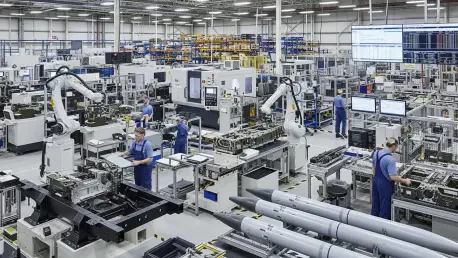
Scalability is the ultimate test for any manufacturing ecosystem, especially when the goal is to produce advanced weaponry consistently and in large numbers without any deviation in quality. We have to move toward a culture where the quality of the 1,000th unit is exactly the same as the first prototype that passed its initial trials, which requires a rigorous implementation of standardized processes across both public and private sectors. This involves creating a sensory-rich environment of precision on the factory floor, where predictive maintenance and real-time monitoring ensure that every component is tracked from its raw material stage to the final deployment. It is about more than just checking boxes; it is a fundamental ethical responsibility to ensure that when a soldier relies on a piece of equipment, it performs perfectly every single time. If we cannot maintain these identical performance standards at scale, then the quantity of our production becomes a liability rather than a strength.
With the rise of AI-enabled and autonomous systems, how is the nature of the future battlefield changing the way we think about military effectiveness?
The future battlefield is rapidly evolving into a connected, autonomous web where artificial intelligence drives decision-making at speeds that are impossible for humans to match. We are shifting away from isolated, man-operated platforms toward software-defined systems that communicate seamlessly across air, land, sea, and space. This transformation demands a high level of trust in the algorithms we develop, which is why it is so vital that the software and the “brains” of these machines are built right here at home. There is a profound sense of responsibility in creating autonomous systems that can navigate the complexities of modern warfare while remaining secure from electronic interference or cyber-attacks. Our focus must remain on ensuring that these AI-driven systems are not just technological marvels, but are deeply integrated into a sovereign strategy that empowers our forces with the best possible tools.
What is your forecast for the defense manufacturing sector over the next decade?
I foresee a landscape where the distinction between private industry and national defense organizations disappears as we reach a state of total technological synergy. By the time we look back from the mid-2030s, the 65 percent domestic production rate we observed at the 2026 Bengaluru summit will likely have surpassed the 90 percent mark, with the country serving as a global beacon for trusted, indigenous electronics. We will see the maturation of a manufacturing ecosystem where semiconductors, autonomous software, and heavy hardware are co-developed in a seamless loop of innovation and testing. The ultimate victory will be the realization that we no longer need to look outside our borders for the technology that keeps our citizens safe, as our own industry will be capable of delivering world-class systems from the design phase to final deployment. This decade will be defined by an unwavering spirit of self-reliance, ensuring that our defense capabilities are as independent as the sovereign nation they protect.