
The rapid convergence of information technology and operational technology has forced industrial facilities to abandon the legacy mindset of isolated machine logic in favor of high-speed, data-driven ecosystems. In this modern era, the simple execution of a manufacturing cycle is no longer the sole metric of success; instead, the ability to harness granular process data for predictive maintenance and real-time optimization has become the standard. This shift places an immense burden on control hardware, which must now bridge the gap between rugged shop-floor reality and sophisticated cloud-based intelligence. As manufacturing volumes increase and the tolerance for downtime vanishes, engineers face the complex task of selecting a control architecture that balances deterministic reliability with the raw computational power required for modern digital innovation. This evolution is driven by the strategic deployment of Programmable Logic Controllers, Programmable Automation Controllers, and Industrial PCs that serve as the fundamental pillars of the digital factory.
The Foundations of Reliable and Multi-Domain Control
Deterministic Reliability: The Enduring Legacy of the PLC
The Programmable Logic Controller remains the fundamental workhorse of the industrial world, designed with a philosophy centered on extreme reliability and deterministic operation. In environments where electrical noise, extreme temperatures, and heavy vibrations are the norm, the ruggedized nature of the PLC provides a level of durability that standard computing hardware simply cannot match. Its architecture is purpose-built for the factory floor, utilizing a dedicated operating system that prioritizes the execution of control logic over all other secondary tasks. This specialization ensures that critical machine movements occur exactly when intended, preventing mechanical collisions or process deviations that could result in costly damage. By maintaining a strict focus on the input-output scan cycle, these controllers offer a level of predictability that is essential for high-speed packaging, automotive assembly, and chemical processing where safety and precision are paramount.
The internal logic of a PLC is optimized for Boolean operations and simple math, allowing it to execute thousands of logic rungs in a matter of milliseconds with absolute consistency. Unlike general-purpose computers that may experience latency due to background updates or peripheral interrupts, the PLC provides a guaranteed response time that engineers rely on for synchronization. This deterministic behavior is the cornerstone of industrial safety, as it allows for the implementation of fail-safe routines that trigger immediately upon the detection of an anomaly. Furthermore, the modular nature of modern PLC hardware allows for easy expansion of physical inputs and outputs, enabling the system to scale alongside the machinery it controls. While newer technologies offer more processing power, the unmatched uptime and specialized resilience of the PLC ensure its continued relevance in any application where a single second of failure is unacceptable.
Multi-Domain Integration: Expanding the Scope of Automation
As industrial systems grew in complexity, the Programmable Automation Controller emerged to fill the functional gap between rugged logic controllers and flexible standard computers. PACs represent an evolution of the traditional controller, designed to handle multi-domain automation such as advanced motion control, signal processing, and direct database connectivity within a single platform. By adhering to international software standards like IEC 61131-3 and supporting object-oriented programming, these systems enable a more seamless flow of information between the shop floor and the enterprise level. This capability allows engineers to implement complex control algorithms that were once only possible on PC-based systems, while maintaining the industrial-grade hardware reliability required for continuous production. This hybrid nature makes the PAC an ideal choice for facilities that require high-speed synchronization across multiple machines.
The transition to PAC architecture allowed for the integration of disparate systems, such as vision-guided robotics and complex thermal management, into a unified engineering environment. Instead of managing multiple separate controllers for logic, motion, and networking, a single PAC can orchestrate these functions through a common tag database. This reduces the complexity of the control cabinet and simplifies the troubleshooting process for maintenance teams, as they only need to interface with one software package. Moreover, the ability of PACs to communicate across various industrial protocols like EtherNet/IP and Modbus TCP facilitates the horizontal integration of the factory. By acting as a central hub for both operational logic and data collection, the PAC has become an essential tool for manufacturers looking to modernize their infrastructure without the inherent stability risks of a standard commercial operating system.
Strategic Implementation and Data-Centric Power
High-Capacity Computing: Leveraging Industrial PC Architecture
The Industrial PC represents a significant shift toward high-capacity computing on the plant floor by leveraging standard architectures like multi-core processors and advanced graphics units. Unlike traditional controllers, IPCs are designed for local edge computing, providing the horsepower needed for artificial intelligence-based visual inspection and complex condition monitoring. These systems allow for real-time adjustments based on analytical models, providing a bridge between raw operational data and executive-level decision-making. However, the adoption of IPCs introduces specific trade-offs, such as a larger cybersecurity attack surface and a shorter hardware lifecycle compared to legacy logic systems. Despite these challenges, the ability to run high-level languages and standard operating systems in a ruggedized enclosure has made the IPC indispensable for modern smart factories that rely on massive data logging and video analytics.
One of the primary advantages of the IPC is its ability to run multiple virtual machines, allowing a single piece of hardware to simultaneously manage machine control, human-machine interfaces, and local data storage. This consolidation reduces the overall footprint of the control system while providing a flexible environment for running third-party software tools for optimization and reporting. From 2026 to 2028, the deployment of IPCs is expected to accelerate as more facilities integrate machine learning algorithms directly into their production lines for automated quality sorting. Because IPCs utilize standard IT hardware components, they also benefit from the rapid innovation cycles of the consumer and server markets, bringing high-speed solid-state storage and gigabit networking to the industrial edge. This makes them the superior choice for data-intensive applications where the primary goal is to turn raw sensor output into actionable business intelligence.
Strategic Selection: Criteria for Modern System Engineering
Selecting the correct control architecture is no longer a matter of identifying the most advanced technology, but rather the best fit for specific operational constraints and environmental factors. Engineers must evaluate critical criteria, including the necessity for deterministic response times, the total volume of data being processed, and the long-term maintenance requirements of the facility. For instance, high-speed motion synchronization and safety-critical tasks favor the PAC or PLC, while massive data storage and real-time analytical workloads make the IPC the superior choice. Furthermore, the total cost of ownership must be considered, including the availability of skilled personnel who can program and maintain these different platforms. A facility specializing in heavy machinery might prioritize the extreme longevity of a PLC, whereas a high-tech plant might benefit more from the flexibility of an IPC network.
Environmental considerations also play a vital role in the selection process, as the cooling requirements and vibration tolerance of an IPC differ significantly from the passive cooling designs of a PLC. While an IPC offers more computing power per dollar, the potential for software corruption or operating system instability requires a more robust maintenance and backup strategy. Conversely, the long lifecycle of a PLC, which can often exceed fifteen years of service, provides a stable foundation for industries with slow upgrade cycles. The decision-making process must also account for the integration of cybersecurity, as networked controllers are increasingly targeted by sophisticated threats. By carefully weighing the trade-offs between raw speed, deterministic timing, and ease of connectivity, engineering teams can design a control system that meets the specific throughput demands of the facility while remaining within the budget.
The Path Toward Unified Industrial Architectures
Technological Convergence: Developing Hybrid Control Solutions
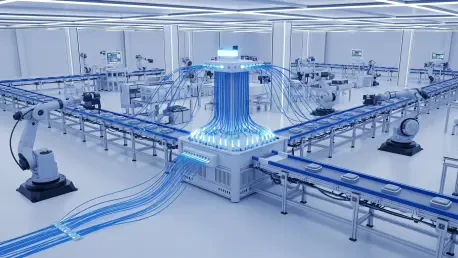
The current industry consensus points toward a convergence of these once-distinct technologies into hybrid architectures where the lines between hardware types are increasingly blurred. In these modern setups, it is common to see a PLC handling deterministic machine control while an IPC sits alongside it to manage artificial intelligence workloads and cloud communication. This synergy allows engineers to build systems that are simultaneously resilient and intelligent, leveraging the strengths of each platform to maximize uptime and insight. This approach also simplifies the integration of legacy equipment with newer digital tools, ensuring that existing investments are not rendered obsolete. By utilizing standardized communication protocols like OPC UA, these hybrid systems can share data across the entire organization, enabling a level of transparency and coordination that was previously impossible.
This hybrid strategy also facilitates the use of the cloud for non-critical tasks such as long-term trend analysis and global supply chain coordination. While the local PLC ensures the machine continues to operate safely, the IPC or PAC can push aggregated data to a centralized server for comparison across multiple production sites. This tiered approach to data management prevents the local control network from becoming overwhelmed with traffic while still providing the high-level visibility required for modern management. Furthermore, the use of industrial gateways and edge servers allows for the implementation of advanced security measures, such as deep packet inspection and network segmentation, between the factory floor and the external internet. By embracing a converged architecture, manufacturers can achieve the high-speed performance required for precision manufacturing while maintaining the flexibility to adopt new digital tools as they emerge.
Actionable Innovation: Building a Unified Factory Architecture
The industry successfully transitioned toward integrated control architectures by prioritizing modularity and the adoption of software-defined logic across the production line. Engineers moved away from rigid hardware dependencies, instead implementing virtualized controllers that allowed for greater scalability and flexibility in responding to market demands. This shift proved that the most effective strategy involved balancing the deterministic requirements of physical machine movement with the high-level computational needs of modern data analytics. Organizations that invested in open-source protocols and cross-platform compatibility found themselves better equipped to handle the complexities of a unified digital ecosystem. Ultimately, the focus shifted from simply maintaining machine uptime to optimizing the entire value chain through informed, data-driven decisions that reduced waste and improved overall equipment effectiveness across the entire enterprise.
To sustain this progress, facilities focused on establishing standardized programming frameworks that allowed for easier code reuse and faster commissioning of new equipment. The integration of version control systems and automated testing for PLC and PAC logic became a standard practice, mirroring the rigorous development cycles found in traditional software engineering. This evolution allowed maintenance teams to update control parameters remotely and securely, significantly reducing the need for on-site interventions for minor adjustments. By establishing a robust foundation of interconnected systems, manufacturers ensured their facilities remained adaptable and resilient in the face of ongoing digital transformation. The successful implementation of these systems required a commitment to continuous training for the workforce, ensuring that the human element of production remained as capable and sophisticated as the hardware driving the industrial revolution.