
The ability for a robotic system to mimic the nuanced motions of a human hand while operating at the breakneck speed of a modern assembly line has long been considered the ultimate hurdle for industrial engineering. Sanctuary AI has moved beyond theoretical models to deploy a sophisticated Physical AI within the high-stakes environment of a Tier 1 automotive supplier. This transition from controlled laboratory testing to the chaotic reality of a live production floor marks a significant shift in how manufacturers view autonomous systems. Unlike previous generations of robots that followed pre-programmed scripts, these new systems rely on real-time reasoning to navigate unpredictable physical variables. By successfully automating tasks that require high levels of tactile sensitivity and spatial awareness, the firm is proving that machines can handle the most intricate parts of the manufacturing process. This breakthrough sets the stage for a new era where the line between human dexterity and machine precision continues to blur, offering solutions to long-standing labor challenges.
Industrial Performance and Technical Breakthroughs
Exceeding Accuracy and Speed Benchmarks
Modern manufacturing requires a level of consistency that leaves almost zero room for error, as even a minor glitch can result in substantial financial losses. During recent deployments, the system achieved a task success rate of 99.5%, which is a critical threshold for industrial viability. This level of reliability ensures that the robot is not merely an experimental addition but a core component of the production sequence. Achieving such high precision in a non-static environment is difficult because the robot must constantly account for slight variations in part placement or lighting. The achievement of this benchmark demonstrates that the AI has reached a level of maturity where it can be trusted with expensive components and high-speed workflows. Furthermore, the system completed its assigned tasks in just 2.54 seconds, effectively matching the rapid cycle times of human workers. By matching human speed, the system can be seamlessly inserted into existing production cells without requiring a total redesign.
Overcoming the Challenge: The Problem of Deformable Objects
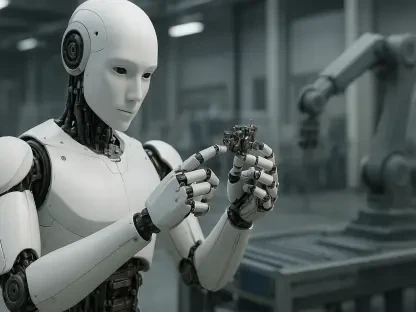
The primary technical achievement involves the manipulation of flexible or deformable objects, such as wire assemblies, which have long been a bottleneck in robotics. Unlike steel frames with fixed coordinates, wires bend and shift unpredictably, requiring a robot to possess contact-rich dexterity. Sanctuary AI’s platform uses a continuous loop of visual and tactile data to track moving targets in real time, allowing the system to perform delicate insertions with a level of perception that mirrors human adaptability. This capacity to feel the environment and adjust pressure or orientation on the fly is a departure from traditional blind automation. When a wire is not exactly where the sensor expects it, the Physical AI reasons through the discrepancy and repositions the gripper accordingly. This adaptive behavior is essential for complex assembly tasks where rigid programming fails. By mastering these unpredictable interactions, the technology opens the door to automating thousands of previously manual tasks.
Strategic Scalability and Future Implications
Leveraging a Hardware-Agnostic Philosophy
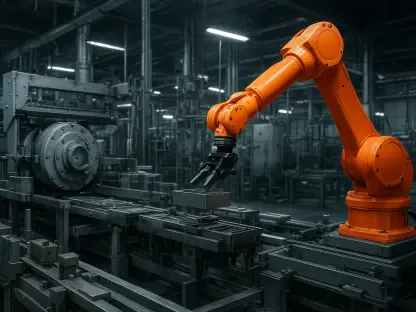
A standout element of the current strategy is the commitment to a hardware-agnostic philosophy that prioritizes software intelligence over specific robotic forms. Rather than limiting the software to proprietary humanoid frames, the company designed its Physical AI to be deployed onto existing industrial robotic arms. This approach allows manufacturers to upgrade the brains of their current infrastructure without replacing expensive hardware, facilitating faster adoption across the sector. By decoupling the intelligence from the physical machine, the technology becomes a versatile tool that can be integrated into various factory layouts. This flexibility protects significant capital investments while the technology scales across different industries, from automotive to consumer electronics. Between 2026 and 2029, the industry is projected to see a rapid surge in adaptive software that can be integrated into legacy units. This strategy ensures that intelligence remains the central value proposition in an ever-evolving market.
Driving the Shift: Flexible and Reasoning-Based Systems
This breakthrough aligns with a broader shift in the Fourth Industrial Revolution from fixed automation toward flexible, reasoning-based systems. As the automotive sector faces persistent labor shortages for repetitive, high-dexterity roles, AI-driven robots offer a way to maintain throughput through autonomous decision-making. The industry is moving away from rigid programming and toward systems that can see, feel, and react to the inherent messiness of a live factory floor. This transition is not just about replacing labor but about creating a more resilient manufacturing ecosystem that can adapt to product changes without months of reprogramming. Functional intelligence is prioritized over the aesthetic of the robot, focusing on the ability to understand physical principles like friction and gravity. By building a foundation of proven intelligence, the industry ensures that when general-purpose robots eventually reach the mass market, they will be equipped with software that has already mastered complex physical interactions.
Actionable Insights: Preparing for an Autonomous Workforce
The successful integration of Physical AI into a high-volume production line provided a blueprint for how companies managed the transition to advanced automation. Stakeholders recognized that the value of these systems resided in their ability to learn and adapt rather than just execute fixed commands. To capitalize on this progress, industrial leaders began auditing their existing workflows to identify high-dexterity tasks that previously required human intervention. They also invested in training technical staff to oversee AI-driven systems, ensuring that the human-machine collaboration remained efficient. The deployment proved that data-driven perception was the key to handling deformable objects, prompting a shift in research focus toward tactile feedback sensors. Organizations that adopted a hardware-agnostic mindset found they could scale these solutions more rapidly by utilizing their current equipment. Ultimately, the industry moved toward a model where intelligence was the primary driver of manufacturing flexibility.