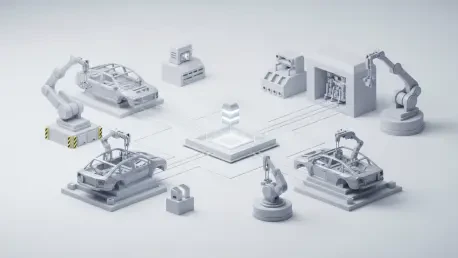

The logistical complexity inherent in managing a global network of automotive production facilities often creates bottlenecks that hinder rapid innovation and increase operational overhead. To address these challenges, Stellantis has initiated a comprehensive digital overhaul of its manufacturing ecosystem by integrating high-fidelity virtual models known as digital twins. This strategy is not merely an incremental update but a fundamental shift toward a software-defined manufacturing architecture that bridges the gap between digital design and physical execution. By collaborating with industry leaders like Nvidia and Accenture, the company aims to replace traditional, hardware-heavy processes with flexible, data-driven workflows. These virtual environments allow engineers to visualize and manipulate entire factory floors with surgical precision, ensuring that any modifications are validated before they are implemented in the real world. This proactive approach minimizes the risk of costly errors and sets a new benchmark for industrial scalability.
Strategic Transition: Moving Toward Software-Defined Manufacturing
The shift toward a software-defined manufacturing model represents a pivotal moment for legacy automakers who have traditionally relied on rigid physical infrastructure for production. Stellantis is spearheading this change by leveraging advanced simulation technologies to create a dynamic environment where software dictates the pace and efficiency of the assembly line. This transition allows for unprecedented flexibility, as production parameters can be adjusted in the virtual realm without the need for immediate hardware retooling or manual reconfiguration. By treating the factory as a programmable entity, the company can respond more effectively to the volatile nature of global supply chains and evolving consumer preferences. This methodology effectively decouples the planning phase from physical constraints, allowing for a continuous cycle of improvement that remains unhindered by the traditional limitations of heavy machinery and fixed factory layouts.
Furthermore, the integration of digital twins serves as a critical safety net for testing complex production workflows in a controlled, risk-free virtual setting. Before a single piece of equipment is installed or a robotic arm is programmed on the actual factory floor, every movement and sequence is meticulously simulated and refined to ensure optimal performance. This capability is particularly valuable when introducing new vehicle models or battery-electric platforms that require entirely different assembly logic compared to internal combustion engines. By identifying potential bottlenecks and safety hazards during the simulation phase, engineers can optimize the speed and flow of the production line while safeguarding the well-being of the human workforce. The ability to iterate rapidly in a virtual space ensures that the physical transition is seamless, reducing the downtime that typically plagues major factory changeovers during the launch of new products.
Technical Infrastructure: Harnessing Omniverse and Physical AI
At the foundation of this digital transformation lies the Nvidia Omniverse platform, which serves as the connective tissue for various engineering and manufacturing data streams. By utilizing the Universal Scene Description framework, Stellantis can merge disparate datasets into a single, cohesive 3D environment that provides a unified view of the entire production process. This “single source of truth” eliminates the silos that often exist between design, engineering, and manufacturing departments, allowing teams to collaborate in real time on a shared virtual model. Because the platform supports massive datasets and complex geometry, it can represent the intricate details of a factory with high fidelity, from the smallest sensors to the largest conveyor systems. This level of interoperability ensures that every stakeholder has access to the most accurate information, which is essential for maintaining consistency across a diverse global network of manufacturing sites.
Unlike conventional 3D visualizations that only represent the aesthetic properties of an object, these digital twins are powered by physical AI, making them interactive and functional. This means the virtual models are programmed to strictly adhere to the fundamental laws of physics, including gravity, friction, and thermodynamics. When a virtual robot performs a task, the simulation accounts for the weight of the components it carries and the resistance it encounters, ensuring that its behavior mirrors what will happen on the factory floor. This high-fidelity simulation is crucial for automotive manufacturing, where the margin for error is often measured in tiny fractions of an inch and precision is paramount for vehicle safety and quality. By creating a digital environment that behaves like the physical world, Stellantis can train its autonomous robots with extreme confidence, knowing that the skills learned in the virtual world will translate perfectly to the real factory.
Operational Mastery: Efficiency and Global Scalability
Utilizing these sophisticated digital replicas, Stellantis is now capable of performing closed-loop optimization to significantly enhance the throughput of its assembly lines. If a specific workstation within a facility, such as the Detroit Assembly Complex, exhibits signs of underperformance, engineers can run thousands of virtual scenarios to identify the most efficient solution. These simulations can test various paths and timing sequences to determine which configuration produces the highest output with the lowest energy consumption. Once a superior workflow is identified, the validated software update is pushed directly to the physical machines on the floor, bypassing the lengthy trial-and-error processes traditionally conducted during production hours. This seamless integration between the virtual and physical realms ensures that the factory remains in a state of continuous improvement, where every operational second is utilized to its maximum potential.
Beyond line optimization, this technological advancement empowers the workforce by providing tools that predict mechanical failures before they actually occur. By monitoring real-time data from sensors and comparing it against the digital twin’s baseline, maintenance teams can identify subtle anomalies that indicate wear or impending breakdown. This shift from reactive repairs to proactive maintenance allows employees to schedule interventions during planned downtime, preventing the catastrophic work stoppages that often derail production targets. Moreover, this transition frees up skilled technicians from the constant cycle of troubleshooting emergencies, allowing them to focus on higher-level innovation and process refinements. By placing real-time data and predictive analytics in the hands of the workers, Stellantis is fostering a culture of agility where employees can make informed decisions that accelerate the product development lifecycle.
Industrial Evolution: Actionable Lessons for Digital Integration
The successful integration of AI-powered digital twins across the Stellantis manufacturing network demonstrated that the path to industrial resilience required a fundamental rethink of traditional production paradigms. Organizations that achieved similar levels of digital maturity prioritized the creation of a unified data architecture, ensuring that every engineering department worked from a synchronized virtual model. It became clear that the most effective implementations focused on physical AI, which allowed for the accurate simulation of real-world variables before any physical assets were deployed. Leaders in the sector recognized that empowering the workforce with predictive maintenance tools was essential for reducing operational risks and fostering a culture of continuous innovation. This approach allowed the company to maintain its competitive edge by ensuring that the factories were as intelligent as the advanced vehicles they were designed to produce.
To replicate this success, manufacturers should have adopted a phased rollout strategy that targeted high-priority facilities before attempting a global scale-up of virtual systems. The focus remained on establishing a common digital framework that utilized universal standards, which simplified the process of sharing innovations across different geographic regions. By investing in scalable platforms like Nvidia Omniverse, companies were able to create a future-proof foundation that could accommodate the increasing complexity of software-heavy vehicles. It was also critical to ensure that the training of autonomous systems was integrated directly into the factory simulations, creating a shared intelligence between the production environment and the end product. These actions provided a clear roadmap for navigating the complexities of modern manufacturing, proving that digital transformation was a vital necessity for staying relevant in the market.