
The traditional paradigm of industrial automation relied heavily on static, single-purpose machines that required extensive downtime and expensive reconfiguration whenever production needs changed. This rigid infrastructure often led to significant bottlenecks and limited the agility of manufacturers striving to keep pace with rapidly shifting consumer demands and supply chain disruptions. Theker addressed critical inefficiencies by introducing a modular robotic framework that leverages sophisticated artificial intelligence to adapt to various tasks with minimal human intervention. Following the recent announcement of an $85 million funding round, the company is now positioned to accelerate the deployment of its versatile systems across international markets. This capital infusion reflects a growing confidence among investors that the next generation of industrial robotics must be as fluid as the software that controls it. By prioritizing adaptability, the firm carved out a niche that challenges the dominance of established, fixed-system competitors in the tech landscape.
Hardware Architecture: Advancing Flexibility through Intelligent Modularity
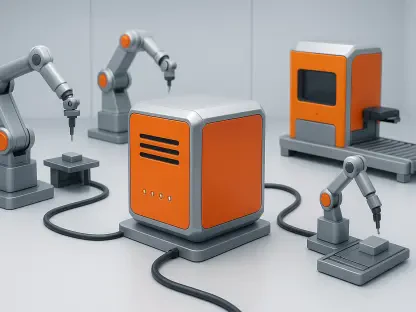
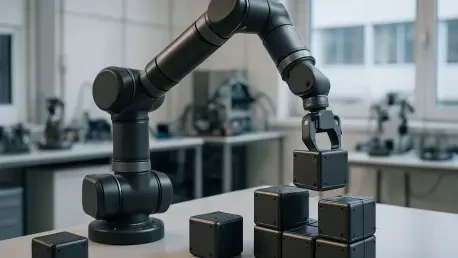
The core innovation behind this modular approach lies in the proprietary connector system and decentralized processing units that allow individual robot components to function independently or as a unified collective. Unlike legacy systems that require proprietary controllers and specialized engineering for every new application, these interchangeable modules utilize standardized interfaces to swap tools and sensors within minutes. This design philosophy ensures that a single robotic arm can transition from delicate electronics assembly to heavy palletizing without necessitating a complete overhaul of the physical workspace. Furthermore, the integration of edge computing within each module enables real-time responsiveness, allowing the hardware to detect environmental changes and adjust its trajectory accordingly. By reducing the reliance on central mainframes, the architecture minimizes latency and enhances the overall safety of human-robot collaboration in warehouse environments. This transition toward decentralized hardware intelligence represents a significant departure from older models.
Complementing the physical modularity is an advanced artificial intelligence layer that serves as the cognitive backbone for the entire hardware ecosystem. This software platform uses reinforcement learning to simulate thousands of operational scenarios, allowing the robots to master complex movements before they reach the factory floor. By synthesizing data from a vast network of deployed units, the AI continuously refines its algorithms to improve precision and energy efficiency across the board. This collective learning capability means that an update implemented in one facility can immediately benefit every other connected system globally, fostering a state of constant evolution. Engineers focused on developing a user-friendly interface that empowers non-technical staff to program tasks using natural language processing and visual guides. Consequently, the barrier to entry for small enterprises has been lowered, democratizing access to high-end automation that was previously reserved for massive conglomerates with deep pockets.
Strategic Investment: Scaling Manufacturing and Global Deployment
Allocation of the newly secured $85 million will focus on expanding manufacturing capabilities to meet the surging backlog of orders from international logistics providers. A portion of the investment is earmarked for the construction of a state-of-the-art facility that utilizes the company’s own modular robots to produce new units, creating a self-sustaining cycle of production. This move is expected to reduce lead times and lower the cost per unit, making the technology even more competitive against traditional labor markets. Additionally, the research and development team will receive increased funding to explore new sensor technologies, such as advanced tactile feedback, to broaden the range of materials the robots can handle. By scaling operations from 2026 to 2028, the organization aims to insulate itself from global trade volatility. Strengthening these foundational elements of the business is essential for maintaining growth as the brand expands its international footprint.
Stakeholders in the manufacturing and logistics sectors observed how the successful completion of this funding round signaled a permanent shift toward more resilient and adaptable automation strategies. It became clear that the path forward required a departure from rigid capital expenditures in favor of scalable, software-defined hardware that could grow alongside the business. Companies that prioritized the integration of these modular systems experienced faster returns on investment and greater operational flexibility during periods of market uncertainty. Industry leaders recommended that organizations conduct comprehensive audits of their existing workflows to identify specific areas where modular AI could replace aging, fixed-purpose machinery. By fostering a culture of continuous technological adoption and retraining the workforce to manage these intelligent systems, businesses positioned themselves to thrive. The emphasis remained on building robust ecosystems where humans and robots worked in tandem to achieve unprecedented productivity.