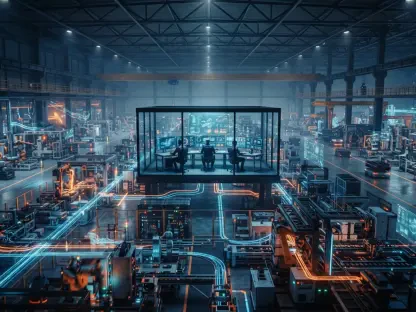

The once-dominant internal combustion engine is rapidly losing its grip on the European continent as manufacturers orchestrate a high-stakes pivot toward electrified powertrains to secure their industrial relevance. This shift is not merely a corporate choice but a survival strategy driven by aggressive climate mandates and a race for global industrial dominance. Legacy manufacturers now find themselves at a crossroads where the tradition of mechanical engineering meets the precision of digital and chemical innovation. The transformation represents the most radical change since the inception of the assembly line, requiring a complete overhaul of global supply chains and domestic manufacturing philosophies.
Quantifying the Transition and Real-World Implementation
Growth Metrics and Strategic Investment Trends
Strategic investments totaling over €60 billion are currently fueling electrification initiatives aimed at launching dozens of new battery-electric models by the end of the decade. These capital allocations are essential for scaling production to meet high-capacity output demands while targeting a two-thirds electric sales share by 2030. Regional adoption rates continue to accelerate as manufacturers focus on high-density battery integration to stay ahead of technological curves.
This aggressive scaling is intended to position the continent as a primary hub for green automotive exports, competing directly with emerging powerhouses. By prioritizing software-defined architectures and efficient power management, European firms aim to reclaim market share lost during previous supply chain disruptions. The focus remains on transitioning from niche luxury segments to accessible mass-market electric mobility for all regional consumers.
Industrial Retooling: The Case of the Mulhouse Assembly Plant
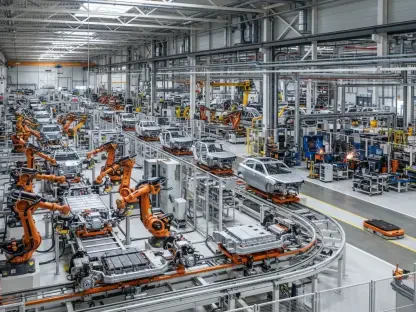
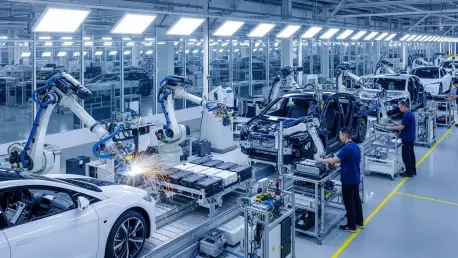
A prime example of this industrial evolution is the €1 billion capital commitment to transform traditional French manufacturing hubs into specialized facilities. The retooling of the Mulhouse assembly plant for 2029 model generations serves as a blueprint for modernizing legacy factories that once relied entirely on fossil fuels. By dedicating resources to these sites, automakers are addressing economic anxieties and securing thousands of regional jobs that were previously at risk.
Stellantis is creating a cohesive, cross-border manufacturing network that leverages shared platforms to produce multiple brands on a single line. This industrial agility is crucial for navigating the volatile demand cycles associated with the early stages of mass-market electric adoption. Such flexibility allows plants to remain profitable even as consumer preferences fluctuate between different levels of hybridization and full electrification.
Perspectives From Political and Industrial Leadership
The synergy between political leadership and industry executives has given rise to a unified electrification team strategy. National leaders and top automotive executives have aligned their goals to ensure that the transition remains a pillar of regional economic strength. State-led roadmaps to phase out fossil fuels by 2050 provide the necessary regulatory certainty that businesses require before committing multi-billion dollar sums to these long-term projects.
Experts emphasize that decarbonization is a vital tool for domestic economic renewal, ensuring that the infrastructure for charging evolves in tandem with the vehicles. Without this coordinated effort, the risk of industrial stagnation would be significantly higher, potentially leaving the workforce behind in an increasingly digital economy. Regulatory frameworks are now designed to incentivize local production and discourage reliance on carbon-heavy imports.
The Road Ahead: Implications for Global Competitiveness and Sustainability
The push to manufacture one million electric vehicles annually within a single national market remains a primary domestic production target. This ambitious goal necessitates a robust local supply chain for raw materials and battery cells to reduce reliance on external providers. However, maintaining industrial competitiveness against global rivals who currently dominate the sustainable energy supply chain remains the most significant hurdle for manufacturers.
Potential developments in solid-state battery technology and expanded charging networks will determine the ultimate success of these hubs. The dual nature of the transition creates a complex landscape where the risk of site closures exists alongside the opportunity for high-tech job creation. Strategic adaptation and continuous investment in worker retraining are the only ways to mitigate these risks while capitalizing on the growth of the green economy.
Summary of the European Electrification Paradigm
The industry witnessed a pivotal shift where corporate restructuring met state climate policy to redefine the entire automotive sector. Stakeholders recognized that the success of the transition depended on the integration of high-tech manufacturing with local energy security. The movement toward domestic battery supply chains allowed the region to stabilize its industrial output against external pressures.
Labor unions and management cooperated on extensive retraining initiatives that prepared the workforce for a digital-first manufacturing environment. These combined efforts established a new standard for industrial resilience, ensuring the sector remained competitive against aggressive global peers. The overall strategy successfully bridged the gap between traditional mechanical engineering and a future defined by sustainable mobility.