
The promise of a fully autonomous factory floor remains a distant dream for many American industrial hubs, where the sounds of heavy machinery often drown out the digital whispers of predictive algorithms. While global headlines frequently showcase sleek, lights-out production facilities powered by advanced neural networks, the reality for the average manufacturer in 2026 is significantly more grounded in traditional methods. Current industry data suggests that nearly 80% of domestic manufacturing plants still lack any meaningful level of automation, creating a stark divide between the technological vanguard and the broader industrial base. This disparity exists despite the fact that a vast majority of executives acknowledge the necessity of smart technologies to remain competitive in an increasingly globalized market. The paradox of high theoretical interest paired with low physical execution highlights a systemic friction that prevents many organizations from transitioning their operations into the digital age. This gap is not merely a matter of resisting change but stems from a complex web of technical debt, financial caution, and the overwhelming difficulty of upgrading systems that were never intended to connect to the internet. Consequently, the journey toward a digitized manufacturing sector is proving to be a marathon of incremental adjustments rather than a sudden sprint of innovation.
Root Causes: Technical Debt and Financial Risk
A significant portion of the stagnation in automation adoption can be attributed to the sheer physical and digital weight of legacy infrastructure that permeates American shop floors. Many facilities continue to rely on industrial machinery that was commissioned decades ago, operating on proprietary protocols and isolated controllers that do not natively communicate with modern cloud environments or artificial intelligence platforms. To bridge this gap, engineers often find themselves attempting to retrofit sensors onto antiquated equipment, which frequently results in fragmented data streams that are difficult to clean or standardize for machine learning purposes. Without a unified data architecture, even the most sophisticated generative AI models lack the high-quality input necessary to provide actionable insights. This fundamental lack of digital maturity means that companies must first invest heavily in basic connectivity and data governance before they can even consider the deployment of autonomous systems. This foundational work is often invisible and unglamorous, yet it remains the most critical prerequisite for any long-term success in the smart manufacturing landscape.
Financial hurdles and the inherent risks of production downtime further complicate the transition from manual processes to AI-driven workflows within the industrial sector. Most manufacturers operate within tight margins where every second of machine availability translates directly to profitability, making any experimental technology integration a high-stakes gamble. This reality has led to a widespread phenomenon known as “pilot purgatory,” where small-scale artificial intelligence projects are successfully tested in isolated environments but never graduate to full-scale enterprise implementation. The primary deterrent is the fear that a software glitch or a model failure could lead to catastrophic line stoppages, potentially resulting in millions of dollars in lost revenue and severe disruptions to the broader supply chain. Consequently, plant managers often prioritize the reliability of proven, manual processes over the theoretical efficiencies promised by unvetted automated solutions. Breaking out of this cycle requires a fundamental shift in how organizations calculate return on investment, moving away from short-term gains toward a more comprehensive view of long-term digital resilience.
Strategic Integration: Incrementalism and Competitive Pressure
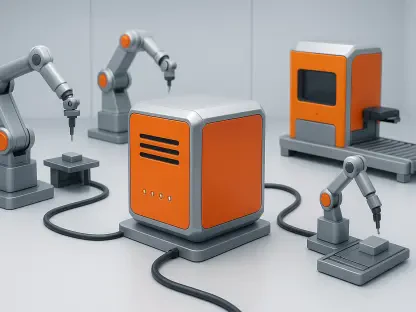
Rather than attempting a total digital overhaul that risks total operational paralysis, forward-thinking manufacturers are increasingly adopting a strategy of modular incrementalism. This approach focuses on integrating flexible, low-risk technologies such as autonomous mobile robots and collaborative robotic arms that can work alongside human operators without requiring massive infrastructure changes. By deploying these systems in specific, high-impact areas like warehouse logistics or repetitive material handling, firms can begin to harvest immediate data while minimizing the threat of a site-wide failure. These modular solutions allow organizations to build internal technical expertise and prove the value of automation to skeptical stakeholders without committing the massive capital required for a full factory conversion. This iterative progression also enables the workforce to adapt to new tools gradually, reducing the friction often associated with rapid technological shifts. As these small-scale successes accumulate, they create a roadmap for more complex integrations, such as real-time predictive maintenance or agentic systems.
The current trajectory of AI adoption mirrors the historical evolution of industrial robotics, which initially faced significant pushback before becoming an indispensable standard in the automotive industry. In those earlier eras, the early adopters were the ones who ultimately defined the competitive landscape, leaving latecomers to struggle with outdated cost structures and slower production cycles. Today, a similar “peer effect” is beginning to manifest as manufacturers observe the tangible productivity gains reported by competitors who have successfully bridged the digital divide. Reports of 10% to 20% increases in throughput and significant reductions in energy consumption are forcing once-hesitant executives to reconsider their technological timelines. This competitive pressure acts as a powerful catalyst, transforming artificial intelligence from a luxury experimental tool into a basic survival requirement. As more case studies emerge detailing the practical benefits of automated quality control and demand forecasting, the collective skepticism within the industry is being replaced by a sense of urgency to modernize.
Future Outlook: Scalable Intelligence and Operational Resilience
Looking toward 2030, the outlook for American manufacturing is characterized by a gradual but accelerating shift toward total system interoperability and data-driven decision-making. Analysts project that the level of factory automation will triple as the cost of high-precision sensors and edge computing continues to decline, making advanced capabilities accessible to small and medium-sized enterprises. The focus is expected to shift from simple task automation to the creation of truly agentic systems that can sense, think, and act independently to optimize entire production lines in real time. This evolution will likely be driven by the wider availability of pre-trained industrial AI models that require less customization than the bespoke solutions of the past. As these technologies mature, the emphasis will move toward automated data capture and the use of digital twins to simulate manufacturing scenarios before a single physical part is produced. This capability will drastically reduce waste and improve agility, allowing manufacturers to respond to market fluctuations with unprecedented speed.
The road to bridging the AI adoption gap demanded a concerted effort to align executive vision with the practical realities of the production floor. Successful organizations eventually realized that digital transformation was not a singular event but a continuous process of refining data pipelines and fostering a culture of technical curiosity. They prioritized the creation of robust cybersecurity frameworks and invested heavily in upskilling their existing workforce to manage the new digital infrastructure. By 2026, the industry had shifted its focus toward standardized communication protocols, which allowed disparate machines to finally operate as a unified system. These strategic choices facilitated the move away from isolated pilots toward integrated solutions that provided a measurable impact on the bottom line. Leadership teams that moved aggressively to clean their data sets and simplify their legacy environments were the ones that ultimately secured a competitive advantage. This transformation served as the essential platform for the next decade of industrial innovation, ensuring long-term growth.