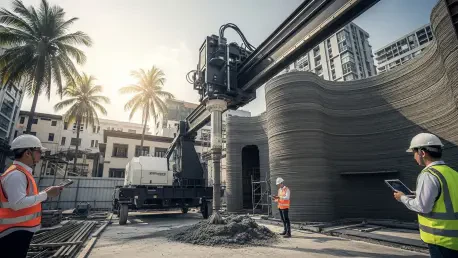

The humid streets of Paco, Manila, are currently witnessing a radical transformation in architectural history as automated nozzles replace traditional trowels to construct the first large-scale 3D-printed structure in the Philippines. This landmark project, a collaborative effort between the humanitarian organization Caritas Manila and the Japanese engineering firm Onocom Group, represents a fundamental shift away from the labor-intensive “hollow block and mortar” method that has defined local construction for generations. By deploying advanced 3D concrete printing technology, the venture seeks to address the urgent need for high-quality infrastructure that can be erected rapidly and reliably. The resulting building is not merely a technical showcase but a functional multi-purpose facility designed specifically to bolster local social welfare programs and community outreach. This initiative proves that high-tech automation is no longer a distant concept but a tangible reality capable of reshaping how the archipelago approaches urban development and social services.
Efficiency and Precision: Modernizing the Construction Site
The core of this technological transition lies in the ability of 3D concrete printing to translate intricate digital blueprints into physical forms with surgical accuracy and minimal human intervention. Unlike traditional methods where structural integrity can vary based on manual masonry skills, this automated process ensures that every layer of specialized concrete is deposited exactly where it is needed. This precision effectively eliminates many of the common errors associated with on-site fabrication, such as uneven wall thickness or structural misalignments. Furthermore, the speed of construction is drastically increased, allowing developers to complete the structural frame of a building in a fraction of the time required by conventional crews. In a region where infrastructure projects are frequently hampered by logistical delays and seasonal weather disruptions, the capability to compress building timelines from months to weeks provides a crucial advantage for both private developers and public service agencies looking to modernize.
Beyond the immediate benefits of speed and accuracy, this modern printing technique introduces a sustainable approach to building that minimizes the environmental footprint of new construction projects. Traditional building sites often generate significant amounts of material waste due to over-ordering and the cutting of raw materials, yet 3D printing utilizes an additive manufacturing process that consumes only the precise volume of concrete required. This efficiency is paired with specialized material blends that offer superior durability compared to standard concrete mixes, providing a higher level of resistance against the seismic activity and extreme weather patterns common in the Philippines. The layering process creates a monolithic structure that is inherently robust, offering a more resilient alternative to the patchwork nature of hollow blocks. By integrating eco-friendly practices with structural longevity, this method establishes a new benchmark for how Philippine buildings can be engineered to survive the challenges of a volatile climate while reducing total consumption.
Social Impact: Aligning Technology With Community Needs
While sophisticated construction technologies are frequently associated with high-end commercial real estate or luxury residential developments, this project intentionally focuses on the needs of the underserved. The resulting facility in Paco is designated as a hub for Caritas Manila’s poverty relief efforts, educational initiatives, and disaster response coordination, demonstrating that innovation can serve a higher social purpose. By applying 3D printing to the humanitarian sector, the organizers are challenging the notion that cutting-edge tools are reserved exclusively for the wealthy. This focus ensures that the benefits of the fourth industrial revolution reach the most vulnerable sectors of society, providing them with safe and modern spaces that might otherwise be unaffordable using traditional methods. The initiative highlights a strategic shift in how non-profit organizations view technology, moving from simple service delivery to the adoption of advanced engineering solutions that create long-term value for marginalized urban and rural communities.
A significant aspect of this venture is the harmonious blend of Japanese technical expertise and Filipino community values, which was evident during the ceremonial blessing of the high-tech construction site. This ritual served as a bridge between the clinical precision of modern machinery and the deeply rooted spiritual traditions of the local culture, illustrating that progress does not require the abandonment of heritage. The partnership with Onocom Group brought international engineering standards to a local context, fostering a knowledge exchange that empowers local workers and designers to adapt to new digital tools. It suggests that the successful implementation of foreign technology depends heavily on its alignment with the social fabric and specific needs of the host country. By grounding this high-tech project in a mission of faith and service, the stakeholders proved that the most effective way to introduce radical change is to ensure it is driven by a clear sense of community responsibility and a commitment to shared progress across all social strata.
Future Foundations: Scaling Innovation for National Development
The successful groundbreaking of this 3D-printed structure serves as a vital proof-of-concept that could trigger a wider transformation throughout the entire Philippine construction industry. If this pilot project meets its performance goals, it offers a scalable model for addressing the chronic housing shortage and the need for rapid school construction in remote provinces. The digital-first nature of 3D printing allows for decentralized construction, where digital designs can be sent to printers in various locations, bypassing the complex logistics of transporting heavy traditional building materials. This capability is particularly relevant for the Philippines’ unique geography, where shipping supplies between islands often inflates costs and extends deadlines. By adopting this technology on a larger scale, the government and private sector could collaborate to erect sturdy, low-cost housing for victims of natural disasters in record time. This transition marks the beginning of a move toward more agile infrastructure development, where the speed of software meets the physical requirements of a rapidly growing population.
The completion of the Paco project established a clear precedent for how the Philippines approached its future urban and rural development needs through the lens of automation. Decision-makers recognized that traditional methods alone were insufficient to meet the rising demands of a modernizing economy and a changing climate. To move forward, it was recommended that the construction sector invested heavily in technical training for local laborers to operate specialized printing equipment, ensuring that the workforce remained relevant in a digital economy. Policymakers and architects also found that updating building codes to include additive manufacturing standards was an essential step in ensuring safety and encouraging wider adoption. By focusing on modular designs and sustainable material science, the nation moved closer to solving its infrastructure gaps with high-efficiency solutions. Ultimately, the integration of 3D printing into the mainstream market required a coordinated effort between international partners and local agencies to turn this technological milestone into a standard practice for all future national projects.