
The unprecedented accumulation of unfilled orders within the American industrial sector has reached a critical threshold, forcing many manufacturers to reconsider their long-term production strategies and capital expenditure allocations for the upcoming fiscal periods. While current economic indicators suggest a stabilization in consumer demand, the industrial machinery segment continues to grapple with a multi-year backlog that stems from both supply chain fragility and a sudden surge in domestic manufacturing initiatives. This backlog is not merely a temporary delay but represents a structural shift in how corporations view procurement and asset management in an era characterized by localized production. Companies that once relied on international sourcing are now pivoting toward domestic solutions, creating a bottleneck that existing infrastructure is struggling to accommodate. Consequently, the debate has moved from whether expansion is necessary to how quickly new facilities can be commissioned.
Reshoring and Infrastructure: The Primary Demand Drivers
The surge in demand for specialized machinery is being propelled by extensive federal investments in semiconductor fabrication and green energy infrastructure which require precision equipment. As these large-scale projects move from the planning stages to active construction, the necessity for specialized CNC machines, heavy lifting equipment, and automated assembly lines has become more pronounced than ever. This trend is further amplified by the ongoing reshoring efforts where firms seek to mitigate geopolitical risks by establishing robust supply chains within North American borders. However, this transition is hindered by the fact that the existing machinery manufacturing base is already operating at or near maximum capacity. The resulting lead times for new equipment have stretched to unprecedented durations, causing a ripple effect throughout the entire industrial ecosystem. To combat this, industry leaders are exploring modular expansion strategies that allow for faster output.
Beyond legislative incentives, the drive for expansion is also fueled by a fundamental change in the replacement cycle of industrial assets as companies prioritize efficiency over longevity. Older equipment that lacks the connectivity and sensory capabilities required for modern data-driven manufacturing is being phased out in favor of intelligent systems that can predict maintenance needs. This massive technological turnover is occurring simultaneously across multiple sectors, including aerospace, automotive, and heavy construction, placing an immense burden on machinery providers. The pressure to innovate while maintaining high production volumes has created a paradoxical situation where manufacturers need new machines to build the machines they have already sold. To navigate this challenge, many organizations are forming strategic partnerships with technology firms to integrate advanced software into existing hardware, thereby extending the utility of current assets while waiting for new units.
Technology and Automation: Bridging the Production Gap
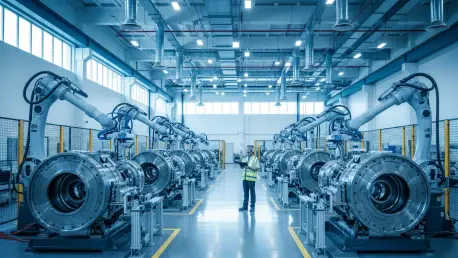
Artificial intelligence and robotics are no longer peripheral technologies but have become the core components of the next generation of industrial machinery required to solve the backlog crisis. By implementing sophisticated autonomous systems, manufacturers can significantly reduce the labor-intensiveness of complex assembly processes, which is vital given the persistent shortage of skilled technicians. These advanced technologies allow for a higher degree of precision and a reduction in material waste, which directly improves the bottom line for firms operating on thin margins. Moreover, the integration of digital twin technology enables manufacturers to simulate production workflows and identify bottlenecks before physical expansion begins, ensuring that new investments are optimized for maximum efficiency. This level of technological sophistication is a prerequisite for any new machinery expansion, as it provides the scalability needed to handle current volume while remaining flexible.
Industrial organizations successfully navigated these expansion challenges by prioritizing the synchronization of their procurement cycles with real-time data from their supply networks. They recognized that the key to overcoming massive backlogs lay in the strategic decoupling of production processes from traditional fixed-site constraints through the use of decentralized manufacturing nodes. These forward-thinking companies invested heavily in cross-training their existing workforce to manage complex automated systems, ensuring that human capital remained a competitive advantage during the transition. Furthermore, the adoption of standardized machinery components allowed for faster assembly and easier maintenance, which significantly reduced the overall lead time for new equipment deliveries. Strategic leaders also established closer ties with financial institutions to secure flexible financing models that supported long-term growth even during market volatility. By taking these steps, the sector moved toward resilience.