
Kwame Zaire is a seasoned manufacturing expert with a deep-seated passion for the intersection of electronics, heavy equipment, and production management. As a thought leader in quality, safety, and predictive maintenance, he provides deep insights into how scaling specialized production can reshape mission-critical industries. This conversation explores the rapid growth of high-performance powder production, the strategic transition to a US-based supply chain, and the innovative use of PM-HIP technology to eliminate traditional manufacturing bottlenecks.
With the recent integration of a third EIGA atomizer, production capacity has surged to meet demanding new targets; how has this expansion reshaped your operational strategy for titanium and refractory alloys?
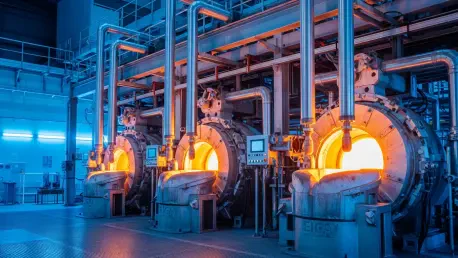
Commissioning the third Electrode Induction Melting Inert Gas Atomizer ahead of schedule at the Tennessee facility was a major operational win. We now have one unit strictly dedicated to refractory alloy powders and two units focused on titanium alloy powders, which creates a very stable and efficient production flow. This specialized setup allows us to reach a significant annual capacity of approximately 200 tonnes for refractory materials and 480 tonnes for titanium alloys. Having these dedicated production lines means we can maintain exceptionally high quality standards while meeting the urgent volume requirements of our partners in mission-critical industries.
How are you positioning your specialized powder production to support the specific mission-critical requirements of the defense and space industries?
Our current strategy is focused on delivering high-performance materials that can withstand the most extreme environments, such as those found in nuclear reactors or deep-space missions. By scaling our domestic production capacity, we are directly answering the “demand pull” from the US government for a more secure and sovereign manufacturing base. We maintain constant dialogue with the US Navy and other commercial customers to ensure our production scale matches their long-term project timelines and technical needs. We must act as a modernizing force in the industry, providing a reliable source of spherical powders that are absolutely vital for national security and economic development.
You’ve mentioned a leadership position in PM-HIP manufacturing for near-net-shape parts; what impact does this have on alleviating traditional supply chain vulnerabilities like long lead times?
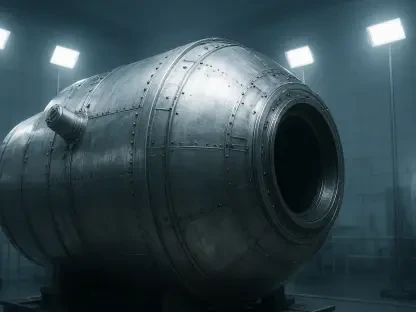
The traditional reliance on castings and forgings has long been a source of vulnerability due to extreme lead times and general supply chain instability. Our leadership in PM-HIP—or Powder Metallurgy-Hot Isostatic Pressing—provides a way to manufacture near-net-shape parts that bypass these old bottlenecks. This technology allows us to create components that are nearly finished right out of the machine, offering an immediate and viable substitute for parts that usually take months to forge. By reshoring and scaling these modern manufacturing processes, we are creating a much more agile and resilient industrial base for our global customers who require mission-critical speed.
Amaero has completed its move to the United States and a major investment program; how does the potential IPO and upcoming tech like argon recycling fit into your long-term vision?
We recently completed a three-year capital investment program valued at approximately AUS $72 million, which has transformed our foundational production capabilities. Moving our headquarters to the United States positions us perfectly for a potential US initial public offering in late 2026 or early 2027, subject to market conditions. Beyond the financials, we are focused on technical sustainability, such as the argon recycling plant planned for commissioning in the first quarter of 2027. Adding a fourth EIGA atomizer in June 2027 will further cement our role as a scaled manufacturing powerhouse that is integral to domestic sovereign supply chains.
What is your forecast for the evolution of sovereign manufacturing and the global supply chain for advanced alloys?
I foresee a significant shift where “sovereign manufacturing” becomes the standard for industries that are critical to national security and economic development. We will see more companies co-locating their manufacturing processes to reduce risks and increase the speed of delivery for advanced alloy components. The ability to produce 680 total tonnes of high-performance powder annually is a foundational step, but the real evolution will be in the total modernization and re-shoring of the industrial base. As we continue to innovate, the integration of these advanced materials into rapid production cycles will ensure that the defense and aerospace sectors remain resilient against global supply disruptions.