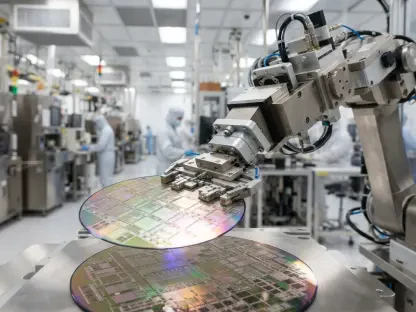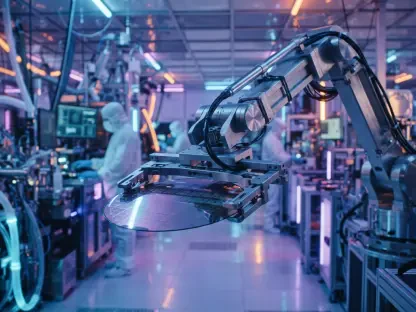
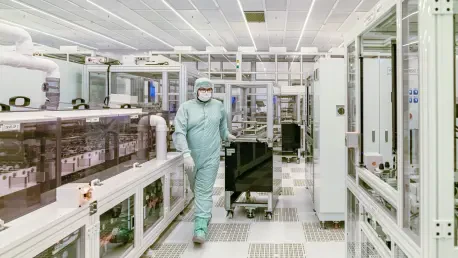
Data from UNCTAD suggests that the financial rewards of semiconductor technology are dictated by intellectual property ownership rather than the physical act of manufacturing. While the global race to subsidize domestic chip production has intensified, with nations committing staggering sums to
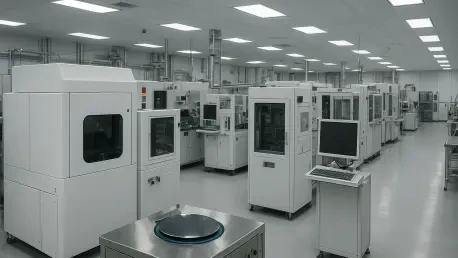
Tesla’s Optimus humanoid robot and Cybercab fleet require specialized processors that prioritize energy efficiency and low-latency data processing over standard commercial chip features. This specialized demand has driven the establishment of Terafab, a centralized semiconductor manufacturing
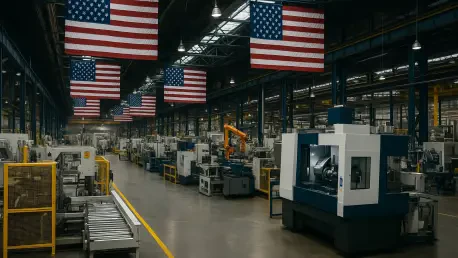
Specific tax provisions allowing for the immediate deduction of capital expenditures have prompted small-scale manufacturers like Munson Boats to resume stalled expansion projects. Building on this individual success, the White House Council of Economic Advisers (CEA) recently released its

Decentralized machine learning requires a physical foundation that can deliver high performance with minimal power consumption, a challenge currently addressed by the development of tailored CMOS hardware. As the EFX—Expo for Electronics Manufacturing unfolds at the Stuttgart exhibition center from

Urban planners are integrating semiconductor high schools and vocational training programs into the Naju innovation city to cultivate a reliable talent pipeline. This initiative serves as the bedrock for the ambitious Honam Chip Cluster, a joint venture between Jeonnam Province and Gwangju
The transition toward smart ultrasound probes and advanced diagnostics is driving a need for specialized chips that handle massive data throughput with minimal heat. This requirement has fundamentally altered the landscape of medical semiconductor development, as generic off-the-shelf components