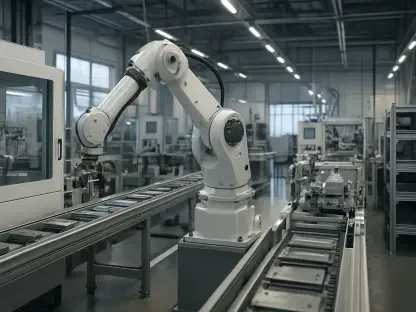

The exchange of reasoning between intelligent agents represents the next evolution in supply chain management, moving beyond the mere exchange of raw electronic data. In 2026, the automotive sector has decisively pivoted away from general-purpose generative AI tools, recognizing that a $4 trillion

Research led by the University of Sheffield indicates that even the most optimistic deployment of carbon capture technology will not achieve net-zero emissions by 2050. This revelation comes as the global community grapples with the sheer scale of the petrochemical industry’s environmental

The migration of cryogenic characterization to the fab floor signals a new era of disciplined, data-driven manufacturing for extreme-environment electronics. For decades, the pursuit of quantum supremacy and superconducting logic was confined to the whisper-quiet halls of university physics

Semiconductor production capacity is being diverted toward specialized chips for data centers, leading to a dramatic increase in the bill of materials for all mobile devices. This systemic shift in the global supply chain has arrived as a direct response to the insatiable hunger for

The synthesis of anonymized telematics, computer vision, and engineering expertise provides a repeatable framework for cities looking to modernize their safety protocols. For decades, urban planners relied on crash maps that documented where tragedies had already occurred, essentially waiting for

Navigating the Shift: Cost Efficiency Versus Supply Continuity The global manufacturing landscape is currently undergoing its most significant transformation since the dawn of the industrial age. For decades, the primary objective of supply chain management was the relentless pursuit of cost