
Traditional Design Rule Checking often involves exhaustive manual debugging cycles that delay the tapeout process for high-performance computing hardware and mobile processors. This bottleneck is intensified by the shrinking physical dimensions of transistor gates, where even a microscopic

For companies operating in the aerospace and medical sectors, maintaining a seamless digital record is a mandatory regulatory requirement rather than an operational luxury. This shift represents a fundamental maturation of additive manufacturing, where the physical output of a 3D printer is no

The traditional divide between high-volume starch mogul systems and low-output starch-free depositing is rapidly disappearing as new technology bridges the production gap. For decades, candy manufacturers were forced to choose between the sheer throughput of starch-based molding and the superior
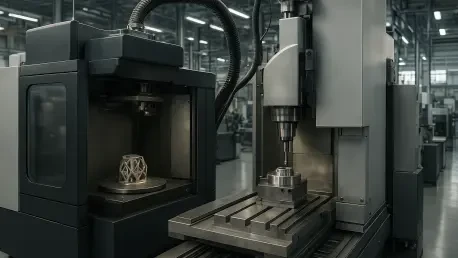
Hexagon’s new HYPERSCAN SR utilizes WiFi 6 technology to provide wireless optical tracking, enabling high-mobility 3D scanning in demanding environments like construction and energy sites. This breakthrough is merely one highlight from the 2026 International Manufacturing Technology Show (IMTS),

ASML’s specialized output is no longer finding a home in Europe, where state-funded grants are primarily fueling the production of older semiconductor generations. This startling shift represents a total collapse of the domestic market for the world’s most advanced lithography systems, as the Dutch

The traditional barriers between additive experimentation and industrial-scale production have finally dissolved, revealing a landscape where 3D printing operates as a standard, high-reliability manufacturing tool. Large-format metal production systems are offering a viable alternative to