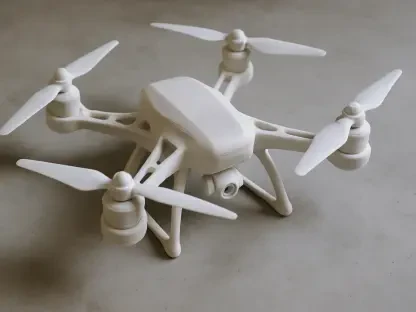

The Royal Moroccan Air Force is enhancing its drone capabilities through a firm procurement contract for DESERT STING and THUNDER precision-guided munitions from the EDGE Group. This specific acquisition, finalized during the Marrakech Airshow 2026, represents just one facet of a much larger,

Outdated manual tracking systems are increasingly viewed as a significant liability for manufacturers operating in today's complex international markets. As the global supply chain faces unprecedented pressures from climate instability and shifting geopolitical alliances, the margin for error in

The persistent hurdle known as the translational gap frequently stops laboratory breakthroughs from becoming commercially viable medications due to manufacturing and stability limitations during scale-up. The modern pharmaceutical landscape is currently undergoing a paradigm shift, transitioning

Tesla’s Optimus humanoid robot and Cybercab fleet require specialized processors that prioritize energy efficiency and low-latency data processing over standard commercial chip features. This specialized demand has driven the establishment of Terafab, a centralized semiconductor manufacturing

Rigorous testing on NASA-sourced spacecraft telemetry and water treatment testbeds has proven the efficacy of decomposition-based modeling for detecting coordinated cyber-attacks. In the high-stakes environment of modern industrial operations, the sheer volume of data produced by sensors can be
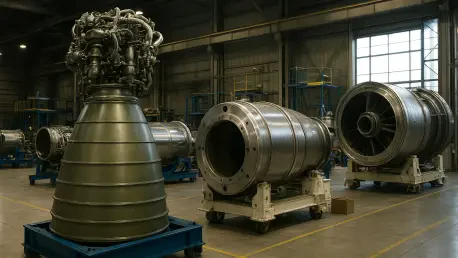
The ability to print complex, lightweight engine parts on demand ensures that the next generation of rockets will be significantly cheaper to launch. For decades, the aerospace industry operated under a paradigm of extreme mechanical complexity, where constructing a single rocket engine required